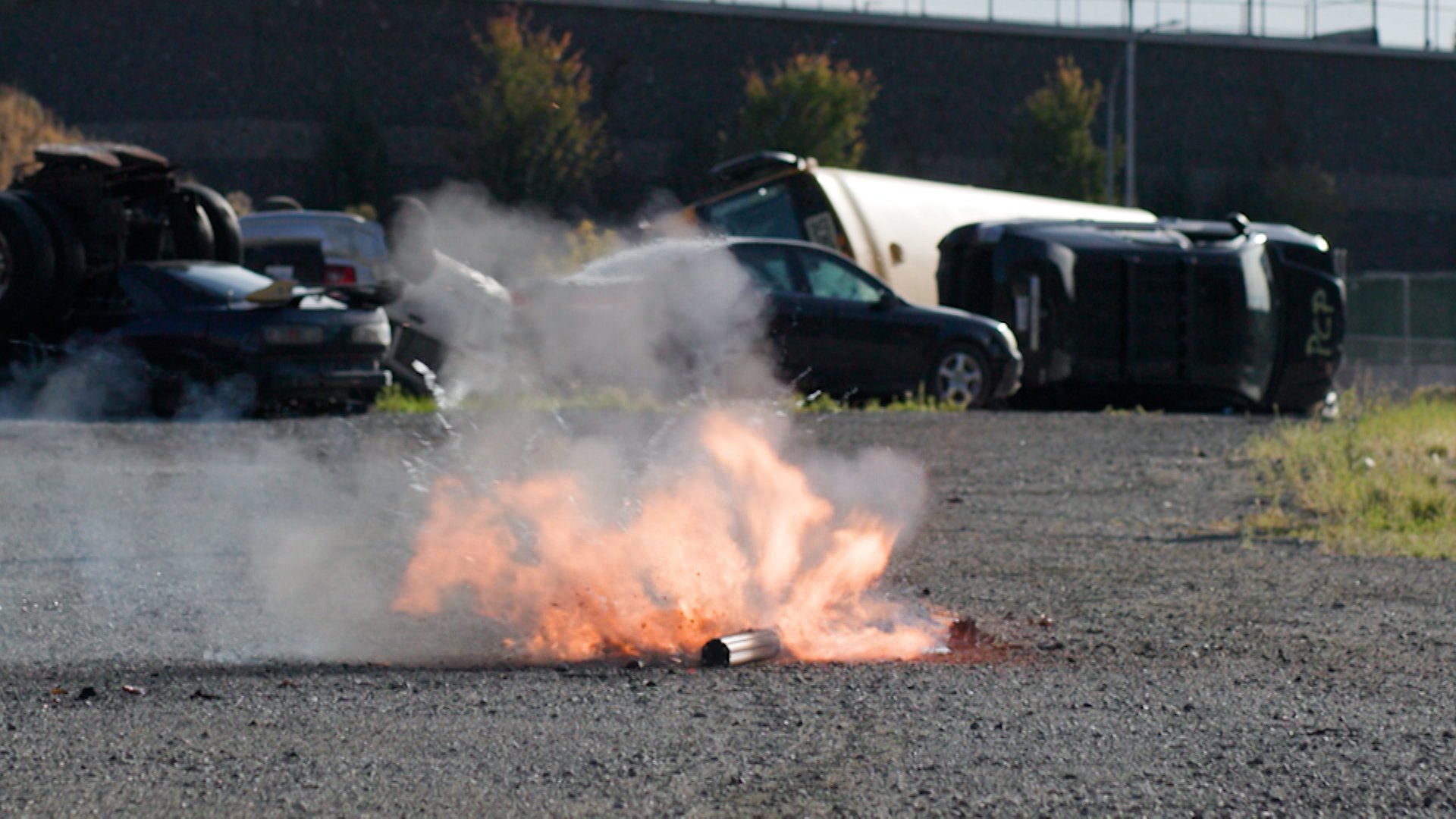
Screengrab from the exploding battery commercial shot by CFJC for Kamloops Fire Rescue. (Image Credit: Kent Simmonds/CFJC Today)
Lithium-Ion Batteries

‘Charge smart, charge safe’: KFR urging battery safety during National Fire Prevention Week

Oct 5, 2026 | 4:57 PM

KAMLOOPS — It is National Fire Prevention Week and Kamloops Fire Rescue (KFR) is once again warning about the dangers of lithium-ion batteries, in the hopes people ensure they’re charging their devices properly.


“People just need to charge smart, charge safe and be lithium-battery aware,” Josh Cowen, KFR’s life safety educator, told CFJC Today.

Lithium-ion batteries are everywhere, including in cameras, phones, laptops, gaming consoles, e-bikes and vehicles – and Cowen said if not properly cared for, a battery can overheat or explode, releasing toxic smoke and other chemicals.

“The more devices we have, the more fires we’re going to,” Cowen said. “Every year, Kamloops Fire Rescue is responding to more and more lithium battery-related fires. Going forward, people need to understand they’re dangerous, they need to use the right chargers for the devices, and the more education we do, the better.”

“We shot a commercial with CFJC where we overcharged a lithium battery and that battery and the e-bike exploded for like 10 minutes. The little single cells were flying 20, 30, 40 feet in the air, so it just shows how volatile it can be.”

Fire Prevention Week runs Oct. 4 to 10 and Cowen said this year’s theme is “Charge Into Fire Safety: Safe Charging Is a Superpower!”

He said safe charging includes using the right charger to charge devices on a hard surface like a table or desk and not on the bed or a couch. It also also means unplugging devices when fully charged, charging large devices outside, if possible, and stop all charging immediately if a device feels hot or if it starts to swell up.

“Last year’s theme was more or less the same and this year, the National Fire Protection Association is just pushing to ensure you charge you lithium batteries correctly,” Cowen said. “I think people are getting bit better, but I think the majority are a little bit unaware of the risks.”

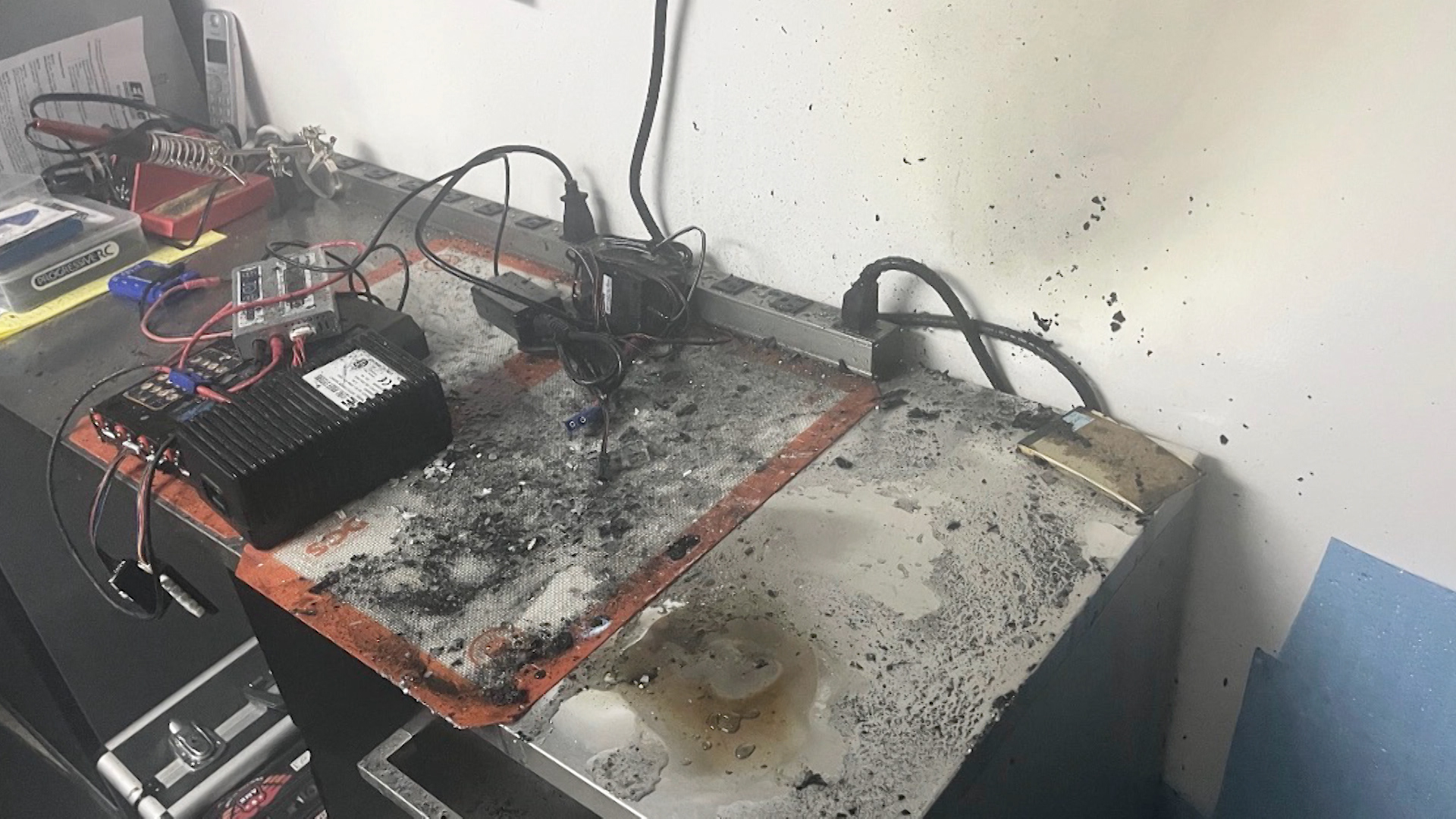
One notable incident in Kamloops took place this past March, when an RC plane battery exploded while charging. Cowen said proper safety precautions meant Roly Wolsfold did not lose his house.

“The one thing that saved that guy’s house was he was charging that on a stainless steel counter,” Cowen said. “If that had been on a bed or the floor with a bunch of cardboard around it, that would have created a big fire.”

Damage caused by a lithium battery that exploded at Roly Wolsfold's house in Kamloops in March.
Damage caused by a lithium battery that exploded at Roly Wolsfold’s house in Kamloops in March. (Image Credit: Kamloops Fire Rescue/Contributed)

Cowen said it’s also important to ensure lithium-ion batteries are properly disposed of, as he said improper disposal can also lead to fires in garbage trucks and at recycling facilities and landfills.

“[When] lithium batteries explode, they go into what’s called thermal runaway and what that is is a chemical chain reaction within that battery cell,” Cowen said. “Nothing can put that out [and] the best thing to do is to, unfortunately, let them burn. In our line of work, that is extremely difficult to do, especially if they’re up against a building or in an underground parkade.”

“It just shows the more education we do, the better, because people need to understand the risks.”