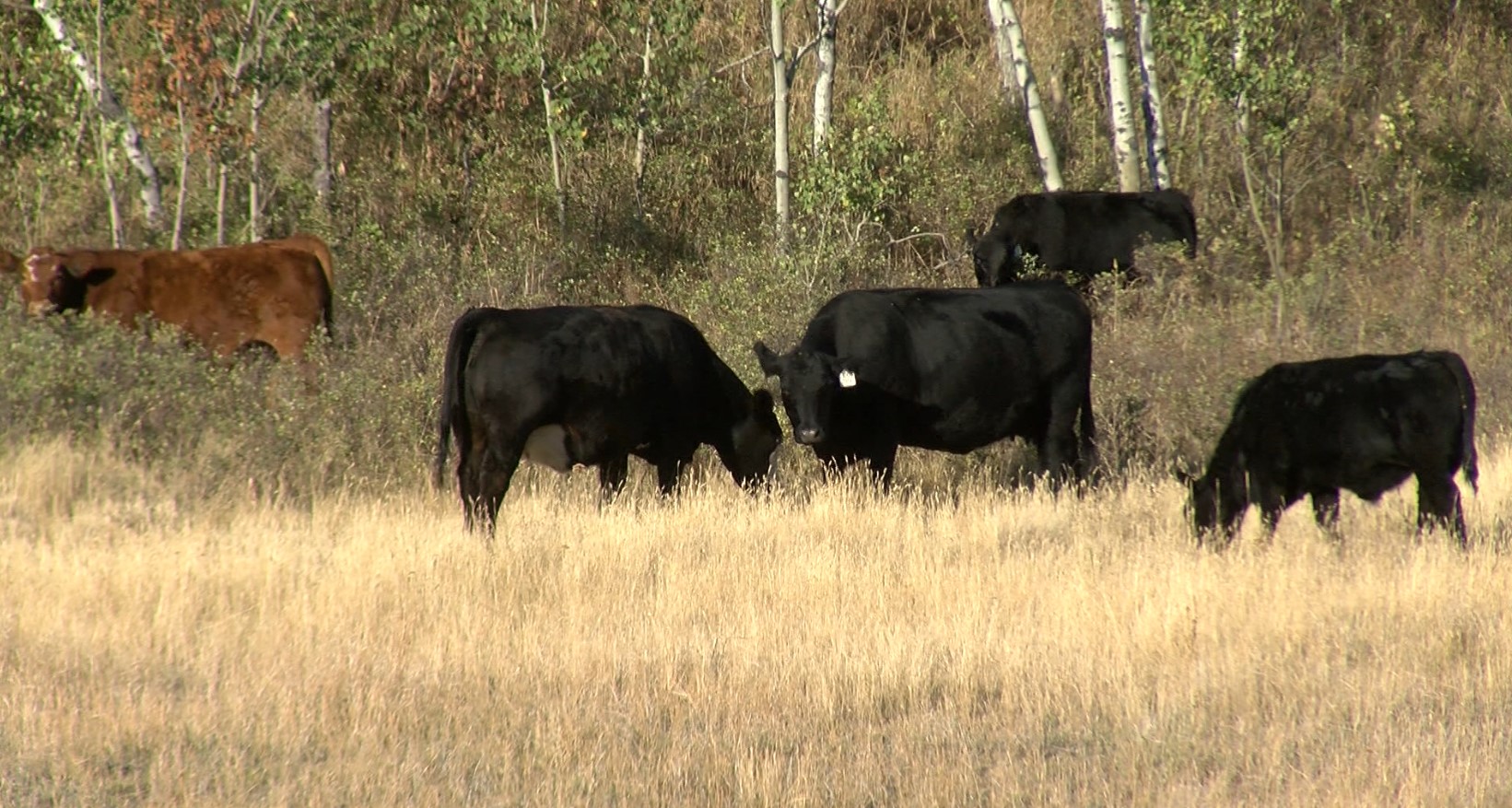
(Image Credit: Kent Simmonds/CFJC Today)
Ranching Woes

‘Like a dating site’: Ranchers in B.C. and Alberta partnering up to address feed shortages

Sep 17, 2026 | 5:12 PM

KAMLOOPS — Ranchers and livestock producers in British Columbia facing feed shortages and wildfire impacts are getting a helping ‘hoof’ thanks to a partnership between the B.C. Cattlemen’s Association and Alberta Beef Producers.


Calling it a case of those who have helping out those who don’t, Kevin Boon, the general manager of the BC Cattlemen’s Association, said it’ll ensure affected B.C. ranchers will be able to access feed through the cold winter months.

“It’s an industry where we help each other out wherever we can, and so I reached out to my counterpart in Alberta and said, ‘Look, you want to try and do something?’ and he said, ‘By all means. Let’s put it out there and see what we can do.'”

Enter the ‘hay’ line, where B.C. ranchers will be able to call 250-306-6277 or reach out via email to ask for help. They’ll be introduced to an Alberta rancher, and once that connection is made, it’ll be up to the pair to work out the details of their arrangement.

“We’re just a hay finder or a feed finder site,” Boon said. “It’s kind of like a dating site without the marriage.”

Help can arrive in one of three ways – feed is transported to B.C., cattle are moved to pasture in Alberta, or feedlot or drylot capacity is provided to animals that will need to spend the winter in Alberta.

“Sometimes it’s easier to move the cattle to the feed than the feed to the cattle,” Boon said. “They have an abundance in Alberta this year, and the cows need feed.”

This summer’s wildfires impacted hundreds of farms and ranches across central B.C., and areas of the Thompson-Nicola Regional District (TNRD) were no exception.

“We’re looking at probably in the neighbourhood of 6,000 to 7,000 heads of livestock moved just by the TNRD over the last few months,” Kevin Skrepnek, the TNRD’s emergency services manager and EOC director, said.

“Huge impacts to that sector in terms of the disruption of business, but also lost infrastructure, lost hay and feed supplies.”

Added Boon, “[Ranchers are] in a lot of stress and have a lot of questions to answer, and if can do just the smallest of things to help them get through, it really helps their situation.”

The impacts of this fire season are yet to be fully realized, but Boon said it’s expected to be between 800 and 900 kilometres of destroyed fencing on Crown land alone, as well hundreds of head of cattle lost and many more missing.

“We’ll find out and we’ll get a better tally here in the next couple months,” Boon said, noting the road to recovery will be different for everyone.

“We’re putting options out for them and if they want them, if they work for them, they’re able to take them. All we’re basically trying is to supply them with options to help them out.”