Cattle in pens at the BC Livestock Producers Co-operative location in Kamloops. (Image Credit: Kent Simmonds/CFJC Today)
Ranching Woes

Wildfire, drought seasons bring unique challenges for B.C.’s ranching community

Aug 6, 2026 | 5:41 PM

KAMLOOPS — Ranchers in British Columbia are enduring another harrowing summer, as they navigate this year’s wildfire season as well as lingering drought and water shortage issues.


Wildfires, like the Pear Lake fire in the South Cariboo, have forced ranchers to move thousands of head of cattle to safer pastures, both south toward Kamloops and Merritt and north toward Williams Lake.

“We’re seeing this year these fires being very volatile,” Kevin Boon, the general manager of the B.C. Cattlemen’s Association, told CFJC Today. “We saw the Pear Lake fire move extremely fast, same with Bradley Creek. Many of the fires are covering big ground so it’s imperative we’re ahead of it.”

“We know we’ll lose cattle. We know we’ve lost cattle. We know we’re missing cattle,” he added.

Moving cattle is not a new dilemma, but it’s one that’s becoming more frequent as fire seasons become more severe. Escape plans for cattle can vary based on the situation. The preference is to move herds on the ground, though Boon said they’ll be trucked to safety, if needed.

“Just because they’re not moved, doesn’t mean they’re not affected because while we might have them there, we might end up doubling the size of that herd by moving others in there with them,” Boon said. “It creates some real management issues.”

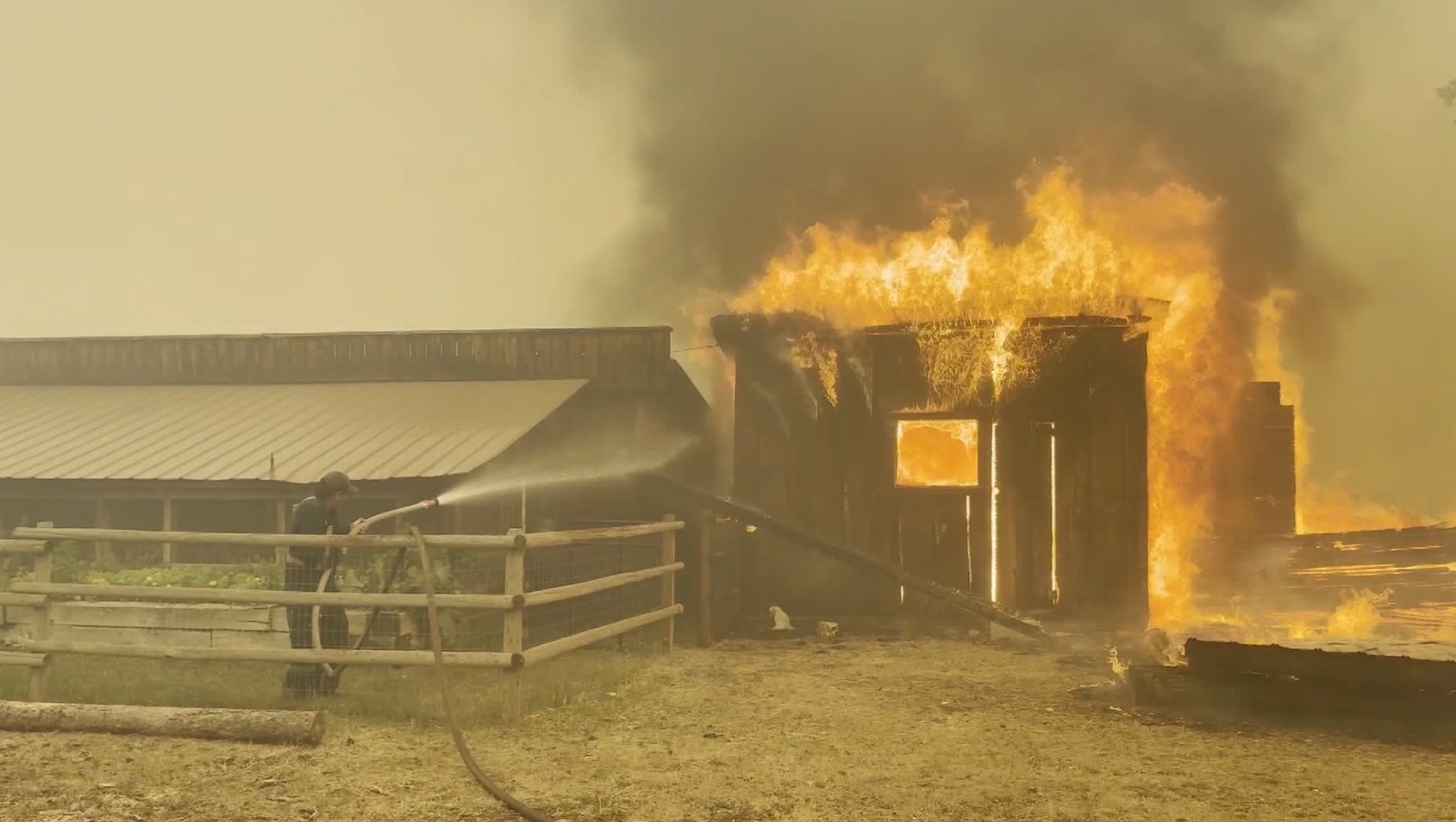
Work under to try and extinguish a fire at the Firefly Ranch in Clinton.
Work under to try and extinguish a fire at the Firefly Ranch in Clinton. (Image Credit: Global BC)

These severe fire seasons and other issues facing ranchers can be traced back to prolonged drought conditions across southern B.C. The B.C. Cattlemen’s Association has sounded the alarm before and they say provincial decisions – like the suspension of hundreds of water licenses to protect fish in the Salmon River watershed – while well-intentioned, don’t always help.

“It’s hard to justify losing a lot of infrastructure and putting people’s lives in danger for a couple hundred fish,” Boon noted. “I’m all for saving, I want to save every fish we can, but it’s at what cost?”

“These orders are targeted and designed to restore and protect critical streamflows as quickly as possible and they are only considered when voluntary conservation measures are not enough to prevent serious or irreversible harm to fish population,” Randene Neill, B.C.’s Minister of Water, Land and Resource Stewardship said during a Tuesday media availability.

While Boon admitted it was a “heavy, hard decision” for the minister to make, he’s hoping the province will amend those restrictions a little, given wildfires that are burning in the area.

“We really need to look at if there is an opportunity to utilize this irrigation not just to protect our food security but to protect our residents who live in these areas,” Boon said. “If we can get some water on that ground, it may not stop a fire, but it might give the firefighters a place to set up a fire line.”

Neill was in the Salmon River area earlier this week and learned of the moves being made by ranchers to improve water flows. While the B.C. Cattlemen’s Association remains optimistic, the province isn’t likely to budge from its decision because of “severe drought” in the Thompson-Okanagan.

“Every time we issue one of those orders, it is an absolute last resort,” Neill said. “We know these decisions bring serious impacts to farmers in the area and we are here to help.”

There are existing assistance programs in place, but Boon said the B.C. Cattlemen are in discussions with the provincial and federal governments on two separate relief programs for wildfires and for drought. Details, however, remain slim at this time.

He says the organization is also hoping for better watershed management so water can be stored in the spring and used during these drier summer months.

“At the end of the day, fires, drought – it’s all water,” Boon said. “We can’t control what comes out of the sky and so we’re doing everything we can to store water and move it. The more water we can get on the ground and the greener we can keep things, the better chance the firefighters have of actually managing the fires.”