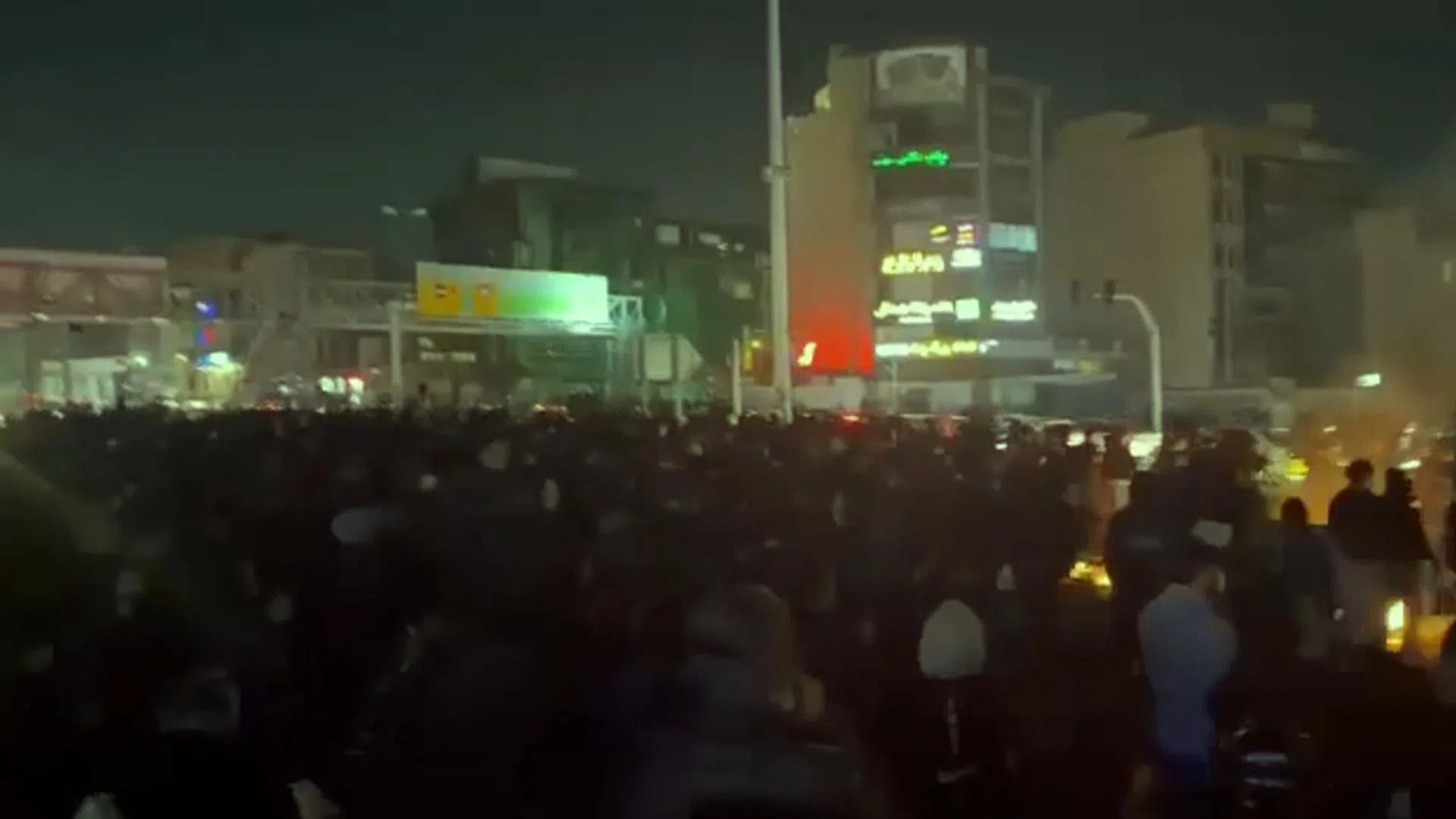
Iran protests (Image Credit: CNN)
IRAN REVOLUTION

Kamloops’ Iranian community in the dark as political unrest and calls for revolution intensify

Jan 12, 2026 | 5:48 PM

KAMLOOPS — Canada has joined a host of other nations — including Australia and members of the European Union — in condemning Iran for the killing and arresting of protestors. While the official statement from Canada speaks to 40 people killed by Iran’s security force, it’s believe that number is significantly higher and potentially in the thousands. 


The issue with firm details comes from the internet blackout in the country, which has seen both internet and telephone service disrupted for several days. That blackout means family in places like Kamloops have been left without contact to loved ones, as the political unrest and calls for a revolution intensify.

What began as protests into the cost of living, has swiftly changed into calls for revolution in Iran and the removal of the supreme leader.

“They know that soldiers and the regime are right in front of them, and they are using live ammunition, they are using guns. They might be killed,” said Mohammad, speaking to CFJC Today. “But they look back and see there is nothing for them if you go back — the cost of living, the inflation, everything — so they chose to go forward. It’s a gamble for them, they are gambling their lives.”

“It’s a revolution right now that is going on. It’s rising up,” said Nima. “At the beginning, it was just protest, but now it’s just developed to something more than that. This oppressive regime has been there for 47 years. That is why I’m here (in Canada).”

Nima joked that his family affectionately calls him a ‘momma’s boy’ as he often calls home daily before work. With blackouts throughout Iran, he’s not had any contact with family in days.

“No connection, no call,” Nima told CFJC News. “When I open like my WhatsApp, my Telegram, it’s says ‘last seen in a week’ and it’s so painful, I just want to cry. But I’m not alone. And people in Iran are getting killed in the streets, they are getting murdered and we are not alone. This is the least thing I can go through for them. They are going through much worse things.”

“Knowing there is nobody on the other side of the line, nobody answers and there are lots of things going on and they might not be okay, something might have happened to them — it’s pretty tough,” added Mohammad. 

Nima has watched the limited news escaping the blackout, the death and destruction but also the good — images of old Iranian flags replacing that of the current regime, videos of women burning their hijabs.

“This regime changed the flag completely from history, and of course, I feel this in my heart that there are some brave people out there to do that,” added Nima. “Such brave women, we’ve seen this a lot.”

“Seeing those pictures for somebody who is sitting outside the country, it gives you that pleasure that somebody is standing up for themselves,” added Mohammad. “But for them, for those people, it gets dark sometimes.”

Due to internet blackouts, uncertainty remains for how many have already lost their lives at the hands of the government. 

“An oppressing regime cannot survive, today, tomorrow, or in a year. [Revolution is] going to happen,” said Mohammad. “But seeing all those people being hurt, all those families. The pictures, the little video clips that are coming out… the pictures, the video clips are not good, are not promising. I don’t know how to feel. I know it’s going to happen, but at what cost?”

Ali recent moved to Canada from Iran where he witnessed the previous protests first hand.

“This time, it’s enough and you can see that. In Iran it’s not about hijab anymore, it’s not about food anymore, it’s not about air anymore — it’s about change. It’s about change,” said Ali. “The life that we used to have — not me, my parents, my grandparents — the life that they used to have compared to now, it is terrible. We want it back, we deserve to have that back.”

“I miss my parents, I miss my friends, I miss even the ones that I don’t know in Iran. But I’m sure that someday soon enough in the future this regime is going to go out and we are going to go back and we are going to hug them and we are going to win this war,” added Ali. 

The idea of revolution, of regime change, is nothing new for Iran. For Mohammad, there is trepidation mixed with hope that this time, things will finally turn. 

“I hope change happens this time, because it’s not going to stop, not going to stop,” said Mohammad. “It happened four years ago, 10 years ago, 15 years ago. It’s been happening and it is going to happen again, each time more intense and more people are being killed.”