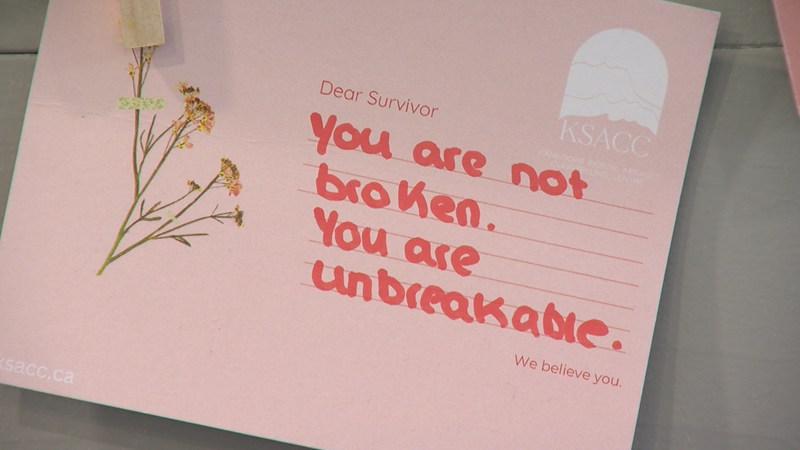
(Image Credit: Kent Simmonds/CFJC Today)
Funding Woes

‘Not good enough’: Kamloops sexual assault survivors, therapy providers lament long waits for counselling

Oct 28, 2026 | 11:26 AM

KAMLOOPS — Sexual assault survivors and therapy service providers in Kamloops are sounding the alarm about what is — at times — a two-year waitlist for counselling supports as demand is far outpacing resources.


Cheryl Latimer told CFJC Today she began reaching out for help a couple weeks ago when her sexual abuse trauma began to resurface. The Kamloops resident said she was shocked by what she discovered.

“While calling around to the local places that offer free therapy for survivors, we’re looking at a two-year wait list in Kamloops,” Latimer said. “That is not good enough. We need to do better.


“This is not on the organizations at all; they do as much as they can to help. When asking them what barriers they are facing in regards to quicker services, funding is the top and then a lack of acknowledgement that sexual abuse happens regularly.”

October is domestic violence awareness month. Latimer said it’s possible that realization, plus a combination of a heavy course load at Thompson Rivers University along with other high-profile stories of sexual assault and rape, are likely why she has been experiencing flashbacks to her nearly three-decade trauma in recent weeks.

“I was young and it was a protector that did these acts to me,” Latimer recalled, noting she was around 13 years old when it happened. “I blocked it out… but it was always put onto me that it was my issue and it was all in me. When I was in treatment for a drug addition in the beginning of 2023, I relieved it, and since then a few more memories have come back up.

“One thing that I learned when I ended up on the street and since then through the recovery journey is that if I would have had supports when I needed them, that would have saved me from falling. It definitely would have helped keep me on track.”

Alix Dolson, the agency coordinator at the Kamloops Sexual Assault Counselling Centre (KSACC), said while it is important to help survivors as quickly as possible, access to one-to-one services in Kamloops is “severely limited by funding.”

“What we’re seeing now is decades and decades of chronic underfunding of the anti-violence sector, and unfortunately, the people that have to deal with those consequences are survivors themselves,” Dolson lamented.

Dolson expects KSAAC would need to hire five full-time counsellors to help the 154 adults currently on the waitlist in Kamloops. She said while KSACC has been able to serve 132 adults and 50 children and youth in Kamloops, there are another 18 people also on a waitlist in Chase.

“At some point, in many people’s lifetimes, they will experience sexualized violence and its important that those response services react appropriately and immediately because those positive responses in the aftermath of trauma are what reduces further harm down the road,” Dolson said.

KSACC is triaging people based on severity and offering other supports where possible, so survivors aren’t left to fend for themselves.

“Because trauma is unique to each person and the healing trajectory is unique to each person, some people require fairly short-term services and some people require longer-term services,” Dolson added.

Both KSACC and Latimer are hoping the incoming provincial government will commit to ending gender-based and sexualized violence, and that those commitments will come with proper funding.

“All I see around is that Conservatives are famous for pulling back supports, but I really would love for them to prove everybody wrong and maybe help a little bit more, because our services are just not where they need to be,” Latimer said.

“Historically changes in government have been devastating for the anti-violence sector,” added Dolson. “We saw that two decades ago with the change in government and we’re still clawing our way back from the reduction in services that resulted then.”

“These changes in government, reduction in funding, changes in the economy, the people are impacted the most are the ones that are already most vulnerable.”