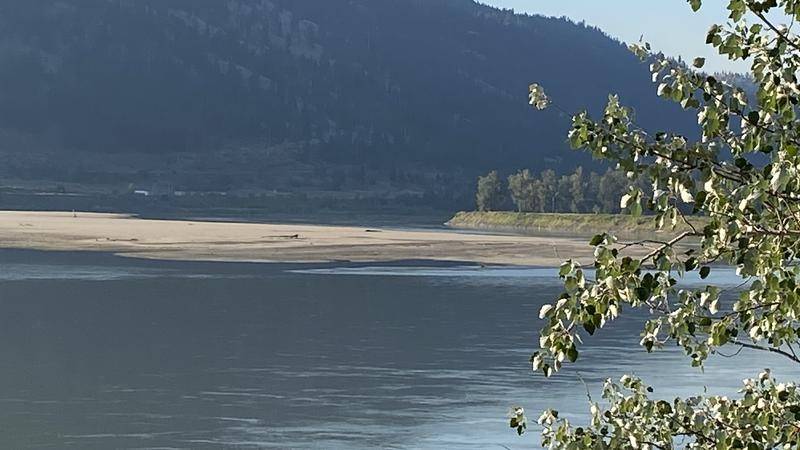
Image Credit: Mel Rothenburger
Armchair Mayor

ROTHENBURGER: With all that water flowing by, do we really need drought restrictions?

Aug 19, 2023 | 8:27 AM

IT’S THE FISH. That’s the answer if you’ve been skeptical about the value of water bans during the drought.

We can be forgiven for asking about it — the rivers are certainly low but they don’t look like they’re going to go dry any time soon. After all, the North and South Thompson aren’t the Colorado, which regularly runs dry by the time it reaches the ocean. That particularly river system has been in a severe drought for 23 years.

Sometimes these water restrictions sound more like a big PR game than a necessity. When the City started talking about possible water restrictions a few weeks ago it didn’t properly explain the rationale. It simply said the drought was getting worse and, therefore, a clampdown on water usage might be necessary.

Kamloops residents are among the highest consumers of domestic water in the country but that’s an issue for infrastructure; the river level is scarcely affected by it. They point out they use a fraction of a percentage of the river flow and taps in the city aren’t going to run dry.

So, in fact, the lawns of Kamloops could quite easily be kept green without anyone being short of water.

But that doesn’t mean the drought isn’t a serious problem. The fish issue is a real thing. Jason Hwang of the Pacific Salmon Foundation said in a media interview the drought causes two big issues for salmon. One is that lower water flows can cause the fish to become stranded and create migration problems. The other is that the drought and the low river levels elevate water temperatures that stress the biology of the salmon.

The North Thompson River — that’s the one that flows right past my house — is five degrees warmer than normal, according to Hwang. It should be in the 13-14 degree range but right now it’s about 19. And I can tell you the river is extremely low for this time of year.

If the salmon have trouble, then so will the grizzlies and orcas that depend on them for food.

A drought report on this week’s City council agenda received scant media attention due to all the focus on the Noble Creek Irrigation System controversy and a couple of other issues, but utility services manager Greg Wightman had some important things to say.

Both the North and South Thompson Rivers are the lowest they’ve ever been for this time of year, at least since records started being kept in 1911. The South Thompson has hit 23 degrees, Wightman said, and that’s extremely harmful to fish.

“The biggest concern right now is the environment,” he told council. “It’s the most extreme drought that we have seen.”

He pointed out that water restrictions aren’t a local decision — it was the provincial government that decided our area is in drought level five, the highest on the scale. Kamloops is simply trying to cooperate with directions from the province.

Several members of council have been echoing that fact, sounding as though they don’t want to take the heat for the water restrictions but, since it’s such a big issue, they should be talking about how they agree with the province rather than trying to deflect.

Maybe it’s all the phone calls they’ve been getting from people who don’t like having to conserve on water. “We’re getting a ton of calls,” Wightman said. People wonder why, for example, they can’t continue with their drip irrigation systems, which are a very efficient way to water. (That question will be reviewed next week, he said.)

Despite those who question the need for restrictions, people are stepping up. In the first week since restrictions took effect, water usage has already dropped by 13 percent. The provincial government wanted Kamloops to shoot for a 30 to 50 per cent reduction, a target Wightman said isn’t practical for Kamloops. So, the local target has been set at 25 percent, which is attainable based on early results.

If residents exceed that objective, restrictions might be relaxed. If they fall short, restrictions might need to be beefed up.

So the drought is real despite all that water flowing past. All the small conservation measures add up. (However, don’t worry about whether there will be enough water to fight the fires. That’s not a problem.)

“The concern right now is not the South and North Thompson rivers going dry,” Wightman reiterated. “The concern is conserving every drop of water we can for the environment….”

Mel Rothenburger is a regular contributor to CFJC Today, publishes the ArmchairMayor.ca opinion website, and is a recipient of the Jack Webster Foundation Lifetime Achievement Award. He has served as mayor of Kamloops, school board chair and TNRD director, and is a retired daily newspaper editor. He can be reached at mrothenburger@armchairmayor.ca.

Editor’s Note: This opinion piece reflects the views of its author, and does not necessarily represent the views of CFJC Today or Pattison Media.