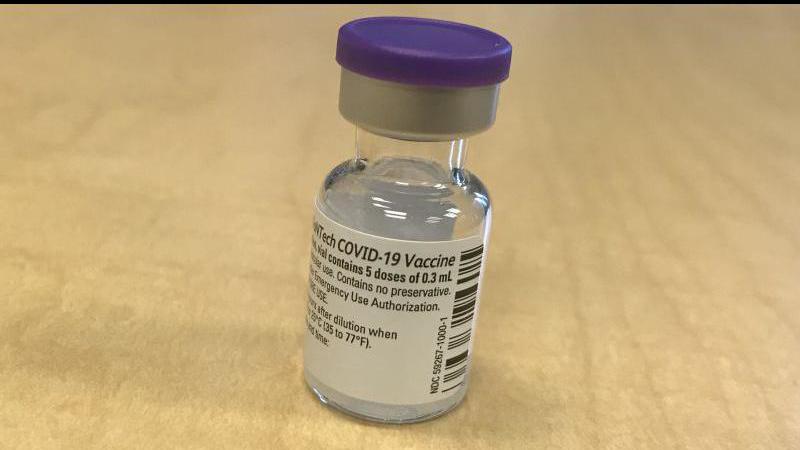
File Photo (Image Credit: CFJC Today)
COVID-19

British Columbians eligible for COVID-19 booster 6 to 8 months following the second dose

Oct 26, 2021 | 1:42 PM

VICTORIA — British Columbia has announced a plan to provide COVID-19 booster shots for anyone who wants one six to eight months following their second dose.

The program will start with those with waning protection from their first doses and those more likely to end up in hospital.

The timing will be determined based on risk and British Columbians will be contacted when they are eligible to book a third dose.

Those over the age of 70 should expect to get a third dose before the end of the year, the province said. Health-care workers, long-term care residents and clinical extremely vulnerable people with immune issues are part of the first phase of boosters.

Indigenous populations will also be part of the first group of booster shots with an all-community approach.

Those who received AstraZeneca as a first or second dose will be offered an mRNA as their booster.

“Our strategy has always been to watch what is happening and adapt,” B.C. provincial health officer Dr. Bonnie Henry said Tuesday.

Starting in the new year, booster shots will be aimed towards clinically extremely vulnerable people that are non-immunosuppressed. The group will also continue with health care workers in acute care and community centres as well as the remaining eligible population based on the six to eight-month gap between second and third doses.

The healthy population of the province should expect an eight-week gap.

There will be community-based clinics where vaccines will be available.

Pharmacies will also be used to help provide booster doses. The booking system will be connected through the province’s Get Vaccinated system.

“We don’t have pharmacies in every community, but we have them in most communities and will complement the work we are doing,” vaccine program lead Dr. Penny Ballem said.

The province is waiting on international studies about the effectiveness of the booster vaccine.

British Columbia will still be defining fully immunized as anyone who has received two or more shots.

“I absolutely recommend (a booster shot), especially for those populations we are focused on. We are seeing breakthrough (cases) through older populations and younger people in populations where we are seeing a higher spread of COVID,” Henry said.

“It will be optional for most of us in the new year. It will give us more durable protection. Right now I don’t have enough information to say it will be necessary to all of us.”

The province is planning to be vaccinating children at the same time as the booster shots. It is still not known when Health Canada will approve a COVID-19 vaccine for those ages five to 11.

For children, community clinics, schools and pharmacies will be used.

Those who have received an mRNA vaccine as either shot one or two will be able to get Moderna or Pfizer as a third shot.

There will be no drop-in clinics anymore for second, third and booster shots.

Data from the province shows the second dose has been more effective when the gap from the first dose was longer than six weeks.

“We moved early to extend the gap between first and second doses and that has benefitted us,” Henry said.

“That is different than what we are seeing in other jurisdictions, like Israel and the United States, where they rigidly stuck to the manufacturer interval.”

Long-term care boosters have been done earlier in Ontario and Alberta due to the shorter gap between first and second.

Ninety per cent of eligible British Columbians have now received their first dose of a COVID vaccine.

However, 20 people with COVID-19 died in British Columbia over the weekend, health officials said Monday, and 1,618 new cases of the disease have been reported.

There were 613 cases from Friday to Saturday while 529 cases were reported from Saturday to Sunday, and 476 from Sunday to Monday.

Of the new cases, 699 were in the Fraser Health region, 190 were in Vancouver Coastal Health, 254 were in the Interior Health region, 186 were in Island Health, and 289 were in Northern Health.

The number of people in hospital with the disease rose slightly to 366. Of those, 149 patients are in intensive care, an increase of seven from Friday.