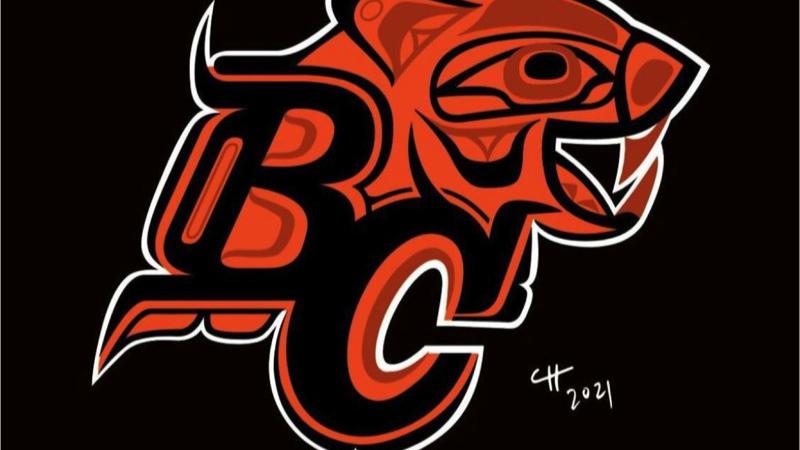
Indigenous artist Corrine Hunt transformed the BC Lions logo into a stylized rendition for the Orange Shirt Game Day (Image Credit: BC Lions)
Reconciliation

B.C. Lions to mark National Day for Truth and Reconciliation at Sept. 24 game

Sep 16, 2021 | 2:44 PM

VANCOUVER — The B.C. Lions are trying to raise awareness about the first National Day for Truth and Reconciliation on Sept. 30.

The CFL team’s vice-president, George Chayka, says players will wear orange tape when they face the Saskatchewan Roughriders in Vancouver at their game on Sept. 24.

He says the Roughriders will also wear orange tape to raise awareness ahead of the day established to honour survivors of Canada’s residential school system.

The Lions are providing 350 tickets to survivors and their families to attend the game.

Chayka says the team is also making a $20,000 donation to the Orange Shirt Society, which was launched by survivor Phyllis Webstad in Williams Lake, B.C., in 2013.

Chayka says the team has commissioned a special orange T-shirt for the game with an Indigenous rendition of the B.C. Lions logo designed by Corinne Hunt, who co-created the medals for the 2010 Vancouver Olympic Games.

Tk’emlups te Secwepemc Kukpi7 Rosanne Casimir was present at Thursday’s announcement.

On May 27, Casimir announced that ground-penetrating radar had confirmed the presence of 215 unmarked graves near the former Kamloops Indian Residential School.

“We are all here today in honour of… the missing children who may have experienced unthinkable circumstances leading to their deaths and whose remains were placed in unmarked graves,” Casimir said. “We are here today to support each other in mapping that path forward.

“This truly is a unique way that we stand here together to not only acknowledge but stand in solidarity to bring awareness to Orange Shirt Day, residential school survivors and the National Day for Truth and Reconciliation.”

Casimir says the Tk’emlups announcement has touched off a series of similar announcements from First Nations across Canada and has changed the way many view history and the relationship with Indigenous people.

“For the first time, so many of our First Nations are sharing statements like, ‘They’re actually listening to me,’ ‘They actually want to know,’ ‘They sat and they listened to me,’ ‘They want to hear my story,’ ‘People are looking at me differently,'” she said.