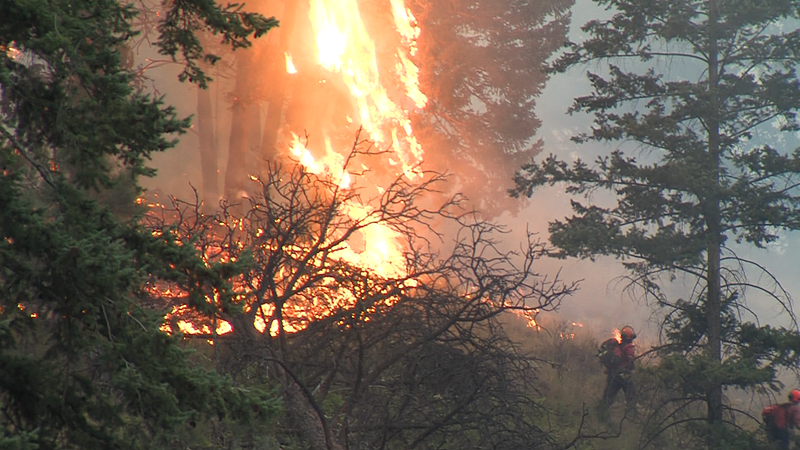
File Photo (Image Credit: CFJC Today)
Wildfire Picture

Open burning allowed, controlled burns planned for Cariboo Fire Centre

Sep 30, 2020 | 12:08 PM

WILLIAMS LAKE, B.C. – Category two and three open fires will once again be allowed throughout the Cariboo Fire Centre (CFC).

The fires will be allowed starting September 30th at noon, as the CFC has seen favourable weather conditions and a decreased wildfire risk in the region.

“Local governments may still have their own burning restrictions in place, so people should always check with local authorities before lighting any fire of any size.”

The BCWS says the following activities will be permitted:

Category 2 open burning:

  • the burning of stubble or grass over an area less than 0.2 hectares
  • one or two concurrently burning piles no larger than two metres high by three metres wide
  • the use of sky lanterns
  • the use of tiki torches and chimineas
  • the use of fireworks, including firecrackers
  • the use of burn barrels or burning cages of any size or description
  • the use of binary exploding targets (e.g. for target practice)
  • the use of air curtain burners (forced-air burning systems)

Category 3 open burning:

  • any fire larger than two metres high by three metres wide
  • three or more consecutively burning piles no larger than two metres high by three metres wide
  • one or more burning windrows
  • burning stubble or grass over an area greater than 0.2 hectares

Those looking at burning a Category 3 open fire has to have a burn registration number, which can be obtained by calling 1 888 797-1717.

Meantime, crews with the BC Wildfire Service (BCWS) will assist in two ecosystem restoration burns in the Cariboo Fire Centre over the next few weeks.

The burns will be managed by the Ministry of Forests, Lands, Natural Resource Operations and Rural Development BC Wildfire Service Ecosystem Restoration Program and could begin as early as Oct.1, through Oct.16. The BCWS says that smoke may be visible from nearby communities and Highway 20.

Burns will be weather dependent and will only be conducted when weather conditions are suitable.

The Eniyud Community Forest ecosystem restoration burn will cover close to 147 hectares of land, approximately 15 km northwest of the community of Tatla Lake. The goals of the burn include: mitigating wildfire risks by reducing accumulations of forest fuels; removing damaging lodgepole pine dwarf mistletoe plants; preparing the site for restoration; and supporting the establishment of a new, healthy stand of young trees.

“The lodgepole pine dwarf mistletoe (Arceuthobium americanum) is a naturally occurring parasitic plant that lives in these trees. It impairs an infested tree’s growth and causes deformities, which limits its use in the manufacture of forest products.”

The Joes Lake ecosystem restoration burn will cover almost 159 hectares, 4 km southeast of Alkali. The goal of this burn is to reduce accumulations of fine fuels. The BCWS says that if this site is not treated using prescribed fire, any wildfire that did occur could produce a crown fire, making it difficult to extinguish. This burn will be completed in partnership with Alkali Resource Management, the Community of Alkali, and the Es’ketemc people.

The BCWS adds that fire is a “normal, natural process in many British Columbia ecosystems.”

“Historically, lodgepole pine forests are regenerated when fire eliminates existing stands of these trees. Apart from a fire eradicating lodgepole pine dwarf mistletoe plants, the heat releases seeds from cones so a new forest can grow.”

A prescribed fire is an intentionally ignited fire that is planned and managed by a certified burn boss. The burn boss is responsible for ensuring that the initial burn conditions are favorable and that the fires are extinguished once the prescribed burns are completed. To report a wildfire, unattended campfire or open burning violation, call 1 800 663-5555 tollfree or *5555 on a cellphone.