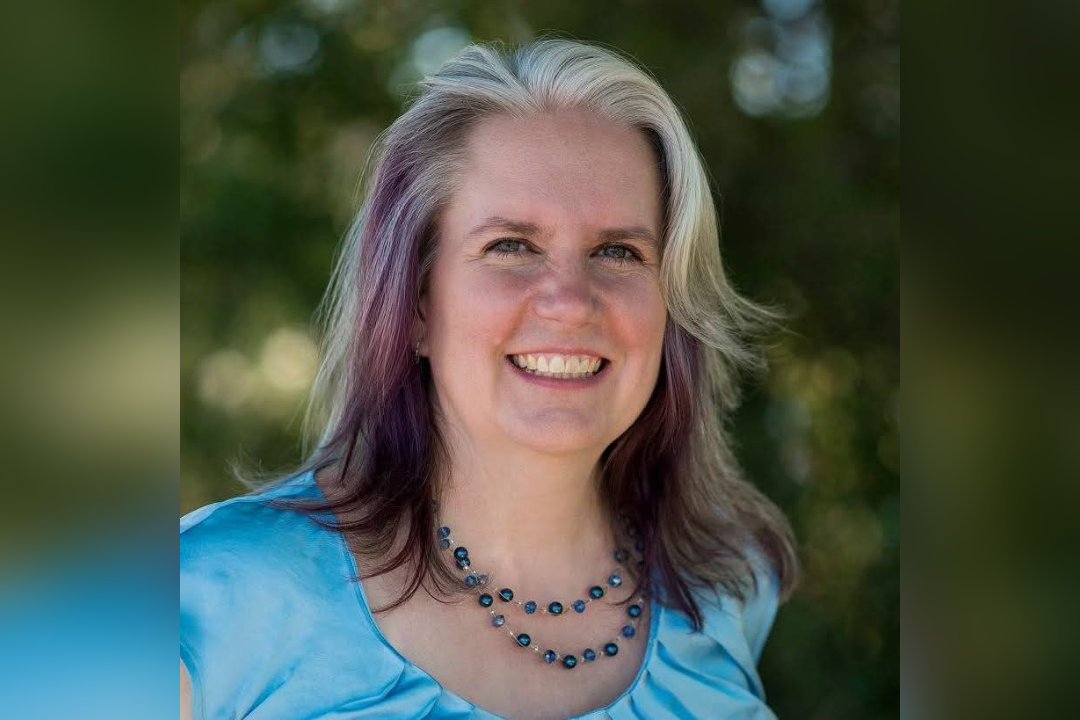
(Image Credit: Kathleen Karpuk / Contributed)
Candidate Profile

CANDIDATE PROFILE: Kathleen Karpuk

Oct 9, 2026 | 12:02 PM

Ahead of the Oct. 17 local election, CFJC Today asked candidates for Kamloops-Thompson School District trustee to complete a questionnaire, offering voters the chance to evaluate their candidacies.  

QUESTIONNAIRE: 

Describe yourself, your professional background, and why you’re running for a seat on the School District No. 73 board of education?

I am an accountant and I work in Financial Planning. I have experience in several different sectors including forestry, agriculture, and healthcare. I have volunteered as a 4-H Leader, a swimming official, through Rotary, and on several different volunteer boards. I have been active at the provincial level as Vice President of the Okanagan Branch of the BC School Trustees Association (BCSTA) and committees such as the BCSTA Working Capital group who wrote an in depth analysis on why the Ministry of Education needed to invest more in maintaining and building schools, the BCSTA Finance and Audit committee and as a BCSTA Provincial Councilor.

I grew up in a remote rural community and experienced first hand the barriers that rural students experience and have to overcome in order to achieve at the same levels as their urban counterparts. I watched my indigenous classmates struggle with the additional barriers associated with their parents and grandparents surviving residential school and the cascade of effects of trauma on their communities.

Much of my focus as a trustee has been working to understand and dismantle the barriers that prevent students from being able to achieve their potential. 

What do you think is the biggest issue facing the SD73 and how would you use your elected position to address it?

The biggest issue facing the school district is lack of stable and sustainable funding. A lack of resources, or resources that can only be used for certain focused areas, does not enable the district to meet the ever expanding expectations being placed on schools.

Schools are no longer just responsible for academics, they are now responsible for mental health, physical literacy, computer literacy, social responsibility, child care, food programs, with additional expectations to teach fiscal literacy, internet safety, use of artificial intelligence and other skills.

Yet resources have not increased to meet these additional demands, or if they are, are time limited with the province removing the funding once the programs have been established.

With rising rates of students identified with disabilities or other diagnoses, classroom complexity has increased, but we still expect one classroom teacher to be able to address all the needs of every student in their room. The level of expectation of the services that schools deliver is not sustainable in the current model.

What do you think is the biggest issue facing students and how would you address it?

I think the biggest issues facing students depends on their age group. For younger students, we’re seeing the impact of increased screen time. That affects their physical literacy, their ability to focus and some of the necessary precursor skills for reading and math. For older students, the impacts of social media, ever increasing negative news and a general sense that the world is becoming a worse place is resulting in increased anxiety and depression. All of these affect student academic performance and over all well being. 

As a trustee, I would focus on making sure that younger students get the necessary building blocks for being able to read and do math. As a district we’ve already been working on this through supporting ‘Read with me’ programs and putting resources in place to support teachers and parents. For math,  we’ve had a group of teachers reverse engineering the math curriculum to identify key numeracy skills for each grade level and to collect and develop teaching strategies so that they can be shared with other teachers. 

For older students, teaching good mental health strategies and techniques is important. We have been bringing in speakers and other professionals to present to students on how to look after their mental well being and I would continue that.  I would also like to increase the number of mental health professionals within the school district. 

What are your thoughts on communication between SD73, its schools and the region’s residents? As a trustee, would you speak to your votes and decisions on the record?

The ability to communicate has become very fractured and challenging with the decrease in print media and the proliferation of social media platforms. Where there once was a few platforms that reached a large number of people, now there are many platforms that reach smaller numbers of people. Different demographics want communication through different channels, and it is challenging to craft consistent messaging across all of those platforms.

My goal would be to ensure that our district website is always up to date (which requires resources) as well as providing support for all of the school websites to remain up to date. The district has a social media presence, which again requires dedicated resourcing to provide timely updates and information to parents, students and community.

Having a full time communication person enables consistent and clear messages rather than depending on many people trying to manage communications off the side of their desk while dealing with complex challenges.

Following a term highlighted by allegations of bullying and harassment by its former superintendent and a $2.2 million budget shortfall, how would you use your position to bring stability to the school district?

Stability is directly related to having a solid foundation both financially and through long term planning. Having sufficient reserves to buffer unexpected financial events such as a drop in student enrollment due to federal limitations on immigration, tariffs due to a trade war or rapid increases in fuel costs due to wars in Ukraine and Iran helps prevent having to make sudden and severe budget cuts.

Having a long term plan that lays out the goals, expectations and priority for the district ensures that programs are prioritized towards student learning and reduces the temptation to introduce multiple different programs without having the support and resourcing needed to ensure they are effective.

There is often a push to use the latest and greatest new thing to solve a problem without addressing the underlying issues causing the problem to begin with. Having a solid strategic plan that looks at what system changes are needed rather than throwing a patch over the problem prevents spending on program packages that are then left unused after the initial enthusiasm dies out.

Having thorough and thoughtful policies and procedures also leads to stability, as expectations around behaviour are understood and consistent treatment is extended to all staff, students and parents. 

Why should residents give you their vote?

Residents should give me their vote because I have a solid track record of showing up for meetings, doing the work of a trustee, going above and beyond through my work provincially and being able to provide perspective of historical decisions.

I have demonstrated a willingness to listen, re-evaluate my ideas and positions and to advocate for issues affecting our communities, students and staff. I bring perspective from a wide variety of disciplines and fields that lets me examine problems from multiple frames of view. I actively participate in asking questions, challenging assumptions and engaging in debate at the board table.