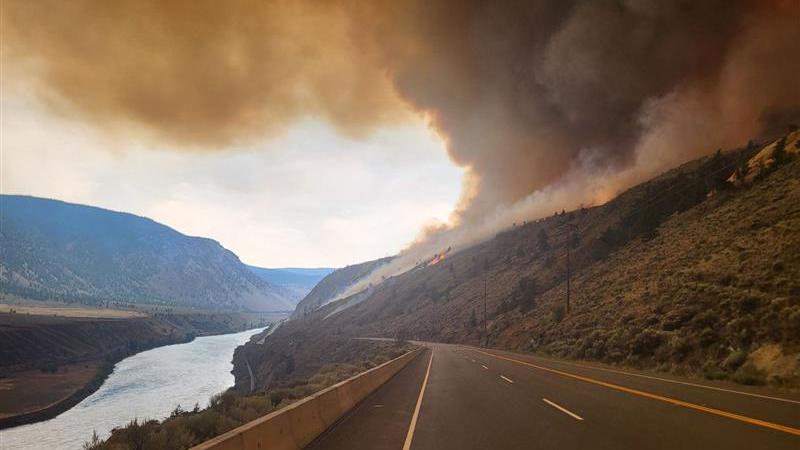
Food insecurity, mental health impacts challenge rural B.C. communities during wildfires: report
-
Share on Facebook
-
Share on Bluesky
-
Share on X
- Copy Link
KAMLOOPS — A new report suggests that threats to health, life and security posed by wildfire risks are not experienced equally.
According to B.C.’s Office of the Human Rights Commissioner, the wildfire threats are influenced by pre-existing inequalities such as age, disability, geography, Indigeneity, income and whether one lives in a remote or rural community.
In the 30-page report released Tuesday (Sept. 15), the human rights commissioner says residents living in rural and remote communities experience wildfires five times more often than urban populations. The report says rural residents typically face greater challenges when it comes to evacuation, preparedness and recovery as their communities are located near forests and natural environment areas.
“These locations are where wildfires most commonly occur,” the report says. “In addition, threats posed by wildfires can have particularly catastrophic economic outcomes for these communities – many of which are rooted in resource extraction and agriculture – since economic and intergenerational stability is often tied to land based assets such as timber, farmland, livestock and multi-generational properties.


