A Conair RJ85 airtanker on the tarmac at Kamloops Airport with a Cessna Caravan birddog in the background on May 27, 2026. (Image Credit: Kent Simmonds/CFJC Today)
BC Wildfire Service

Kamloops-based aerial firefighters staying sharp as hot summer weather approaches

May 27, 2026 | 5:41 PM

KAMLOOPS — The B.C. Wildfire Service has relocated some of its fleet of firefighting planes to Kamloops Airport, and pilots are making sure they’re trained and ready to go when the call comes.


Anthony Ussher is going into his 24th year as an aerial firefighter in B.C. and while it’s quiet right now, he’s making sure his RJ85 airtanker is ready to deploy at a moment’s notice.

“May is always unpredictable. The start is always unpredictable – sometimes you hit the ground running,” Ussher told CFJC Today. “On our first day here we did our practice and then worked fires for our first four days.”

Last year, the fleet was deployed on a two-week stretch to Saskatchewan near the end of May, but there haven’t been any out-of-province deployments so far this year.

“I would say we’re angling toward a higher-than-average fire season coming up just based on the preceding years, is what I feel,” Ussher added.

RJ85s can drop more than 11,000 litres of retardant to help slow the spread of fires. Their work is supplemented by a fleet of skimmers that make rapid water drops to reduce fire intensity so ground crews can get close to the flames.

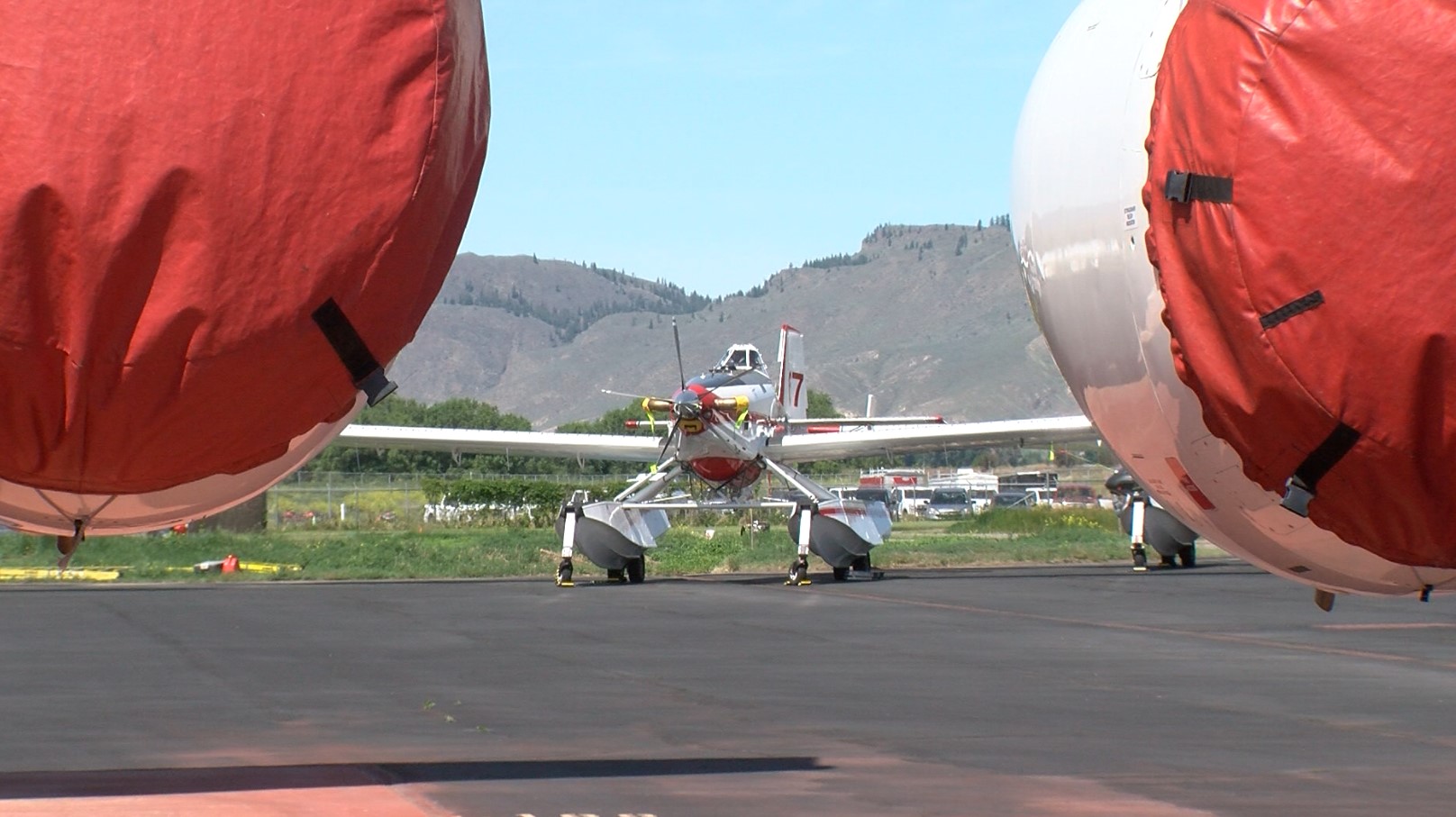
Praeman Pillay is preparing for his fourth wildfire season and when he’s not on the ground, you’ll find him in the cockpit of an Air Tractor AT-802F ‘Fire Boss’ skimmer.

“If there is a water source close by, [that’s] usually when we’ll get sent to these areas,” he said. “We’ll go in and if it’s close enough, we can just circle very rapidly and continue dumping on the fire and add quite a bit of water to it.”

As the season is off to a slower start this year, pilots train every seven days to keep their skills sharp, so don’t be alarmed if you see these planes in the sky.

“Practice closely resembles a regular fire dispatch as we can right from the point where it comes to our phone just like a regular dispatch,” Ussher said. “The only thing that changes is there is no smoke when we get out there, but the tempo, the pace and the tactics are all the same as if we’re working a real fire.”

It’s not just practicing maneuvers in the sky. Pilots also have to make sure they’re in tune with their planes as technology keeps adapting.

“A lot of guys will come in and just nest in their planes and make sure everything is in the particular spot they want it,” Pillay added. “There’s a lot of new parts to planes nowadays and you don’t really know the capabilities of all the GPS units, so you can play with those for a little while.”


An Air Tractor AT-802F “Fire Boss” skimmer on the tarmac at Kamloops Airport on May 27, 2026. (Image Credit: Kent Simmonds/CFJC Today)

This week, the federal government announced plans for a new national aerial firefighting fleet to help provinces and territories respond to the 2026 wildfire season. The planes have been leased by the Canadian Interagency Forest Fire Centre (CIFFC) thanks to $317 million in funding over five years.

It’s welcome news here in B.C. as the fleet of 10 aircraft and two unspecified support assets will increase capacity during periods of intense wildfire activity.

“We’ve had seasons where we’ve exported a lot of crews – aviation resources, structure protecting resources, but we only do that when we can manage with the staff not being here at home,” BC Wildfire Service information officer Jean Strong said.

“It is nice to have that extra capacity to take a little bit of the pressure off of that inter-agency balancing out of resources that we’ve seen over the last few years.”

While that national fleet of planes may eventually find itself in Kamloops while on deployment to B.C., this province will station two Conair RJ85s, six skimmers and two bird dogs at Fulton Field for the next several months. Just how often those planes are called into service though remains to be seen.

“Sitting around doing nothing on the quiet days is not great but we’re paid for the part where we’re out there working interface fires,” Ussher said. “Personally, I like getting on the fires where there’s nobody around but its big merchantable timber, so you know you’re putting in good value for the taxpayer.”

“I’m getting more and more comfortable in the role,” Pillay added. “In the beginning, it’s a lot of information coming at you but as you get more and more comfortable with the situation, you can really help do a better job.”

Strong also urged personal preparation, noting the province is bound to see wildfires this summer. She said it’s a good time to make sure everything is in order now, not when evacuation orders and alerts are imminent.

“It’s hard to predict what might come from a season especially as we’re looking at those longer-term forecasts,” Strong said. “We’d really like to see a lot of rain in June, which is unfortunate for people who like to go camping, but we’ll have to see what the weather has in store for us.”