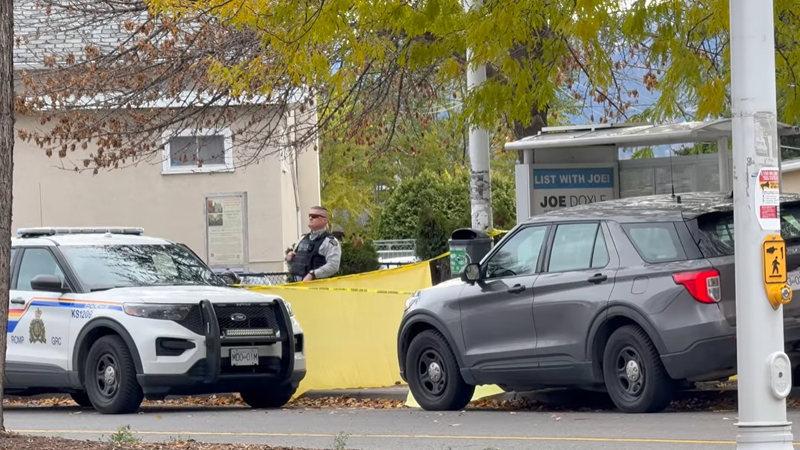
RCMP officers on scene on the 100-block of Tranquille Road early Sunday, Oct. 27. (Image Credit: Contributed)
Fatal Overdose

Kamloops North Shore BIA reiterates call for changes after fatal overdose on Tranquille Road

Oct 27, 2025 | 4:15 PM

KAMLOOPS — The North Shore Business Improvement Association (NSBIA) is reiterating its call for a community interface management approach to the ongoing toxic drug crisis after another overdose death early Sunday (Oct. 26) morning.

Their latest call comes after a person died of an overdose near a bus stop on the 100-block of Tranquille Road, just 100 feet from the officers of the NSBIA.

NSBIA Executive Director Jeremy Heighton said it’s a “needless and heartbreaking” reminder that demonstrates the need for a more coordinated, street-level approach to care.

In a statement, Heighton said the community interface management model will connect people in crisis with consistent support and that it would bring “compassion, consistency and accountability to the front lines.”

“So far this year, at least 39 people in Kamloops have lost their lives to unregulated drug toxicity… Thirty-nine families forever changed,” Heighton said. “Each of those lives represents a missed opportunity to connect someone to care.”

“These tragedies will continue unless we move beyond fragmented responses and build a coordinated, real-time system that meets people where they are.”

Heighton, who is also serving as president of the Business Improvement Associations of BC, said the NSBIA has been calling on municipal, provincial and federal partners to implement the community interface management approach to the crisis since 2018.

He noted it was born out of years of observation and data as well as the “visible breakdown” of existing support systems that leave people to fend for themselves on sidewalks, in parks and in temporary shelters.

“We don’t need more reports. We need coordinated action that actually links the person in crisis to the right service, in real time, through a shared system that keeps people from falling through the cracks,” Heighton added, noting countless studies and pilots have yielded “very little” change on the ground.

Heighton added the NSBIA is calling for immediate and measurable action from all levels of government to:

  1. Implement an integrated street case management system that uses a shared database so case workers, outreach teams and healthcare providers can communicate and coordinate care effectively.
  2. Shift housing priorities toward recovery-focused solutions so there is more housing that promotes health and long-term recovery.
  3. Build an accessible complex care system to support people currently entrenched in street life and those at risk of becoming entrenched. This would create a preventative framework instead of a reactive one.
  4. Expand 24/7 outreach and response services so a trained professional is always available to intervene, connect and respond to people in crisis.

According to the latest data from the BC Coroners Service, there have been 38 toxic drug deaths in Kamloops through the first eight months of 2025. The city is on pace for 57 such deaths this year — the lowest since 2019.

“These deaths are not inevitable,” Heighton added. “They are the outcome of decisions — or indecision — that have allowed systems to operate in silos while lives are lost in the spaces between them.”

“Every day, we wait for a more coordinated response is another day that someone’s son, daughter or friend won’t make it home.”