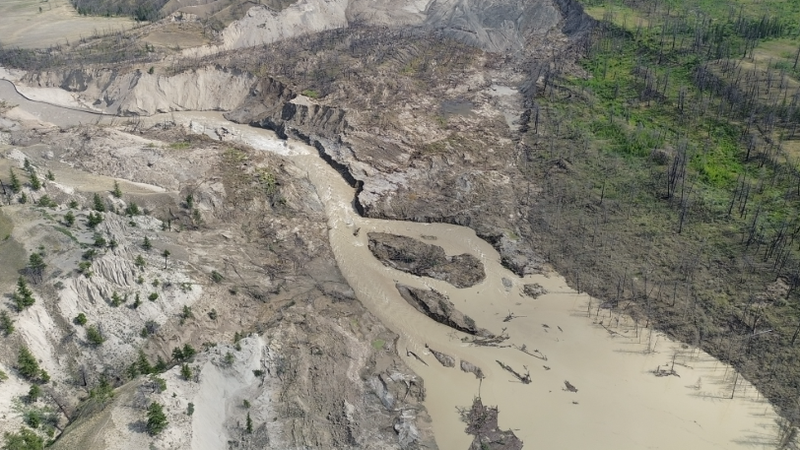
Chilcotin River landslide aftermath still impacting salmon migration, creating future risks
-
Share on Facebook
-
Share on Bluesky
-
Share on X
- Copy Link
WILLIAMS LAKE, B.C. — The Tŝilhqot’in National Government (TNG) is warning that the most serious impacts on salmon and the local river system may still be on the horizon.
A landslide on July 30, 2024, blocked the Tŝilhqox (Chilcotin River) during the key migration period for sockeye and Chinook salmon, creating an 11-kilometre lake upstream of the dam and triggering an extreme breakout flood that altered the migratory pathway to all its salmon spawning grounds. TNG says the Chilko sockeye run faced a 50 per cent mortality loss from the ocean return to spawning grounds and many other salmon were physically damaged when they returned.
In a news release issued Wednesday (Aug. 20), TNG says the landslide reshaped the course of the river, unloaded matter in the water system and destabilized slopes. Along with ongoing high turbidity levels affecting the 2025 salmon migration, the First Nation says the conditions create a high risk of further landslides in the coming years.
TNG notes a high-risk tension crack appeared on the slope above Nagwentled (Farwell Canyon) following the breakout flood. It says there is a high risk that it will fail in the short term and create a rockslide into the river that has the potential to block the salmon migration past Farwell Canyon, similar to the Big Bar landslide on the Fraser River in 2019.


