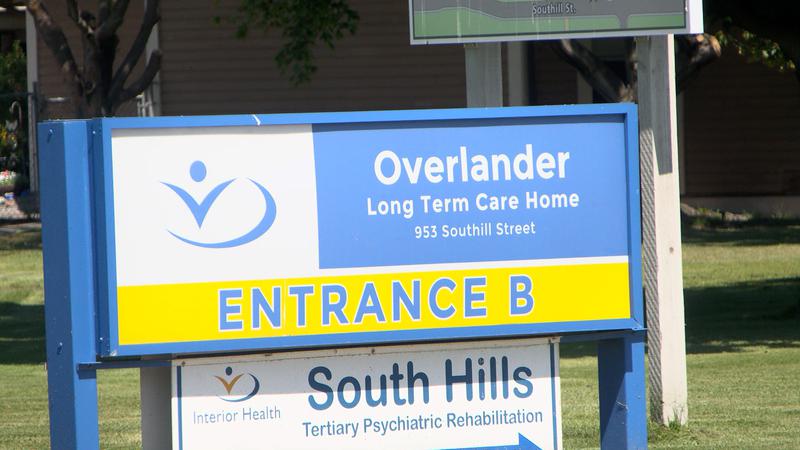
(image credit - CFJC Today)
WORKSAFE BC FINES

‘Failed to meet our standards for health and safety’; Interior Health apologies for ‘limited exposure to asbestos’ at Overlander Care

Jul 11, 2025 | 5:45 PM

KAMLOOPS — The Interior Health Authority has been slapped with a nearly $800,000 penalty, after WorkSafe BC found telecommunications work had taken place at a long term care facility in Kamloops that drilled into a wall containing asbestos.

In its summary of the $783,068.26 penalty, WorkSafe BC says it had inspected the long-term care facility after hearing reports of asbestos-containing materials that had been disturbed.

The location has been confirmed as Overlander Residential Care per an inspection report from WorkSafe. WorkSafe stated the asbestos incident occurred at three nurses stations within the facility, along with other rooms, with BC Nurses Union (BCNU) President Adriane Gear calling the news unacceptable.

“This is unacceptable, as is violence, as is all sorts of other things that nurses and health care workers are exposed to on a daily basis,” said Gear. “So this is just one more example of health employers not taking the safety of workers, which is their responsibility, not taking it seriously.”

“When I arrived on site I observed visible evidence of drywall dust in the areas where the cut holes had been made. Two staff washrooms and an oxygen/equipment storage room were observed to have raw-edge holes with dust underneath them. The equipment room contained a number of porous materials such as mattresses and fabric wheel chairs. These items will likely have to be discarded,” reads the WorkSafe BC Inspection Report. “Staff in the nursing station were asked to avoid touching any objects in the areas directly underneath the newly installed boxes. The on shift housekeeping person was instructed not to engage in any activity that may disturb dust/debris on the floors/shelves”

Gear noted that many of her nurses may not even be aware yet of the findings, in the report dated September of last year, and that they will work with members to ensure those affected are fairly taken care of.

“Any health concerns, any illness that could be linked to asbestos then that would be considered an occupationally acquired illness or injury and so it would be very important that people would be able to make appropriate claims and get appropriate support,” said Gear.

“Exposure to airborne asbestos can cause life-threatening illness such as asbestos and mesothelioma,” reads the WorkSafe BC Inspection Report.

WorkSafe BC says IH also didn’t make sure that a qualified risk assessment was done before the work began.

“Drilling into asbestos-containing drywall is a moderate risk asbestos task and the controls for moderate risk asbestos work were not implemented. As a result, interior health workers and residents of the care facility have likely been exposed to airborne asbestos,” reads the WorkSafe BC Inspection Report.

The Health Authority was also penalized for not implementing an adequate exposure control plan for controlling and handling asbestos. Gear said while the fault lies fully with the health authority, they may begin advocacy among their union to ensure issues never get this far.

“I think it would behoove us to perhaps have some campaign so that my members understand if they are noticing some type of renovation in the workplace, that could be a probing questions. What steps have been taken to ensure that there isn’t asbestos or if there is asbestos containing material, have the appropriate steps been taken to protect all workers, and obviously the patients, residents and clients that we serve,” said Gear.

The reasons for the expensive fine were all considered to be high-risk violations by WorkSafe.

“I confirmed the stickers in the door jams identified the drywall to be asbestos-containing. Further, I observed the holes were approximately 1.5 inches in diameter and were made near the corner of the drywall (where there is the highest probability of asbestos-containing drywall compound being present),” reads the WorkSafe BC Inspection Report.

Interior Health did provide a written statement to CFJC News.

“Interior Health has received a WorkSafeBC administrative penalty related to an incident involving a sub-contractor performing work, which involved limited exposure to asbestos at a long-term care site,” wrote Dr. Shallen Letwin, VP of Human Resources for IH. “The sequence of events involving the subcontractor as well as our organization’s oversight of this work both failed to meet our standards for health and safety”

“While the risk of exposure to asbestos was limited, this matter has put undue stress on staff, those living in the facility, and their families, and for that we sincerely apologize,” added Letwin.

“There seems to be a long runway for healthcare before they actually get a fine,” said Gear. “So this is very serious in the fact that WorkSafe BC has actually stepped up and done this, I think we all need to be paying attention.”

“On September 29, 2024 I received an update from WP Consulting that a number of air samples had been taken and the results were below the detection limit for asbestos. The consultant confirmed the presence of visible dust in close proximity to the disturbance areas. A formal report outlining the air sampling process and recommendations for next steps is anticipated to be provided September 30, 2024. In the meantime, there continues to be a risk of exposure to the settled dust (if disturbed),” continued the Inspection Report.

It’s important to note that the airborne testing occurred two days after the initial incident.

“[D]ust could have settled, and the airborne contamination was no longer present. However, the qualified person confirmed the presence of visible suspected asbestos-containing debris,” reads the report.

A later update in the WorkSafe report confirms that the space was properly cleaned, leaving no traces of asbestos.

“Since September 2024 we have taken steps to provide staff with clear and consistent instruction around the established Interior Health Asbestos Exposure Control Plan, as well as guidelines and risk assessment processes,” wrote Letwin.