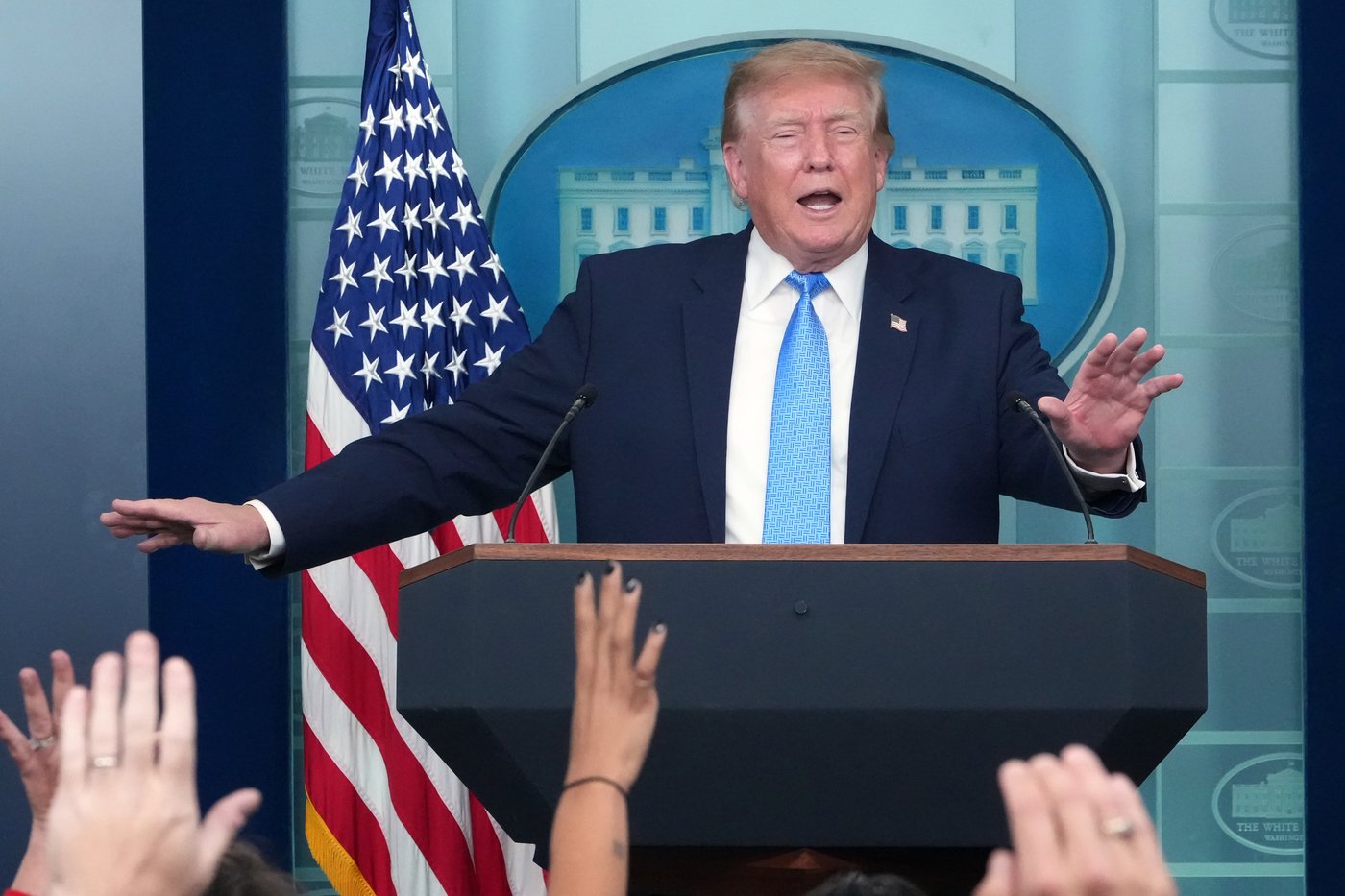
President Donald Trump speaks in the James Brady Press Briefing Room at the White House Monday, Nov. 9, 2026, in Washington. (AP Photo/Alex Brandon)

Trump after meeting with Qatari PM says he believes war with Iran is militarily ‘effectively over’

Nov 9, 2026 | 2:59 PM

WASHINGTON (AP) — President Donald Trump on Monday told reporters he believes the war in Iran “militarily is effectively over,” suggesting that — at least for now — he’s not prepared to resume the bombardment that has devastated the Islamic Republic and caused reverberations across the global economy.

The president made a surprise visit to the White House briefing room after meeting earlier in the day with Qatar’s prime minister, Sheikh Mohammed bin Abdulrahman bin Jassim Al Thani.

“Iran militarily is effectively over,” Trump said. “We’re just keeping it the status quo.”

He added that Iran has been “decapitated” but said he is still looking to make sure there’s a long-term solution to ensuring that Iran’s nuclear program is defanged.


It was some of Trump’s most definitive comments about moving away from his threat to resume strikes on Iran after the U.S. midterm elections had passed.

The president’s Republican Party lost both chambers of Congress to Democrats in last week’s elections. The elections were shadowed by dissatisfaction among the American electorate over the 8-month-old war, which has led to a surge in fuel prices that’s impacted nearly ever sector of the global economy.

Trump, over the course of the conflict, has repeatedly said he is on the cusp of ordering U.S. forces to escalate attacks if Iran’s leaders don’t quickly agree to U.S. terms to end the war, only to back down. In earlier cycles, he has also edged away with a last-minute declaration, sometimes at the behest of Gulf allies, that he’s going to give diplomacy more time.

In a posting on social media shortly before speaking to reporters, Trump once again asserted that Middle East allies — Qatar, Saudi Arabia, UAE, Bahrain, Kuwait and others — “would prefer the status quo.” Minutes later, in his exchange with reporters, he sought to assure war-weary Americans that there was “positive momentum” and that he saw a “good chance” that the war “could get ended.”

“They’re talking to us, and they’re talking very politely, And we’ll see what happens,” Trump said. He added, “The military action doesn’t seem to be a very necessary thing, but we’re locked and loaded, ready to go for any reason that changes.”

Trump, however, gave no hint of a drawdown of the thousands of U.S. troops who have been shifted to the waters off of Iran and maintain a naval blockade to stem the flow of Iranian oil into the global market.

“We’re keeping it going. We have the greatest military blockade ever,” Trump said.

Qatari officials last week presented proposals on Iran’s nuclear program, according to two Middle East government officials familiar with the matter who spoke on the condition of anonymity.

The White House declined to comment, though Trump last week alluded to ongoing indirect talks with Tehran.

All the while, Tehran continues to insist on several concessions from the U.S., which Trump has declined in the past. Among the core demands Iran says must be met before engaging in nuclear talks: ending the U.S. blockade on Iran’s ports, lifting sanctions, unfreezing its assets, issuing compensation for war damage and ending hostilities throughout the region, including Israeli operations in Lebanon.

Earlier Monday, Defense Secretary Pete Hegseth, who has come under fire over the conflict, said the next steps on the war are up to Trump, including the possibility of telling Iran: “Hey, we’re done, and we’re going to watch your nuclear material. You better not move it.”

The defense secretary has been one of the administration’s most prominent defenders of the war. Critics say the administration launched the war without proper authorization, violated the War Powers Resolution and subverted congressional war-declaring powers.

Republican Rep. Thomas Massie of Kentucky moved Monday to force a vote to impeachHegseth, largely over his execution of the war.

Trump told CNN in a phone interview Sunday that as long as the U.S. sees progress in negotiations with the Iranians and they sign a “strong agreement,” it’s “highly unlikely it’s going to be necessary” to resume strikes.

Trump said, however, that the U.S. had identified infrastructure targets, including 38 bridges, that it would strike if military action resumes.

The U.S. military, meanwhile, still has carried out limited strikes on Iran, including against its air defenses, at least twice over the past week. It also fired on and disabled a commercial ship Saturday that the U.S. says was trying to breach its naval blockade on Iranian ports.

—

AP writers Konstantin Toropin, Samy Magdy and Seung Min Kim contributed reporting.

Aamer Madhani, The Associated Press