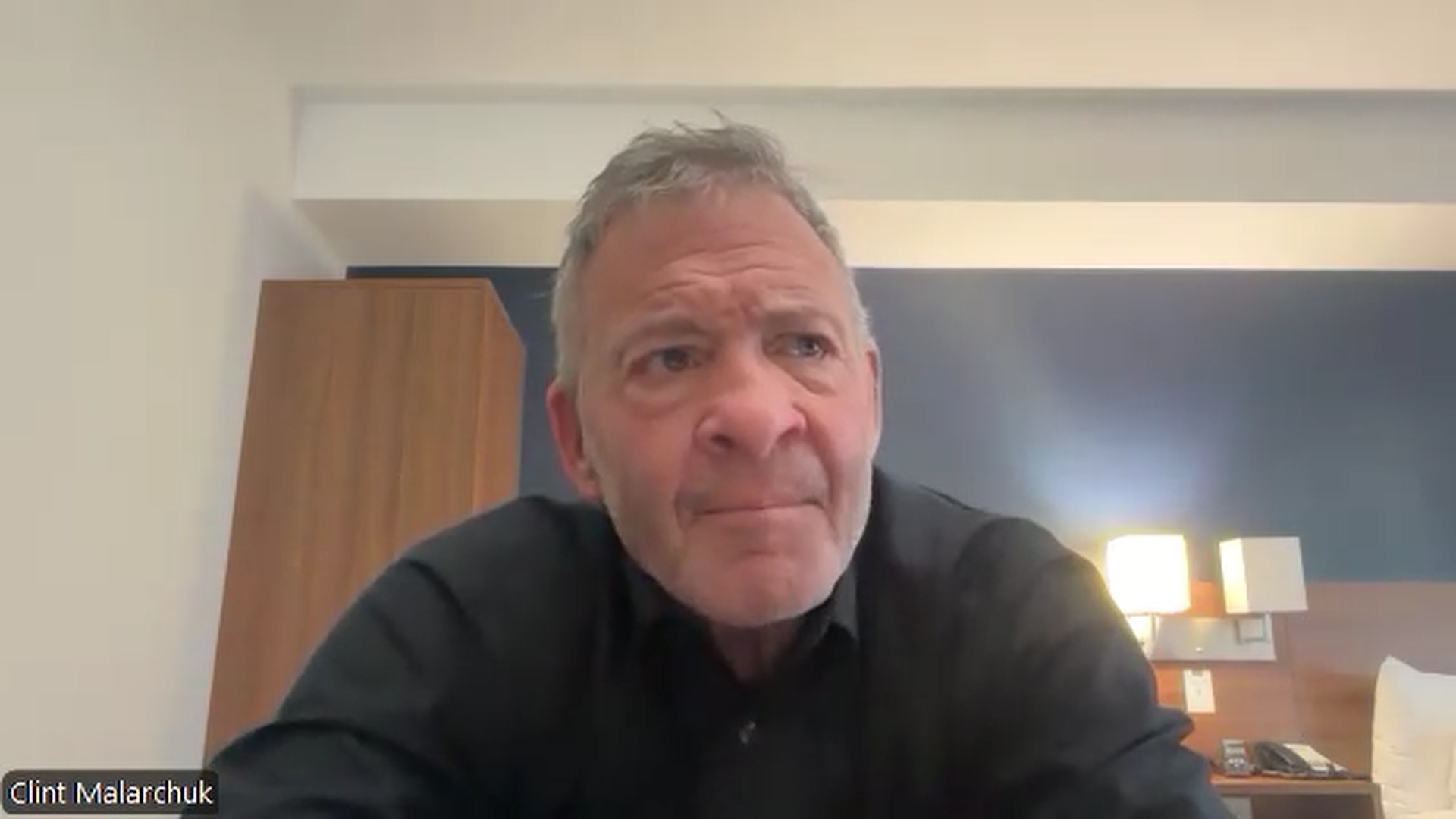
Clint Malarchuk (Image Credit: CFJC Today)
Addiction, Recovery

Former NHL goaltender Malarchuk to speak in Kamloops, encourage mental wellness

Nov 3, 2026 | 6:30 PM

KAMLOOPS — Blood erupted from Clint Malarchuk’s carotid artery and jugular vein on March 22, 1989, in Buffalo, New York, the Sabres’ goaltender’s neck sliced open by a skate.  


Ten days after the near-death experience – the gash hemmed with 300 stitches – he was back on the ice. 

“My cowboy mentality is if you get bucked off a horse, get back on,” said Malarchuk, who lost about 1.5 litres of blood. “Face your fears. Get in there.” 

That macho mindset is in part to blame for decades-long mental health struggles and a suicide attempt, said Malarchuk, who will speak in Kamloops on Wednesday (Nov. 4) at Sandman Centre. 

He didn’t know anything about trauma or PTSD. Seeking counselling was uncommon for athletes back then and never crossed his mind. 

Malarchuk began to spiral, suffering from nightmares and a lack of sleep. 

Demons festering in his head were eventually accompanied by a bullet. 

“It was 20 years later when I actually shot myself, a suicide attempt, that I was diagnosed with PTSD,” Malarchuk said, who became emotional when speaking about that time period. “I had lived with that hell in my head for 20 years… not knowing what was going on and the anxiety and, yeah, the alcohol was my medication, self-medication, escape, numbing.” 

Malarchuk told CFJC in 2019 it was a similar injury to Richard Zednik of the Florida Panthers in 2008 that spurred him to relive his own nightmare and attempt to take his own life. 

He survived and sought help for depression, anxiety, addiction and OCD. Much of his life these days is dedicated to helping others. 

“It makes me grateful that we’ve come a long way,” Malarchuk said. “It’s my purpose. I always say God spared me for those who are still suffering. People come up and they’re like, ‘Oh, my God. That is me. Everything you just described, I’m going through the same thing.’ They feel heard, they feel not alone, they feel it’s okay to not be okay and they get help.” 

Malarchuk said he relies on humour for levity during his speaking engagements. 

“We have to laugh at ourselves,” he said. “We have to be able to lighten that heavy topic a little bit. I tell a few hockey stories and we make it fun.”