WATCH LIVE: CFJC-TV presents the a municipal election night special tonight at 8:00 p.m.
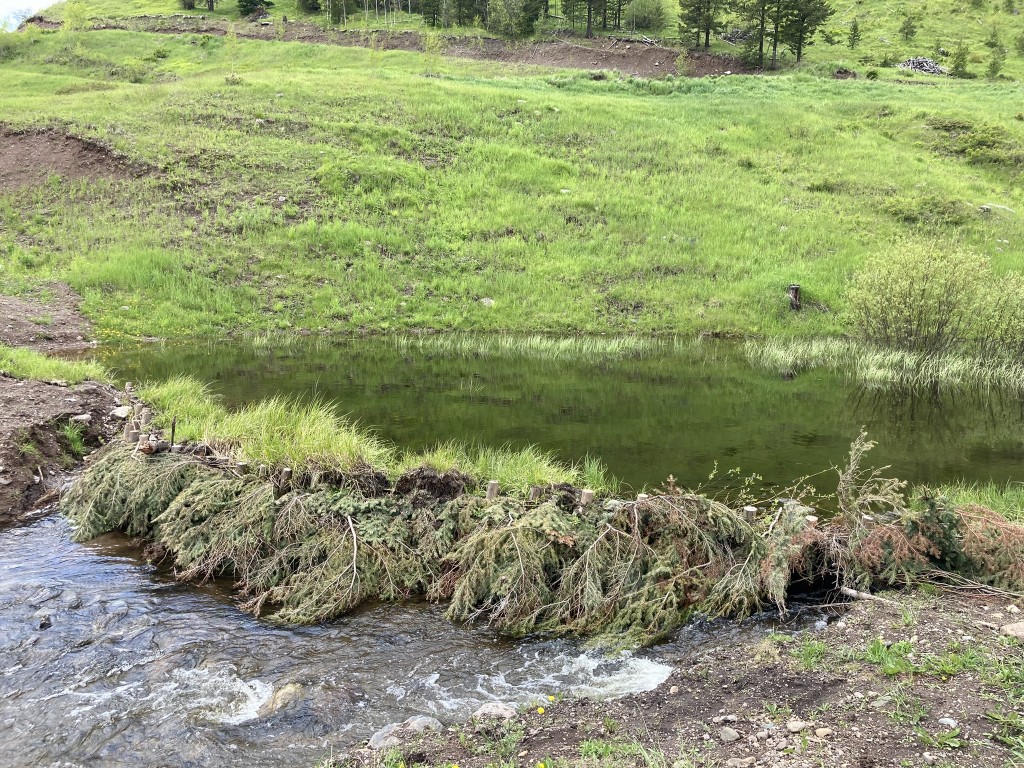
Human-made beaver dam analogue. (Image Credit: B.C. Wildlife Federation)
Wetlands Conservation

Environmental groups build artificial beaver dams in Shuswap area

Oct 17, 2026 | 2:11 PM

SALMON ARM — The Nature Trust of B.C. (NTBC) and the BC Wildlife Federation (BCWF) partnered to build 22 artificial beaver dams as part of conservation efforts in the area the White Lake area.

The BCWF said the structures, known as beaver dam analogues (BDAs), are a low-tech and low-cost means of restoring ecosystem health.

“We’re putting in these beaver dam analogues that hold water back on the landscape, help to reconnect floodplains, support fish and wildlife features, address drought and improve the overall health of these systems,” said Neil Fletcher, BCWF director of conservation and stewardship.

The NTBC said this group of BDAs were completed in September by their Thompson-Okanagan Land Management crew and the BCWF.


“Activities such as drainage, road construction, logging, and land use can disrupt natural water flow. Streams may move faster and become disconnected from their floodplains, leaving less water to support local biodiversity,” said the NTBC.

According to the conservation groups, BDAs have proven to be a successful means of wetlands conservation in other parts of B.C. and in the United States.

“Once we’re able to reconnect these floodplains, we’re able to see more water stored on the landscape, more resilient steams downstream, so this is providing more guarantees for water downstream for users or fish,” said Fletcher.

Fletcher said the structures have a knock-on effect when they are completed, providing more broad ranging-benefits. 

“There are a whole lot of connections to climate change, fire recovery and drought resilience, I think these some of the big things that are solutions we are able to apply on the landscape which brings us and others hope that there’s ways to deal with these things that are beyond scope,” Fletcher said. 

“Adapting to climate change is really challenging to fathom and it’s happening rapidly. I feel like there is a lot of interest in this type for work for those kinds of benefits and the opportunities it provides on scale.”

While there are no actual beavers around to maintain the BDAs for now, the NTBC and and BCWF said the structures can restore the landscape enough to create a desirable habitat for the animals.

“This would be a secondary phase, once we’re able to get these sites into a particular condition where they’re wetter and have more food resources on the landscape,” Fletcher said. 

“We’re hoping beavers move in on their own or we can relocate beaves to some of these areas, so they can continue the good work and the maintenance over time.”