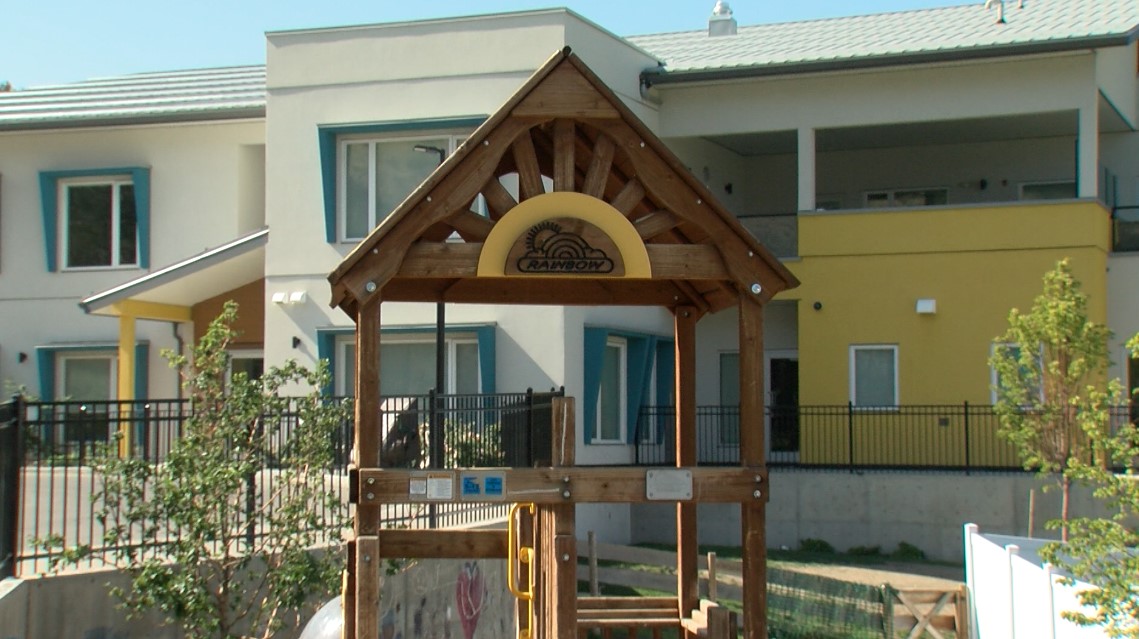
The Early Learning Society of Kamloops daycare at 1500 9th Avenue. (Image Credit: CFJC Today/File Photo)
Lack of Spaces

New action plan aims to address child care shortages in Kamloops

Oct 9, 2026 | 5:32 PM

KAMLOOPS — A new City of Kamloops Child Care Action Plan is confirming what’s long been known in Kamloops – the city is falling short of the required numbers of child care spaces as efforts to address that shortage remain ongoing.


Natasha Hartson, the city’s social, housing and community development manager, said access to child care remains a challenge for many families, despite recent investments, and many aren’t able to secure care for all of their children who need it.

“The child care plan really is to help us, help other people set up child care,” Hartson said. “We did a child care plan in 2019 that, I would say, was more broadly focused. It was more around the child care sector as a whole and a lot of actions within that plan were outside of the scope of the municipality.”

“There’s been a significant shift in the child care landscape since then so we decided to update our plan.”

Work began last year, and it involved a survey of 38 licensed child care providers, and 291 parents and caregivers of children aged 0 to 12. Feedback also included focus groups and discussions with partners, including early childhood education professionals, School District 73 and Interior Health.

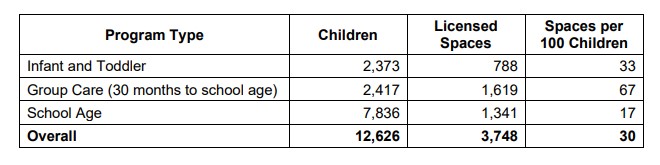
The results of that survey, which was presented at Tuesday’s (Oct. 6) council meeting, showed demand for licensed spaces in Kamloops continues to outpace supply. It found there were 30 licensed full-day spaces for every 100 children, well short of federal benchmark of 59 spaces per 100 children.


(Image Credit: City of Kamloops)

Hartson noted that number doesn’t tell the entire story.

“In certain age categories, we have more than the recommended benchmark, which would be that 30-month-to-5-year-old range,” Harston said. “We’ll hear from folks that there are lots of spaces because there are empty spaces for that age group. However, we still see quite low numbers in that really younger infant care as well as school-aged children, who need a couple hours of after-school care.”

Additionally, families of children with developmental, behavioural or medical needs often face additional barriers in accessing appropriate care, Hartson said.

“Strong child care also sets kids up for success in the long run and so there are lots of really positive impacts to child care that aren’t just about babysitting and all of that,” Hartson added.

The report also noted a higher concentration of child care spaces downtown, in North Kamloops and in the Lower Sahali/Southgate corridor. Many of the primarily residential neighbourhoods – Aberdeen, Barnhartvale, Batchelor Heights, Brocklehurst, Dallas, Dufferin, Heffley Creek, Rayleigh, Upper Sahali and Westsyde – had comparatively few licensed spaces available.

“This pattern is influenced, in part, by the availability of commercially zoned land and locations suitable for larger child care facilities,” the report read. “As Kamloops continues to grow, planning efforts will need to balance centrally located facilities that serve families from across the city with opportunities to integrate child care into residential neighbourhoods where families live, learn and access services.”

Hartson said this plan will give city staff and council a list of achievable goals like where child care facilities are built, recognizing child care as essential community infrastructure, better supports for providers as well as advocacy to higher levels of government.

It could also include a website and a how-to guide with information on licensing and permits, and potentially an internal liaison or concierge function to help prospective providers navigate municipal processes and other barriers.

“It’s really not our role to deliver child care. It’s either private business or (upper levels of) government that’s going to create those spaces, but we do play a role in helping to make sure we are the most set up so child care facilities can be established, operated and expanded,” Hartson said.

Child Care operators welcome plan

Chelsey Mack, the board chair of the Early Learning Society of Kamloops, told CFJC Today she’s pleased to see city’s ongoing efforts to try to address gaps in child care, as many operators have lengthy wait lists.

“[The city has] keyed in on areas where municipalities can make a meaningful difference,” Mack said. “Whether it’s through zoning regulations or the OCP or possible tax relief, those sorts of things that can make it a good operating environment for child care providers.

“If they keep going in that direction, it will help address some of those shortages.”

Mack also pointed out the economic benefits of investing in child care, noting it’s often women who are disproportionately affected by the lack of available spaces.

“I know moms who’ve not been able to go back to work because they can’t find child care or who’ve left the workforce because they can’t get before and after-school care once their children start kindergarten,” Mack noted. “Progress has happened, but there’s still a lot more than can be done.”

Hartson said while city staff will review their efforts in three years, there will be yearly updates provided to council and the community so the plan can be adjusted, as needed.

“We’re just trying to make ourselves as child care friendly as possible,” Hartson said.

“Staff now, with the endorsement of this plan, can move forward with beginning to look at some of our bylaws and our zoning and some of the recommendations we put in the plan.”

You can read the Child Care Action Plan here.