WATCH LIVE: CFJC-TV presents the 2026 Kamloops mayoral candidates' debate at 7:00 p.m. tonight.
Candidate Profile

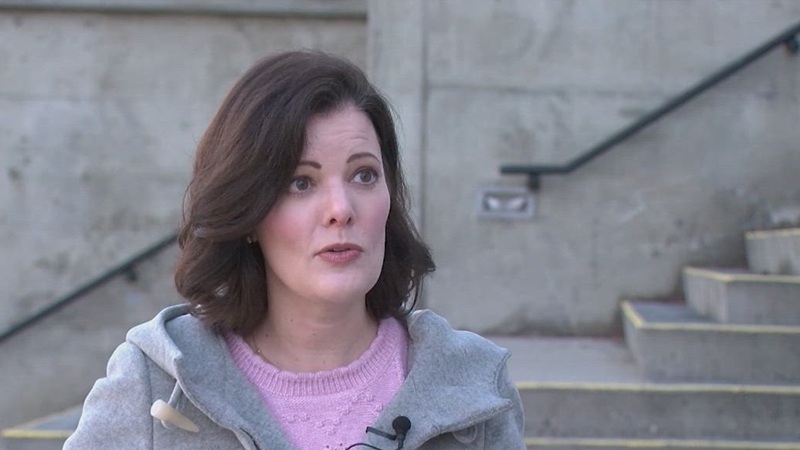
CANDIDATE PROFILE: Katie Neustaeter

Oct 8, 2026 | 10:37 AM

Ahead of the Oct. 17 municipal election, CFJC Today asked candidates for Kamloops City Council to complete a questionnaire, offering voters the chance to evaluate their candidacies. 

QUESTIONNAIRE: 

Describe yourself, your professional background, and why you’re running for public office in Kamloops? 

I moved to Kamloops at six years old, married my husband of 24 years here, and our three kids have now all graduated from Valleyview Secondary. In addition to my extensive volunteerism in the community for a wide variety of organizations, I own Refraction Communications and have a professional background as a nonprofit executive director and provincial director of communications, various work in broadcasting, and am a qualified Educational Assistant. 

Despite profound governance challenges, I’m proud of what I accomplished in my first term as a city councillor on behalf of Kamloops, including advancing the housing continuum, focusing on public safety, and building the social and physical infrastructure needed for our city’s bright future. 

In a second term I’m committed to developing economic drivers, making sound fiscal decisions, and being an informed voice at city hall. 

During 2022-2026, I held positions as TNRD director, safety and security chair, TNRL director, TRHD director, Kamloops Airport Authority Society vice president, Joint Recreation Committee co-chair, Tourism Kamloops board director, Venture Kamloops board member, Governance and Service Excellence Committee member, and SILGA member. 

I’m running for public office because I love Kamloops, believe I’m a solid voice at the horseshoe, and am ready to keep working for you. 

What do you think is the biggest issue facing the City of Kamloops and how would you use your elected position to address it? 

Along with affordability and good governance, crime and social disorder continue to be top issues for Kamloops residents. The intersection of homelessness, housing affordability, and addiction are also layered into those concerns. 

While the provincial and federal governments are responsible for crime, housing, and health, the impacts of larger-system failures present at the local level. This means that municipal governments across our province are grappling with the same issues, pleading with unified voices, and investing significant portions of our budgets to try and create solutions for our residents with limited tools. 

In my first campaign I spoke about my intention to address crime as crime, and vulnerable populations as vulnerable populations. This has remained my approach to these challenging issues as a city councillor and, because of the results, I will continue on this path in a second term. 

I have supported and/or brought forward initiatives that have expanded CSOs to a 24/7 model, activated the Situation Table, obtained purpose-built complex care, increased RCMP foot patrol, reduced graffiti, given CSOs Peace Officer status, staffed the Westsyde Fire Hall, concluded decriminalization as introduced, and more. 

But, in addition to advocacy, I believe the most important public safety work now to carry forward over the next four years will be the implementation of an Integrated Court. Throughout my four years on council, we appealed to the Attorney General of B.C. for authorization to move ahead with an Integrated Court. We were recently granted authorization to begin structuring a pilot program in Kamloops. 

We have a judge, law professors, lawyers and law students, the RCMP, social agencies, and more ready to activate. This model will allow mid-level crime by repeat offenders (the minority of people causing most of the crime) to be addressed in a new way locally; creating accountability and building case files that will make applications to Crown more likely to be successful. There are also opportunities for restorative justice and wrap-around support, but the open-ended revolving door for offenders can be addressed. 

People suffering on our streets deserve compassionate paths to help, recovery, and care. 

People who refuse to abide by the social contract that keeps the broader community safe and thriving need to be held accountable. 

I will continue to advance solutions for both. 

Following a term highlighted by infighting and tension at city hall that impacted Kamloops’ public image, how would you ensure civil discourse and good governance would take place between yourself, fellow elected officials and city staff? 

Ultimately, it is the electorate of Kamloops who will determine if civil discourse is reestablished at the council table. 

It’s a vital moment to decide if we want critical thinkers or critical people acting as the ambassadors and decisionmakers for the city we are honoured to serve. 

While there has been a narrative that there has been “infighting” by all of council this term, the evidence and reality is quite different. Baring one common denominator, Kamloops city council had no unhealthy conflict, privacy breaches, code of conduct violations, public disputes, personal attacks, bullying of staff, lawsuits, or other divisive and embarrassing behaviour. Eight out of nine members of council prioritized the work, understood the role, and were productive during our term. 

Current councillors hold different personal values, political opinions, ideologies, voting positions, and communication styles, but we consistently disagreed without being disagreeable; moving forward as a council and putting Kamloops first. Committees, boards, associations, intergovernmental meetings, and any other activities chaired by, or including councillors, have been conflict and chaos free, including at the TNRD (chaired by a mayor) where all eight councillors have served collectively in a comparable capacity. 

In his final report as municipal advisor, commissioned by the premier, former mayor Henry Braun concluded that, “Based on the compelling evidence before me, in my opinion, the Mayor’s approach is largely responsible for the issues, with minor contribution by Councillors in reaction.” I would encourage everyone to read his full assessment. 

Civil discourse and good governance will be restored by electing leaders who understand the job and can function as part of a team within the system they have entered. 

Kamloops deserves better than the last four years have been, and I believe we will have it. 

Considering recent years of large municipal tax increases in Kamloops, how would you address the city’s tax rate going forward? 

While Kamloops has historically been seen as affordable, that has also meant water utility fees remained unchanged for nine years. User fees have not kept up with costs, fire halls were not staffed, and property tax decisions (like the 0.46 per cent increase in 2021 when other municipalities, like Kelowna, maintained a steady rate) all caught up with us. 

In a growing city like ours, holding rates artificially low is simply not sustainable if we want to protect the core services residents rely on, especially with escalating price tags across the board for all B.C. municipalities. 

Part of tackling affordability in Kamloops moving forward is implementing consistent, predictable fee adjustments to avoid massive “sticker shock” down the road. Unfortunately, much of the last term was spent playing catch-up during a languishing global economy and major costs beyond municipal control (like the RCMP contract/costs). 

With those baseline adjustments made, the job of the next council will be discipline, particularly for non-capital spending. 

While it is noteworthy that Kamloops property taxes were on par with or lower than many peer municipalities in 2026, residents are understandably frustrated with cumulative increase. The city’s financial plan projects a 4.5 to 6.0 per cent range annually in the coming years, but we need to create broader revenue streams. 

Affordability starts with honest, sustainable financial management. 

Moving forward I will tackle municipal affordability by: 

Prioritizing core services: Focusing taxpayer dollars on needed infrastructure (including recreational facility development) and fundamental municipal services, while turning down non-essential supplemental items that increase the bottom line. 

Expanding our non-residential revenue: Growing our local commercial and industrial tax base so homeowners aren’t shouldering the burden alone. 

Maintaining predictable rate adjustments: Replacing sudden, sharp catch-up spikes with small, transparent adjustments aligned with growth so families and businesses can plan ahead. 

Advocating for a standing finance committee to be restored for closer council oversite. 

Kamloops can remain livable and affordable, but it requires planning for the future, hard choices that reflect a responsible grip on spending, and an acknowledgment that, we can’t do everything all at once. 

As major infrastructure projects are on the horizon in Kamloops, how would you prefer the city go about gaining the electorate’s approval – via referendum or the alternative approval process (AAP)? Why? 

Although it is a fully legal process made available to municipalities by the province, who must approve the borrowing amount in compliance with financial regulations before it moves forward, the use of the AAP for major capital projects has caused division and concern in our community that must be heard and respected. 

I have consistently publicly stated that I will not support the use of the AAP on major capital builds (ie many-multi-million-dollar recreational projects) in the future and, subsequent to that commitment, my voting record has reflected my position. 

What are your thoughts on communication between the City of Kamloops and its residents? Are there areas of improvement you’d like to see? 

The east Valleyview water break was a prime example of what is not working when it comes to communication between the city and residents. 

While the incident was unfolding, people in the impacted area showed their willingness to comply with requests and an understanding that infrastructure sometimes fails, but they also expressed profound frustration with the conflicting information they were receiving and the tools that were being used to deliver it. 

During the evolving incident I visited over 30 businesses, each water truck location, and spoke with dozens of residents. What I heard was consistent: communication from the city was confusing and inadequate. 

This incident highlighted the need for streamlined cross-departmental communications, lost opportunities for leveraging community partners (like the East Kamloops BIA and neighbourhood associations), and a gap in neighbour-to-neighbour relationships in a changed and isolated world. The City of Kamloops must continue to explore avenues for reliable, direct communication with residents that reestablishes trust and shifts dependency from social media comments sections to accurate and timely facts. This also requires improved transparency and real-time updates as events unfold. 

In an age of information overload, there is also a loss of primary sources. With local media stretched thin, and even disappearing in circumstances like a daily/weekly paper or the former Radio NL format, residents need the city to be a primary source for trusted and timely information while communicating effectively with news outlets. 

It’s also important to acknowledge that the public’s frustration has been compounded by council turmoil. While public submissions and public hearings are still available for public input at council meetings, those are limited avenues. The necessary pause on “public inquires related to the agenda” was reluctantly put in place because executing the business of the city had become very challenging when the chair was unable or unwilling to effectively moderate dialogue. A handful of people were repeatedly being given free reign to speak repetitively and at length on random topics, hurl insults at council and staff, heckle, and make unfounded accusations, sometimes for hours on end. This was not fair to the other 100,000 residents of Kamloops, the delegations who applied for their limited time at the podium, or people who expressed that they felt intimidated and afraid to participate because of the hostile environment that had been created. This was especially true for seniors and children. 

City council meetings are business meetings and they are governed by mandated, necessary procedure that helps to advance the work prioritized on the agenda. That being said, I fully support the return of public inquiries when a chair is in place who can properly govern chambers, and I have consistently been an advocate for organized town halls with the same caveat, knowing that residents want and need to be heard.