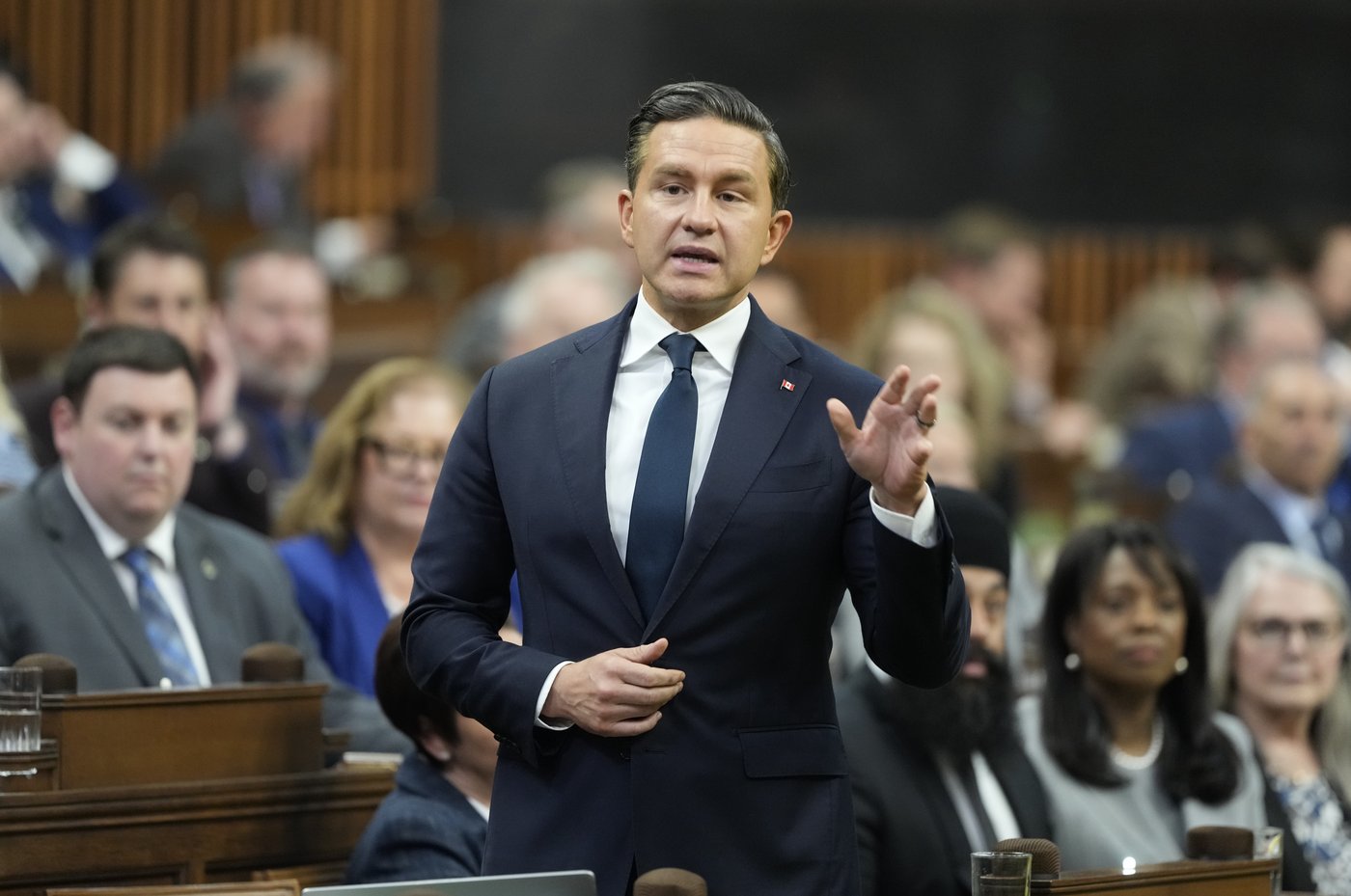
Conservative Leader Pierre Poilievre rises during question period on Parliament Hill in Ottawa on Thursday, June 18, 2026. THE CANADIAN PRESS/Adrian Wyld

Conservative caucus meets in B.C. ahead of return to Parliament next week

Sep 16, 2026 | 10:21 AM

OTTAWA — Concerns about the notion of Canada becoming an “associate member” of the European Union and polices to address pocketbook issues are expected to be front and centre Wednesday as Conservative Leader Pierre Poilievre addresses his caucus in British Columbia.

Conservative MPs are holding a two-day retreat in Penticton, B.C., ahead of the return of Parliament on Monday. The Conservatives and Poilievre have been unable to eat into solid support for Prime Minister Mark Carney and the Liberals, which has remained strong in the face of ongoing economic threats from the United States.

This will be the first time the caucus has met since disappointing results in recent federal byelections which saw the Tories lose a fifth seat to the Liberals in the last 11 months, this time through a vote rather than a floor crossing.

Affordability will be a key part of the Conservative strategy this fall.

“We want an economic action plan. That plan will put money back in your pocket and reward your hard work,” Poilievre said at a press conference in Vancouver on Tuesday ahead of the caucus retreat.

He said the policies of Prime Minister Mark Carney’s Liberals have made life more expensive for Canadians and called on people to consider whether their lives are better now than they were when Carney took power.

“Summits, signing ceremonies, speeches — they’re all fine. But what we need from the Liberals right now are results to save you money, to save Canadians’ jobs and to make our country’s promise return,” he said.

Carney’s designs on a tighter alliance with Europe has also been met with some significant concerns from the Conservatives, including a number of Tories warning of dire consequences if Canada were to import the European “migrant crisis.”

Expectations about a new partnership for the EU and Canada rose ahead of Carney’s trip to speak to the European Parliament in Strasbourg, France on Thursday. On Wednesday, he was there when European Commission President Ursula von der Leyen delivered her state of the union to the Parliament, when she said she was opening the door to Canada becoming an “associate member” of the EU.

It is not clear what that term would entail, and Canada immediately suggested while tighter alliances are being discussed on a number of fronts including energy and security, Carney’s government is not sold on the use of the term “associate member.”

Carney has also been clear that Canada is not looking to join the EU as a member.

Poilievre jumped on the confusion about what the talks with Europe entail.

“The Prime Minister can’t seem to get his story straight about the “associate membership,” “unique alliance,” or whatever else he is negotiating with the EU,” Poilievre said on X.

“Conservatives are clear: we support the decades-old free trade & NATO defence alliance with Europe. But no EU taxes, no EU laws, and no EU open-border immigration policies should be imposed on Canadians. Canada must be independent and sovereign. Period.”

Threats to Canada’s sovereignty are among the reasons Carney said he abandoned trade talks with the United States last month.

Poilievre is fresh off a trip to New York last week, where he made his pitch to American media outlets for a return to tariff-free trade with the United States.

The Conservative leader made a point of refusing to criticize Carney “on foreign soil” in those interviews. Upon his return, though, Poilievre was sharp in his criticism of reports that Canada planned to seek associate membership in the European Union.

The party did not respond to requests for an interview with a caucus member about the retreat and the return to Parliament.

The “economic action plan” Poilievre touted on Tuesday is a roundup of Conservative policy proposals including a longer extension of the federal gas tax break, cutting billions in spending by killing the Alto high-speed rail project, and repealing laws including the tanker ban off the B.C. coast.

“We want to eliminate the GST on Canadian-made automobiles to save you money and save autoworkers jobs,” Poilievre said.

The Conservatives are polling well behind Carney’s Liberals and the trade war with the U.S. has dominated the news cycle this summer.

It’s been a tumultuous summer in Conservative circles, with public infighting about the direction of the federal party drawing in some members of Parliament.

That has led a number of Conservative strategists to publicly question Poilievre’s control of caucus and the discipline within the ranks.

When the Conservatives were preparing to return to the House of Commons a year ago, the party had 144 MPs and pledged to bring strong but not reactive opposition to the House of Commons.

At the time, Poilievre was newly returning to the role of Opposition leader in the House, having spent the summer campaigning in a byelection after losing his longtime seat in April’s national vote.

Since then, MPs Chris d’Entremont, Michael Ma, Matt Jeneroux and Marilyn Gladu defected to the Liberal benches. The popular Quebec MP Richard Martel accepted a seat in the Senate this summer, and the party posted a disappointing third-place result in the byelection to replace him last month.

Cathay Wagantall has stepped aside, leaving her eastern Saskatchewan seat vacant, and Larry Brock is set to resign this week. Byelection dates haven’t been set in those ridings yet.

Poilievre is set to hold a campaign-style rally on the weekend in Brantford, Ont., in Brock’s riding.

That will mark the first time the Tory leader has stepped onto a rally stage since the April 2025 election. The events were a key part of the campaign, and of Poilievre’s rise in the polls between 2022 and 2024.

This report by The Canadian Press was first published Sept. 16, 2026.

Sarah Ritchie, The Canadian Press