Alberta’s premier consulting on scrapping clock changes, prefers more light at night

Mar 5, 2026 | 11:52 AM

Alberta Premier Danielle Smith says her government will consult on doing away with twice-a-year clock changes.

And she suggested if a switch is made, she would prefer going to permanent daylight time.

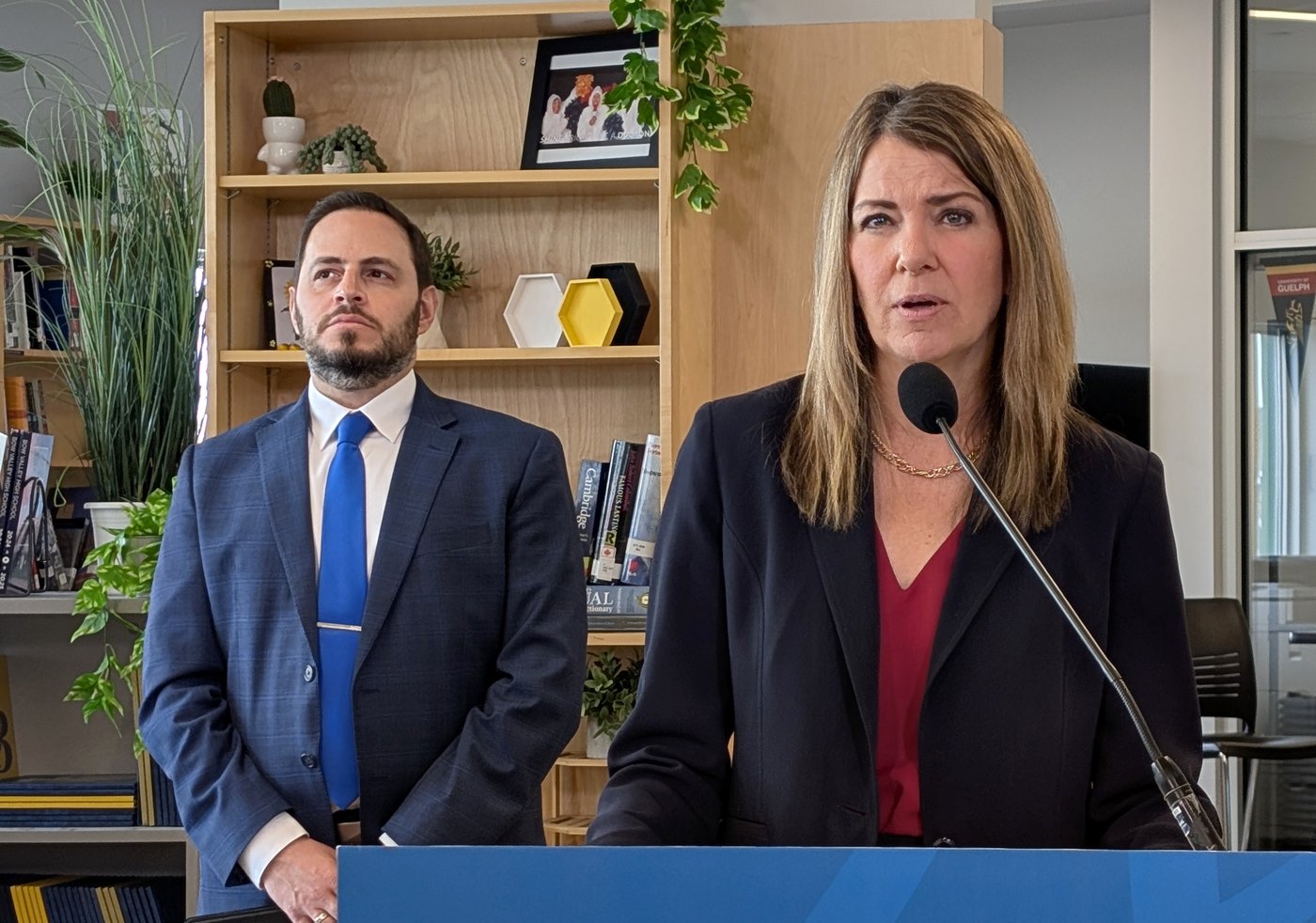
“I kind of like more sunlight at night, and I think most people do, too, because we are on daylight eight months out of the year,” she said at an unrelated news conference in Cochrane, Alta., on Thursday.

“Going to standard (time) 12 months of the year would be a big adjustment for people,” she said.

Her comments come as British Columbians prepare to spring their timepieces forward this Sunday for one final time as that province adopts year-round Pacific daylight time.

Smith said earlier this week that with Saskatchewan’s use of year-round central standard time, B.C.’s shift raises questions about whether Alberta should aim for consistency across the western provinces.

Almost five years ago, a referendum question was put to Albertans to keep daylight time year-round, but it failed by the narrowest of margins — 50.2 per cent to 49.8 per cent.

That 2021 ballot offered only one option: “Do you want Alberta to adopt year-round daylight saving time, which is summer hours, eliminating the need to change our clocks twice a year?”

Smith said Thursday the question was “a little double-barrelled” and confusing.

She said she believes if you simply asked people if they want to stop changing their clocks, that would likely get overwhelming support.

The topic has long been debated in Alberta.

The province adopted daylight time in 1971 after a referendum on the subject passed with 61.5 per cent of voters in favour, only four years after 51 per cent of Albertans voted against the move.

Since then, politicians across the spectrum have periodically petitioned for changes.

Patricia Lakin-Thomas, a biology professor at York University, said in an interview earlier this week that if Alberta does scrap the twice-yearly time changes, it should stick with standard time.

Having permanent daylight time would mean Alberta trades sunlight in the morning for more sunlight in the evening, which Lakin-Thomas said goes against our biological clocks.

“The best co-ordination is when our social clock, that is the clock on the wall, says noon when the sun is the highest in the sky,” she said.

“When that happens, we are closest to being able to wake up around dawn if we follow the normal kind of workday that our society has decided is normal for us in our industrialized society.”

Lakin-Thomas said she was confident that after the first winter of daylight time, many in B.C. and Alberta — if it follows suit — will want the old system back after growing tired of extra dark mornings.

She also said permanent daylight time has proven to be trouble for some with depression, major depression and bipolar disorder, as studies have indicated morning sunlight can help reduce symptoms.

The annual jump to daylight timing has also been known to increase car accidents, heart attacks and strokes, Lakin-Thomas said.

This report by The Canadian Press was first published March 5, 2026.

— With files from Jack Farrell in Edmonton

Lisa Johnson, The Canadian Press