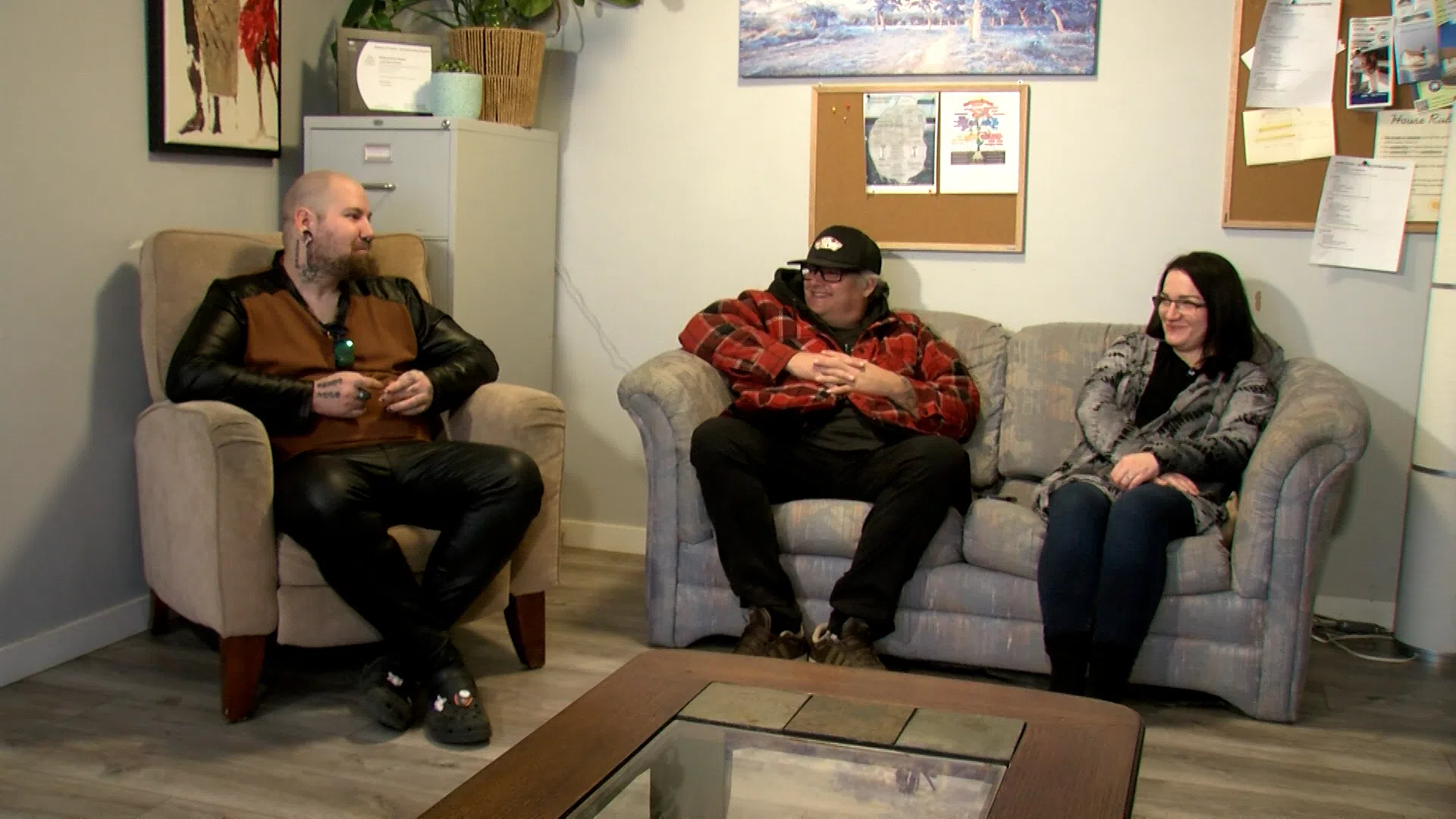
Loud Voice Society (Image Credit: CFJC Kamloops)
Recovery Housing

Loud Voice Society using different approach to recovery

Feb 24, 2026 | 1:53 PM

KAMLOOPS — Those in Kamloops looking to begin their path to recovery have limited options. Currently, just three operators are offering recovery-focused dry housing – the Mustard Seed, Blue House and the Loud Voice Society. All three provide similar services, working with people struggling with addiction to help them get clean and reintegrated into the community.  


Loud Voice Society is the newest program in the city, and the focus is making sure nobody is left to fall between the cracks. 

There has been a recent push to bring more recovery-focused dry housing into Kamloops. It’s perhaps a simple task to expand beds, but Loud Voice CEO Trevor Starchuk believes the beds, without proper supports, will not equate to success.

“The way that it has been rolled out, whether it is abstinence-based or whether it’s harm reduction, the divide between the two is where the gap is,” said Starchuk. “And to weave those two systems together in a way that works, that keeps people together under the same umbrella of care for an extended period of time is really what’s needed.”

“If it was a one-shot deal, most of the people on the streets wouldn’t be on the streets because most of them have been to treatment. It’s either the treatments are too short or the supportive recoveries don’t accommodate for the relapses,” added Starchuk.

Starchuk spent two years researching and developing his five-phase model. 

“The biggest gap that was there that returned people to homelessness was relapse,” said Starchuk.

The five phases are intake and assessment, detox, community treatment, supportive recovery, and then transitional housing. 

“The biggest part of that five-phase model is that it is operated by one organization, so people can transition between the phases according to abstinence, readiness and behaviors conducive to community well-being,” said Starchuk. 

Starchuk, who has lived experience in the recovery system himself, believes it’s unrealistic that everybody will succeed at recovery on their first attempt, and sending them back to street or shelters could mean they never try recovery again.

“We allow for mistakes, we don’t consider them failures like most other systems,” Starchuk told CFJC News. “We don’t exit people as readily for different behavioral issues and substance use. What we do is we transition them back into another phase, so they aren’t exited back out onto the street, as long as they are willing to engage in recovery.”

Starchuk enlisted the help of Felicity Sinclair to help run the programs. She, too, has lived experience, calling out the deluge of low-barrier housing and lack of recovery housing.

“I saw there were doctors prescribing medication that could keep me well. There was housing that was $300-500 a month. There were places that where providing me food. Why would I ever get clean? It was easy for me to stay loaded,” said Sinclair. “I feel like it’s enabling people to stay out there. When someone is ready to get help, they need to have somewhere to go that instant.”

“I realized I went through what I went through to share my experience, strength and hope. It’s inspiring for others to hear that recovery is possible,” added Sinclair. 

The Loud Voice Society, which launched services back in March of 2025, has already begun to see success stories. Tom Moore, this week, will receive his one-year sobriety chip.

“If I wasn’t here, I think I would still be in active addiction,” began Moore. “I just wanted a new start at life.”

“The only other places I could afford would be at wet buildings, and trying to stay clean there, it’s almost impossible,” Moore said. “I had been trying for a few years actually to get into recovery, but I was always in the same situation, so I would do three months and then relapse. And then I was so close to death that my case worker actually got me into treatment.”

Kelly Arens is closer to the beginning of his recovery journey, crediting Loud Voice for saving his life.

“Quite honestly, I don’t think I would be alive,” said Arens. “That is how important this is to me. It’s a very unique place. I didn’t have an option – if I had ended up back at a shelter, I doubt my chances. I have no idea where I would be.”

“I found a lot of hate, a lot of rejection, a lot of stigma, a lot of negativity in the community and I do think that does need to change,” added Arens.

The society currently has 18 beds at three North Shore homes, and a wait list a mile long. The organization is working to open a fourth home, with five additional beds this summer.

Need for dry housing options in Kamloops 

Kamloops city council has been facing a roadblock in the form of the provincial government in its goal of bringing more recovery-focused dry housing in Kamloops. 

“They have low-income places for people who are in active addiction, but they don’t have low-income [spots] for people who are out of addiction or are trying to stay clean,” said Moore.

“It’s really important, because trying to be around people who are still in active addiction is difficult. The pressures are always out there but it’s nice to know we are in a safe place just like this. You know everybody has the same goal. It would be really good if we had other places like this as well,” added Moore.

Arens entered Loud Voice back in December, seeing first hand the impacts of stable housing. 

“The amount of people that I see that are in need that would be willing if only we had a space and an opportunity for people to have a place to go and recover and work on their lives. I think that is something that everybody should be pitching in, I think it’s a huge issue in society,” said Arens. “Something has to change.”

Sinclair believes that putting people in the best position to succeed in crucial for those entering recovery. 

“When you first come to recovery, you don’t have these skills and you don’t have the support group to stay clean through situations that might be tough for that person in that moment. All it takes is having one bad day and you know that the roommate next to you has the drug of your choice,” said Sinclair. “It just a lot easier to access that drug and then your recovery is out the window. It’s a lot easier to find housing that is wet than dry, and it’s difficult to stay clean surrounded by drugs.”