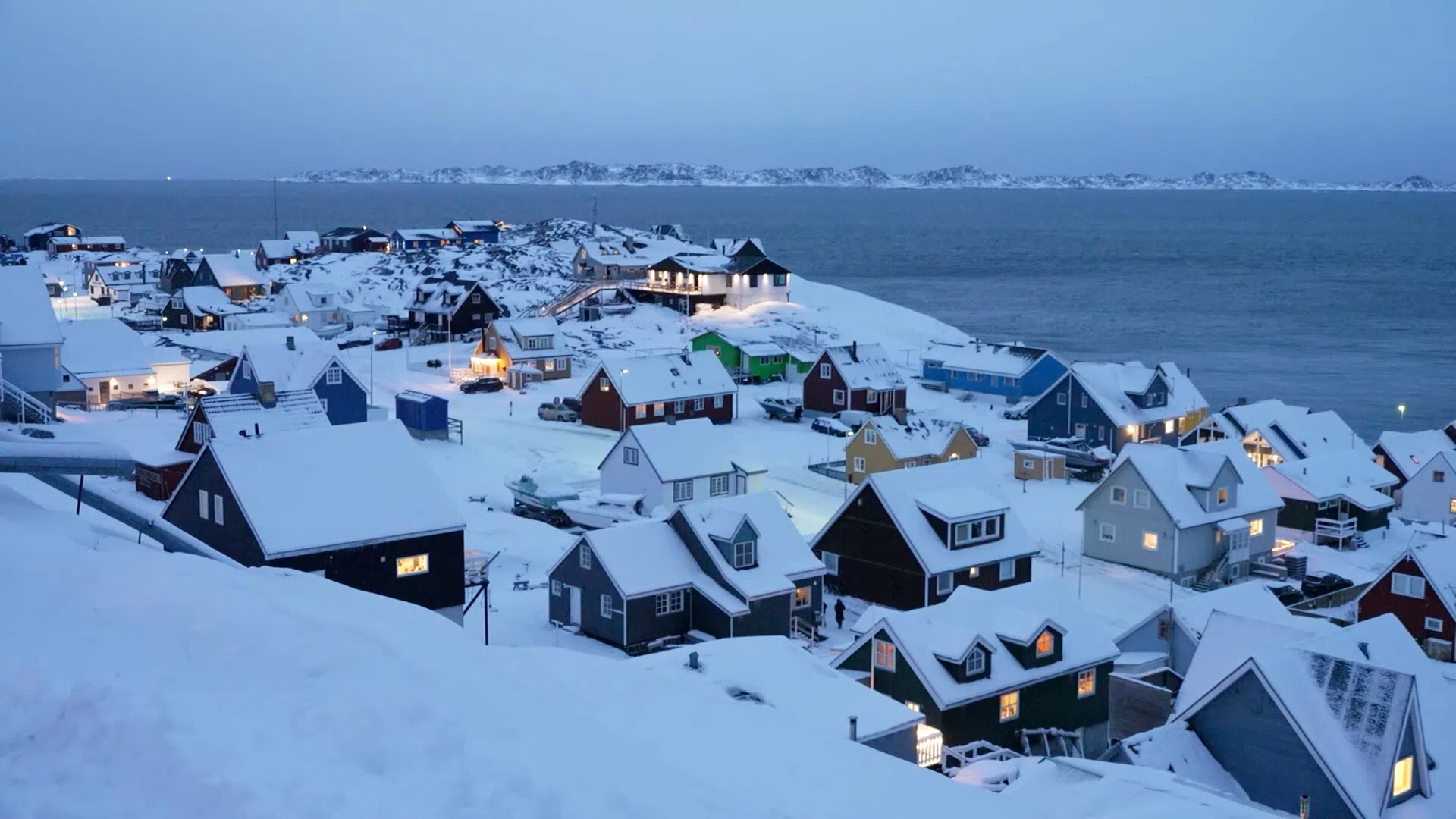
Greenland (Image Credit: CNN)
US CANADA RELATIONS

US Consul General Crowley discusses current state of NATO and importance of Arctic security

Jan 19, 2026 | 4:32 PM

KAMLOOPS — NATO was formed following the end of World War II by North American and European nations and has remained one of the most important defence pacts in world history. As work on a peace deal in Ukraine unfolds, NATO membership continues to be a point of contention between the West and Russia, highlighting the stature of the alliance. After more than 75 years, many north of the border feel the agreement is on shakier ground with US President Donald Trump calling it into question in his pursuit of Greenland.

The sovereignty of Greenland is not a matter for debate — except for President Trump, who claims the Danish territory is required for Arctic security.

President Donald Trump social media post
President Donald Trump social media post (Image Credit: CNN)

The importance of the North is something America’s top diplomat stationed in British Columbia, Shawn Crowley, believes is shared.

“Canada feels very strongly about Arctic security and the United States also feels strongly about Arctic security — and so I think some of the discussion has kind of been launched because of that. And that is an area we need to cooperate very closely on,” Consul General Crowley told CFJC News. “Negative stories always make the news but positive stories rarely do. The security relationship between us is already one of the very best stories that we have. And that has a huge number of facets.”

Greenland enjoys NATO protection and under Article 5, any aggression towards the territory would trigger a response from every other NATO country.

Article 5, however, has only ever been invoked once, and it was by the United States following the September 11 attacks, making comments from the president about nobody supporting the U.S. require clarification from the consul general, who says the issue comes down to funding levels.

“I think the president was getting the feeling some of the allies were not doing what they should be doing for the common defence. And unfortunately for Canada, that was the case. For many years, Canada was down in the bottom three, I think, of all funding for NATO.”

“Members of the Canadian forces are very professional and amazing colleagues and allies but if they don’t have the equipment, they don’t have the training, they don’t have the numbers to do what they need, then that’s an issue for the entire alliance on security,” explained Crowley.

Crowley met with Canadian WWII veteran John Kuharski during his visit to Kamloops and was asked directly if a man who stormed the beaches of Normandy should feel offended by the president’s remarks.

“I think the story of Mr. Kuharski shows the importance of the United States and Canada and the other allies sticking together.”

“Along with Brits and Americans and some other nationalities, [Kuharski] marched across France, Belgium, Netherlands and into Germany, and helped to defeat a really horrible regime. And that was only possible because of the cooperation among those nations,” added Crowley.

Crowley stating the alliance is stronger when our nations are united.

“For all of the churn that is going on in NATO right now, we also should look at how successful it’s been,” said Crowley. “It’s really been one of the most, if not the most successful alliance for maintaining the peace that perhaps we’ve ever seen.”

The continued U.S.-Canada discourse, echoed far and wide on social media presents another aspect of the changing face of diplomacy in the modern world that Crowley is in the middle of.

“It’s changed the same way I think the news industry has changed. When I was growing up, we had the Washington Post, the New York Times, Los Angeles Times, a couple big newspapers that covered the whole world and everything else, and social media and the internet really have affected that business,” said Crowley. “It’s affected the news business on TV, it’s affected pretty much media across the board and, of course, it’s affected diplomacy, as well.”

“This is not the first time. Telephones and telegraphs also affected diplomacy a long time ago. What really is important, and which is the reason that we are here today in Kamloops, it’s important to talk to each other. That doesn’t mean that you are always going to agree with each other, but it’s important to try to understand where the other side is coming from,” said Crowley. “And that is what diplomacy is about.”

International rules-based order ‘under threat’: TRU Professor Hanlon

Geopolitical analysts have been keenly observing the current U.S.-Greenland commentary and the NATO response, including Robert Hanlon, the department chair of the philosophy, history and politics faculty at Thompson Rivers University.

As America looks to take over control of Greenland in a move U.S. President Donald Trump defends as necessary for Arctic security, Hanlon sees the move as a dramatic shift in U.S. foreign policy from global to hemispheric, stating he believes the U.S. is true in their desire for seignory over the territory.

“The U.S. administration is taking it seriously that the American hemisphere is its domain,” said Hanlon. “It sees the North American economy but also the geography as its backyard and so it’s going to do what it can to ensure that its interests are represented.”

Hanlon is unsure how quickly things could change after the mid-term elections in America should the Democrats swing the balance of power, noting a lot of Trump’s changes will take time to undo. He did say NATO’s response to the U.S. posturing is sensible, but creating a facture in the alliance.

“Something that Canada is going to be watching very closely. Not only if the United States does take Greenland, but how long will it be before they start seeing interest on Canadian Arctic islands, the Northwest Passage,” said Hanlon. “This is a serious conversation for Canada in thinking, ‘How do we maintain the international rules based order’, which is, to be frank, under threat under the U.S. administration, currently.”