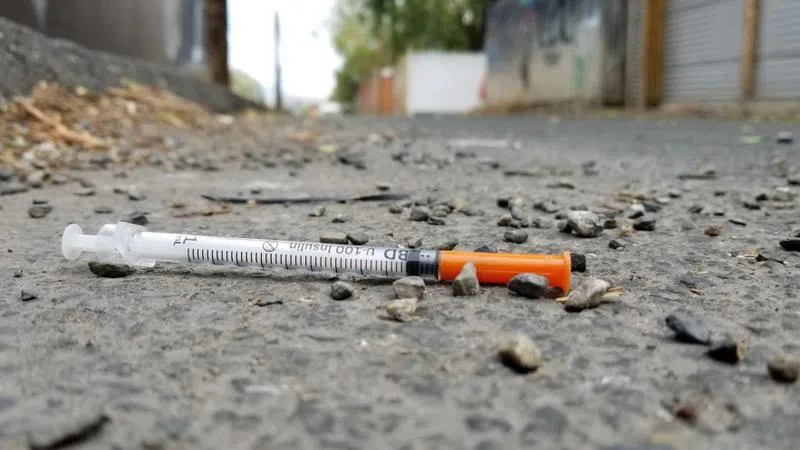
(Image Credit: CFJC Today File Photo)
decriminalization pilot

B.C.’s decriminalization project comes to an end with mixed reaction in Kamloops

Jan 15, 2026 | 6:03 PM

KAMLOOPS — British Columbia’s decriminalization pilot project that was launched back in 2023 will come to an end at the conclusion of January.

Health Minister Josie Osborne made the announcement on Wednesday (Jan. 14), saying the province will not be seeking an extension to the pilot when it comes to an end on Jan. 31. In Kamloops, RCMP Supt. Jeff Pelley has told reporters that the change will not affect the detachment greatly, noting his officers focus on repeat offenders and offences that rise above simple possession.


Troylana Manson lost her son to the drug crisis and now advocates for a solution. She feels the entire process was set up the fail from the start.


“They did not give ‘decrim’ the full go, having the full support of the recovery industry supporting them,” said Manson, who now works with Moms Stop the Harm. “The government fell short on the healthcare part of the ‘decrim’ project”

Kamloops councillor Katie Neustaeter has been pushing for the end of the pilot. Despite being in the opposite camp, she agreed that process was flawed.

“It was well intended but there were no guardrails and you have to do something that is this critical well. It has to be thought through,” Neustaeter told CFJC Today. “And the failure was from the very beginning. It wasn’t just the end product as measured in the data, it was how we entered into this experiment, as well. And part of that was a total lack of consultation with local governments.”

While framed as public health, the CEO of ASK Wellness wonders if the decision to stop the pilot is a more than likely a political decision for an NDP party losing votes on issue of street disorder.

“The public’s opinion had become so vocal, that I don’t think politically, it had any credibility left,” said Bob Hughes. “From a science point of view, I think that there is some evidence that clearly points to that addiction is a health issue, it shouldn’t necessarily be a criminal issue. Unfortunately, they interact with one another quite a bit.”

The move to decriminalize small amounts of illicit drugs was made in part to help destigmatize drug use. According to Neustaeter, it failed in that pursuit.

“There were good intentions but good intentions aren’t good enough when lives are on the line,” said Neustaeter. “Part of what they wanted to achieve was destigmatization around drug use but instead, it was normalization, and that had incredibly damaging effects on communities, on social unrest and also by people who are struggling with addiction right now.”

The need for the province to move quickly on new ideas and initiatives was echoed by all three.

“This is part of, I hope, a more comprehensive strategy that encompasses a component of enforcement, a deepening of our investment into treatment and recovery, a renewal around prevention about the sheer harm of some of the substances that are out there,” said Hughes. “And then, of course, still being able to sustain the vital lifesaving part of harm reduction.”