(Image Credit: CFJC Today File Photo)
Property Tax Implications

Budgetary impact of pipeline assessment changes could top $1.3M next year: TNRD

Dec 15, 2025 | 12:13 PM

KAMLOOPS — The Thompson-Nicola Regional District (TNRD) has written a second letter to the B.C. Ministry of Finance asking that proposed changes to the way gathering and transmission pipelines like Trans Mountain are assessed be halted until there is proper consultation with local governments.


The Dec. 12 letter is addressed to Douglas Scott, the deputy minister of finance and secretary to the treasury board. It comes after TNRD staff presented the district’s board of directors with updated numbers on impacts the changes would have to the 2026 budget for both the regional district and the Thompson Regional Hospital District (TRHD).

“This abrupt decrease in assessed values of Gathering and Transmission Pipelines imposes a substantial and unforeseen financial burden on property owners in other classes at a time of increased economic uncertainty,” the letter reads.

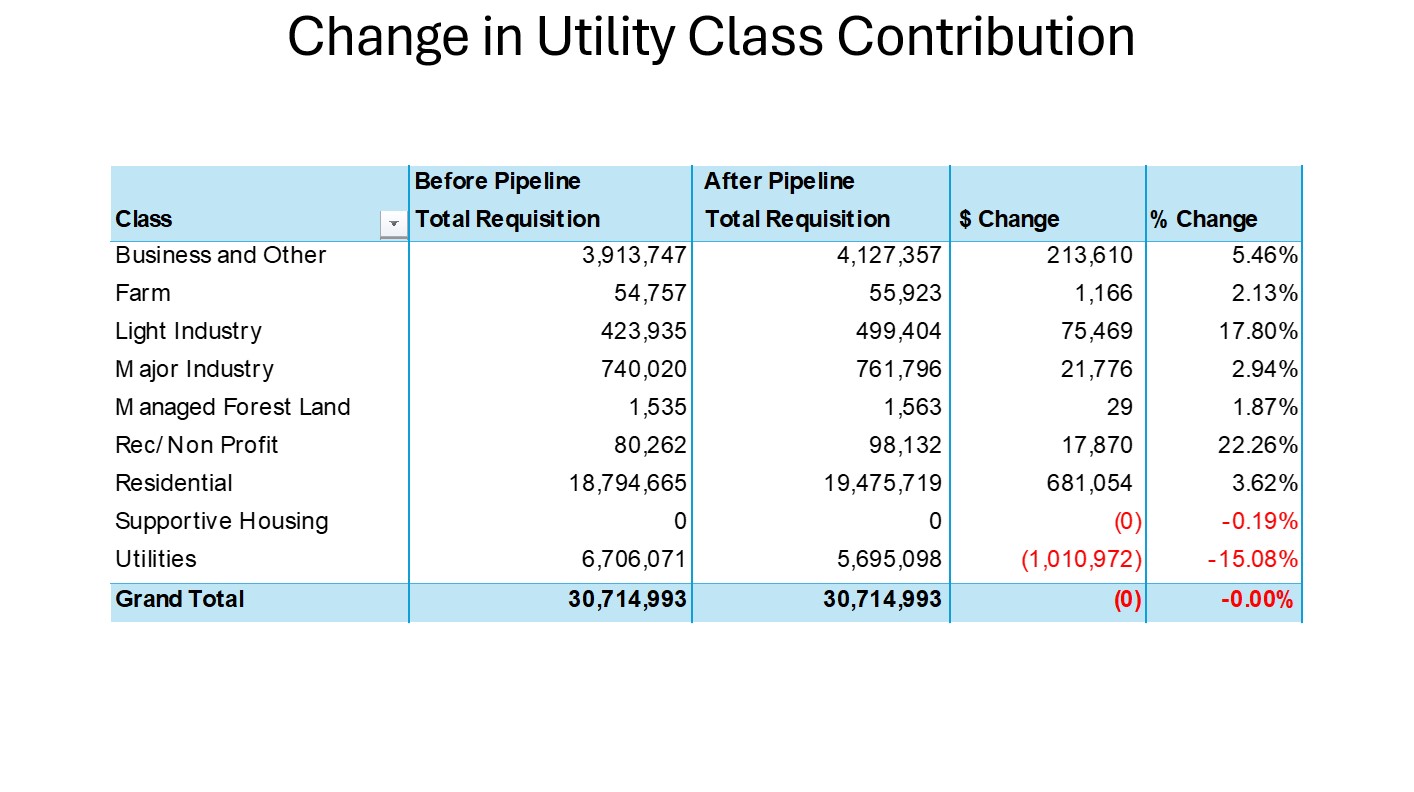
According to the TNRD, if the changes are implemented as planned, approximately $1.3 million in property taxes will be shifted from pipeline companies to residential and business properties each year, beginning in 2026.

About $1 million of that amount impacts the TNRD’s budget, while the remaining $300,000 impacts the TRHD.

Proposed impacts to the TNRD budget as a result of proposed changes to pipeline valuations.
Proposed impacts to the TNRD budget as a result of proposed changes to pipeline valuations. (Image Credit: TNRD)

“It’s going to have huge real world implications, and that’s the purpose of the letter that we decided to send out,” TNRD Board Chair Barbara Roden told CFJC. “The letter shows the real world impacts of this decision and how this is going to hit people, residential primarily but business class as well.”

The updated impacts are substantially higher than previous projections which estimated that the changes to assessed values of pipelines would only shift about $250,000 in taxation on to other property classes in the TNRD budget.

“This information presented is based on the 2026 Preview Roll provided by BC Assessment. This roll also includes regular anticipated changes to property assessments that regularly occur each year,” Austin Potts, the TNRD’s financial supervisor said in a statement.

“The Preview Roll shows a clear impact to taxation as a direct result of the pipeline re-assessments, but with the data BC Assessment provided it was not possible for us to calculate only the pipeline changes.”

Roden also told CFJC that the TNRD does not have the ability to cut services, meaning it’ll be up to other taxpayers to pick up the deficit.

“If we do have to cut services for any reason, it’s never to this extent and we do it in consultation with the people whose services we are cutting,” Roden said. “It’s not something that we want or like to do unilaterally. And no, we can’t just find that kind of money.”

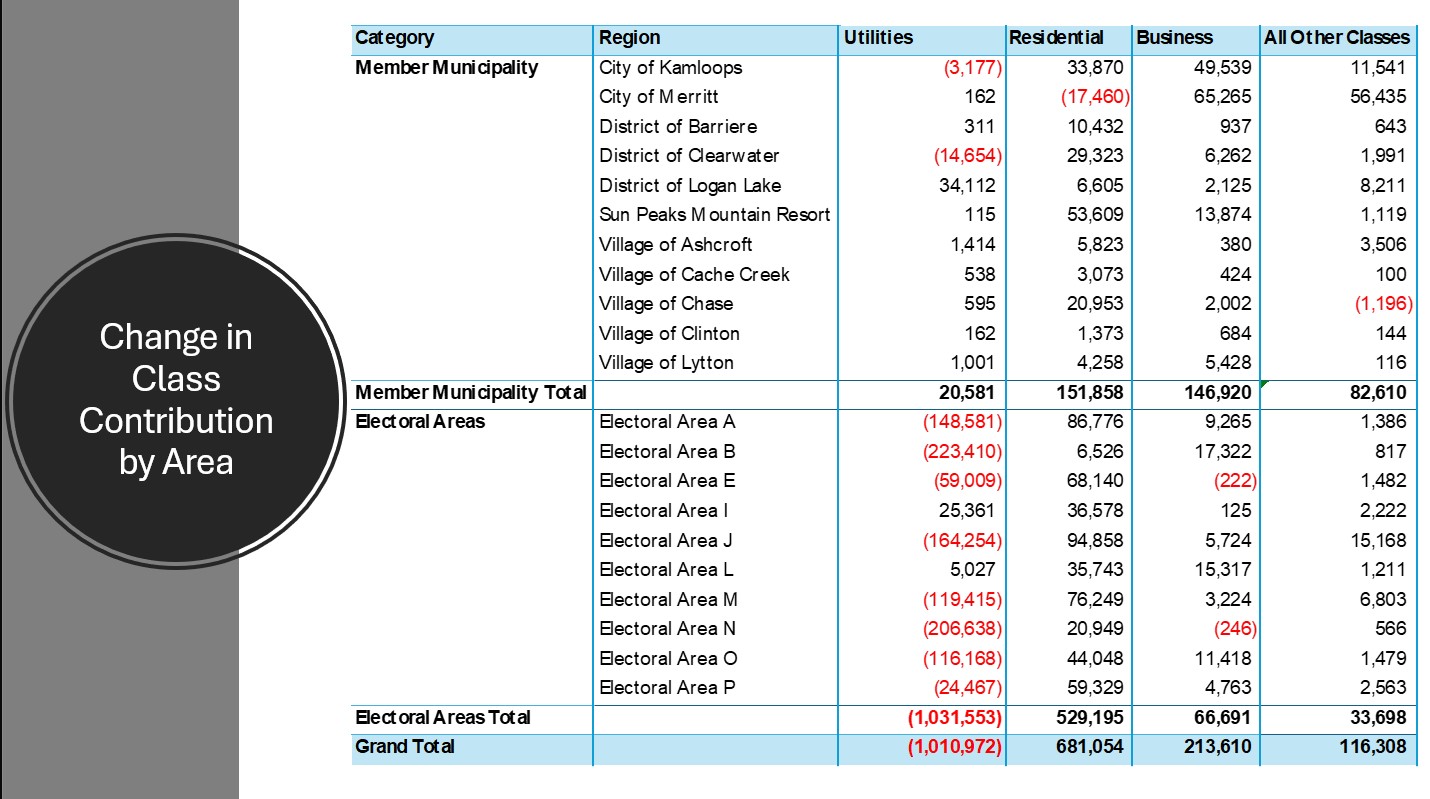
According to the TNRD, residents in the 10 electoral areas are expected to shoulder the majority of the increased taxes — approximately $529,195 — while residents in other member municipalities will pay the remaining $151,858.

Changes in contributions to utility taxes broken down by TNRD electoral areas and member municipalities.
Changes in contributions to utility taxes broken down by TNRD electoral areas and member municipalities. (Image Credit: TNRD)

Roden added while the proposed changes have been under review since 2016, local governments were only notified about it in September.

“The abrupt notice provided by BC Assessment for changes of this magnitude is not sufficient for local governments to reasonably adjust their budgets and ease the anticipated tax burden that this now creates for residents and businesses,” she added.

The TNRD previously wrote to B.C. Finance Minster Brenda Bailey in October, asking her to postpone the changes until at least next year once a potential review on rates for rail, telephone, cable and potentially electrical transmission and distribution lines is complete.

Bailey was expected to review the proposed pipeline valuation changes this month, and it’s not clear if that review has taken place. The minister is on record saying that any risk of a big tax burden shifting to residents and small businesses is “concerning.”

“We have heard that there will be reassessments of other utility properties next year and that its possible the reassessments of other classes will offset what is happening with the pipeline class and we are going ‘great! When we actually know this perhaps that would be a time to look at all of these classes together.'”

Kamloops MLA Peter Milobar has also introduced legislation to draw attention to what he called “the latest NDP backroom deal.” Milobar says the Municipal Affairs Statutes Amendment Act of 2025 will update existing rules on rate caps so municipalities can “accommodate revenue changes if the NDP refuses to halt the property devaluation of pipelines.”

“[It] would enable municipalities to adjust what they collect, actually keep what they collect from pipeline utilities at the same rate that they are currently collecting,” Milobar said in the BC Legislature in October.

In a statement, Tony Luck, the BC Conservative Critic for Municipal Affairs and the MLA for Fraser-Nicola, also took issue with the proposed changes, saying municipalities will be forced to raise taxes to replace lost revenue as they’re not allowed to run deficit budgets.

– With files from Michael Reeve/CFJC Today