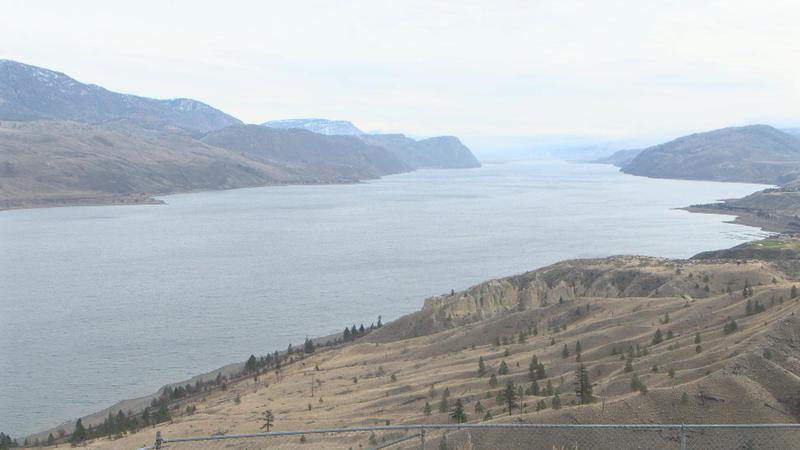
Kamloops Lake (image credit - CFJC Today)
STEELHEAD POPULATIONS

Provincial forecast points to historic low steelhead returns in Thompson, Chilcotin watersheds

Nov 25, 2025 | 4:39 PM

KAMLOOPS — For decades, steelhead trout populations have been declining, but a recent report from the Ministry of Water, Land and Resource Stewardship has 2025 as the worst year on record for the spawning population in both the Thompson and Chilcotin Rivers. The ministry is forecasting the spawning population in the Chilcotin at fewer than nine steelhead, while the Thompson sits at fewer than 19.

Steelhead trout travel up the Fraser River from the Pacific Ocean to the outlet of Kamloops Lake to find their spawning grounds. However, zero steelhead were captured this year in test fisheries, leading to the estimate of fewer than 19 in the Thompson watershed.

“This has been going on for quite some time. I would say the populations have declined over about 40 years, definitely since the ’80s,” said biologist Robert Bison, who authored the report for the ministry. “They have been at these kinds of levels, I would say, for the last 10 years or so.”


While no single cause is to blame, Bison believes the decline is linked to predators in the near-shore ocean environment and conservation efforts that have seen predator populations increase.

“We’ve long since known that a lot of the change is driven by change in the ocean. Particularly in the last 15 years, we’ve come to understand it is the consequence of marine mammal restoration or increases in marine mammal populations in the nearshore waters of, particularly, southern B.C. and also Puget Sound,” stated Bison.

Restrictions have prohibited the Kamloops Fish and Game Club from catching steelhead in recent years, but the concern over the dwindling population has Elmer Fast believing emergency action may be needed.

“Some thought should be seriously given to taking a few of these fish — certainly not all of them, but maybe a couple of pairs, two males, two females — and propagating them in a controlled environment, such as an hatchery, to ensure the offspring from these fish have a high chance of survival,” said Fast, who is also the chairman of the local committee of the Sport Fish Advisory Board.

The Thompson River is home to both steelhead, which travel to the ocean, and rainbow, which remain in fresh water. The two slightly different trout could help the steelhead persist longer.

“They are the species of rainbow trout that go to sea, and there is a bit of reproductive interaction with those rainbow trout that don’t go to sea that live with them. That is going to help them persist a little bit,” said Bison. “But it’s better if some of the fish that do go to sea, when they come back, that they actually reproduce and pass on the genes that were important for their survival.”

“Conservation is number one. If you can manage these stocks in a manner that they are self-sustaining and hopefully provide abundance at levels where use in some form can be undertaken, that is the objective,” said Fast.

Overall, it’s hard to predict out past three-to-five years as conditions are ever changing.

“There are changes that are continuing to occur and I think it’s very hard to foresee too far into the future to what that holds,” said Bison.

The ministry will get an updated and more precise count of the steelhead in the spring.