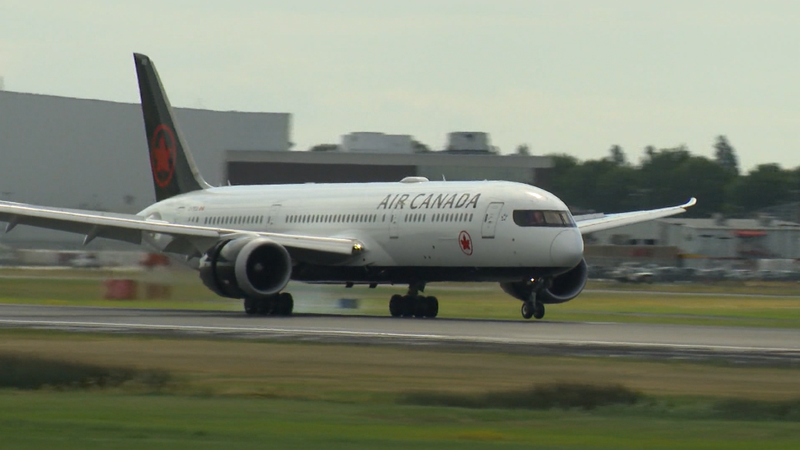
Image Credit: Global News
AIR PASSENGER RIGHTS

Kamloops family out $7,900 due to trip cancellation during Air Canada strike seeks reimbursement

Nov 18, 2025 | 4:21 PM

KAMLOOPS — Thousands of flights were either postponed or cancelled entirely during the strike action taken by Air Canada employees this past summer and some people still haven’t been able to get their money back.

One Kamloops family says it’s still out nearly $8,000 after its trip to Europe was cancelled and have been told they aren’t eligible for reimbursement. CFJC spoke with the Air Passenger Rights organization to learn more about how passengers can try to get reimbursed when a trip is cancelled.

As of this week, Air Canada’s website cites 98 per cent of labour disruption claims as being resolved, but that’s not the case for Chelsey McKinney’s family.


“We had a trip planned to go to Spain and then over to Italy before coming home. We went to Winnipeg for a wedding and the night that we were at the wedding, we got a text saying our flight was cancelled due to the Air Canada strike, which started the next day,” explains McKinney.

McKinney says the family got some money back through her credit card travel insurance and for two of the flights that had been cancelled, but they’re still out $7,900 for the rest of the prepaid flights, hotels and trip activities they had planned.

“‘Under Canadian Air Passenger Protection Regulations, labour disruptions are classified as situations outside of our control. ‘We reviewed your case and unfortunately you are not eligible to be reimbursed for the expenses that you incurred during your trip with us,'” McKinney recites from the email she received from the airline.

Given that the family didn’t get to go on its trip at all, McKinney says that email was a surprise.

“It seems wrong. It feels like we’ve been stolen from, and I don’t really know what else to do next,” she says, adding that she is considering going to small claims court.

Air Passenger Rights president Gábor Lukács says reimbursement would be owed to cover the prepaid costs associated with the cancelled trip.

“In a situation like this, the passenger’s basis for claiming reimbursement would be the failure of the airline to rebook the passenger on competitor airlines as required by the APPR, which is a breach of contract,” explains Lukács. “And Article 19 of the Montreal convention, which imposes liability for delay in transportation of passengers which would also likely be applicable.”

“The passenger in this situation could — and should — take the airline, Air Canada, to small claims court and make them pay,” he says.

Under Air Passenger Protection Regulations (APPR), the advocacy group says the large airline did have an obligation to rebook on any airline.

“Clearly, Air Canada is in the wrong here and a judge will have to assess which of those damages were caused by that wrong. I believe it is all of them but that has to be assessed and I expect Air Canada will have to pay for this,” Lukács reiterates.

Ultimately, Lukács says situations like this stem from a bigger issue around a lack of meaningful enforcement or fines in Canada to keep airlines in check and keep passengers protected.

“There’s no genuine economic incentive for the airline to comply with the law,” he notes. “That’s why there are so many complaints. That’s why airlines feel they can get away with it.”