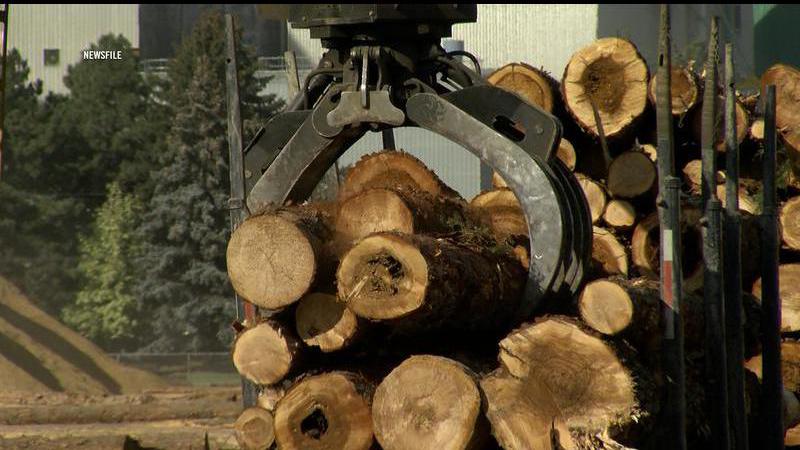
Image Credit: CFJC Today/File Photo
TRADE MISSION

‘It isn’t economically viable’; B.C. forests minister points at US tariffs as reason for diversification

Nov 17, 2025 | 4:23 PM

KAMLOOPS — Last week, B.C. Forests Minister Ravi Parmar led a trade mission to Eastern Asia, making stops in both South Korea and Japan in the hopes of expanding and diversifying British Columbia’s markets overseas. It comes as B.C. is looking to end its historic reliance on U.S. markets amid trade pressures and mounting tariffs.

The B.C. forest industry is not going to be fixed by a single trade mission to Asia, but Parmar is confident the relationships built last week will benefit British Columbians.

“The reason it isn’t moving, it isn’t economically viable for us to move that harvest right now because we are too reliant on the United States,” said Parmar. “That is the position we are in. We have to diversify.”

Kamloops-North Thompson MLA and Forest Critic Ward Stamer was in full support of the mission, and applauded the work before shifting his focus to short-term needs.

“They’ve changed the policies, they’ve changed the regulations, and now it’s 10 times more expensive to cross that stream,” said Stamer. “That is just one example of the things that we could be controlling, but unfortunately the government will not look at common sense, will not look at reducing their overall costs. And that is why we are in the situation we are in.”

The challenge is the vast majority of the work completed last week won’t result in immediate change, but instead plants seeds for the future. Planned growth in Japan, however, may lead to an expanded market in the near term.

“But we were focused also on short-term objectives, as well,” explained Parmar, “and that is the movement of fibre. We know we have to be competitive with Europe, with Russia in these markets. That is why the message we have been sending around buying from Russia versus buying from Canada has been effective on the ground in those markets. We signed some pretty strong [memorandums of understanding] as well, one with the 2×4 Association of Japan.”

The minister and critic disagree on why the province is not utilizing the full annual allowable cut.

“One of the reasons we are in this mess is because we don’t have enough supply right now. We don’t have enough options at the table because we are constrained by the amount of permits that are being approved right now,” offered Stamer. “There is a tremendous logjam, and sorry for the pun, in trying to get these permits put through. The minister and the premier have promised they would be able to speed up the process and that has not happened.”

“The real issue that we have right now is economically viable fibre. When you are market reliant on the United States and there is a 45 per cent tax, you are not able to go and harvest,” said Parmar. “I have spoken to so many companies these last few weeks that are dwindling down and curtailing their harvesting operations just to be able to build up their working capital because they don’t want to lose customers in the United States.”

The completed trade mission was the largest in B.C. history.