CFJC File Photo
Pipeline Taxes

Kamloops council attempting to push back over proposed changes to pipeline assessments

Nov 16, 2025 | 4:41 PM

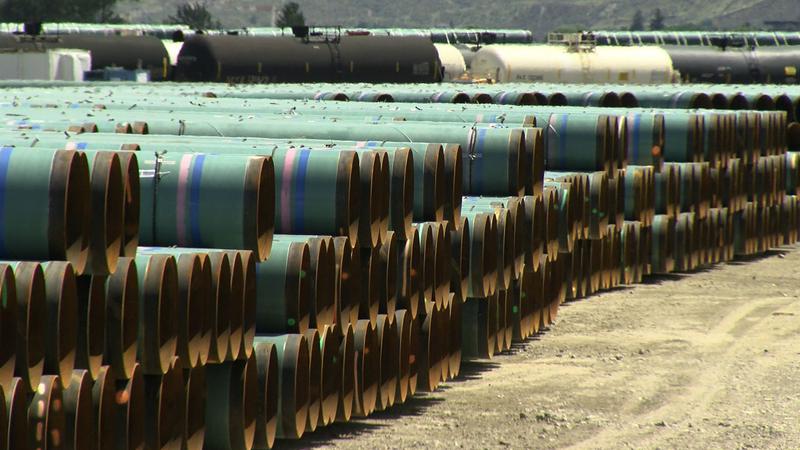
KAMLOOPS — The City of Kamloops is attempting to push back against proposed changes in British Columbia that would reduce the assessed value of pipelines like Trans Mountain.

Councillor Katie Neustaeter said it is important that the city push back – just like the Thompson-Nicola Regional District (TNRD) has – as municipal governments fear budget shortfalls to the tune of hundreds of thousands of dollars.

“They will be essentially downloading a massive amount of cost onto taxpayers and specifically for our community, businesses like Kruger, who are smaller industry because they’re claiming that their assets have diminished in value and so that taxation should be downloaded,” Neustaeter said.

“This is deeply concerning in many ways.”

The proposed changes could mean about a $600,000 shortfall to City of Kamloops coffers, which amounts to a roughly 0.5 per cent hit to the budget.

The TNRD is projecting a reduction of around $250,000 while the District of Clearwater expects to also be out between $240,000 and $300,000, which could mean as much as an 11 per cent hit.

“We would have risk managed this for multiple years if we knew this was coming,” Clearwater mayor Merlin Blackwell told CFJC. “We would have put any Trans Mountain taxation aside and considered it a bonus from the expanded assessment from the expansion to the pipeline project, but we didn’t know that was coming.”

The TNRD has sent a letter to Finance Minister Brenda Bailey, asking that she postpone the changes until at least next year, once a potential review on rates for rail, telephone, cable, and potentially electrical transmission and distribution lines is complete.

“Why the huge hurry to get this one passed?” TNRD Chair, and Ashcroft mayor, Barbara Roden told CFJC last month.

“I get that BC Assessment has to assess properties and update valuations on a regular basis. No one is trying to argue they shouldn’t. It’s just we would like more consultation and transparency as to why this is suddenly necessary, and why weren’t local governments looped in and told that this was coming?”

Kamloops Councillors also voted to send a letter to Bailey – and to Premier David Eby – to ask the provincial government to review the proposed pipeline valuation changes. They also want a delegation from BC Assessment to attend a meeting as soon as possible to discuss the situation.

“It’s incumbent on us to push back hard and say ‘we do not accept this on behalf of our community,” Neustaeter said. “There was absolutely no consultation.”

“Whatever that crunches out to for Kamloops, I think we need to find out those dollars and those figures specifically and write a comparable letter on behalf of our community as well.”

Neustaeter proposed sending the letter to the province and to BC Assessment during the Nov. 4 council meeting, as Trans Mountain contacted the city about its plan to seek approval from Canada Energy Regulator to implement a Drag Reducing Agent (DRA) program across its existing pipeline.

According to Trans Mountain, that program aims to “increase pipeline capacity and operational efficiency” by strategically installing DRA units across the system and within the fence line of existing pump stations.

Neustaeter said Trans Mountain’s moves “[do] not compute” as she noted the company is trying to add value to its infrastructure while also asking that the assessed value of its pipeline be reduced.

“The timing was interesting,” Neustaeter added. “These things do not add up and there is certainly not a financial burden that our tax base should be bearing.”

According to her office, Bailey is expected to look into the proposed pipeline valuation changes sometime this month, though its not clear whether that has already happened. The Minister is on record saying that any risk of a big tax burden shifting to residents and small businesses is “concerning.”

“That’s why I want to hear more about what this means for areas like the Thompson-Nicola Regional District and the people who live there,” Bailey said in a statement.

According to BC Assessment, these proposed changes have been in the works since 2016, though implementation paused in 2020 due to the pandemic and again in 2024 because of the provincial election.