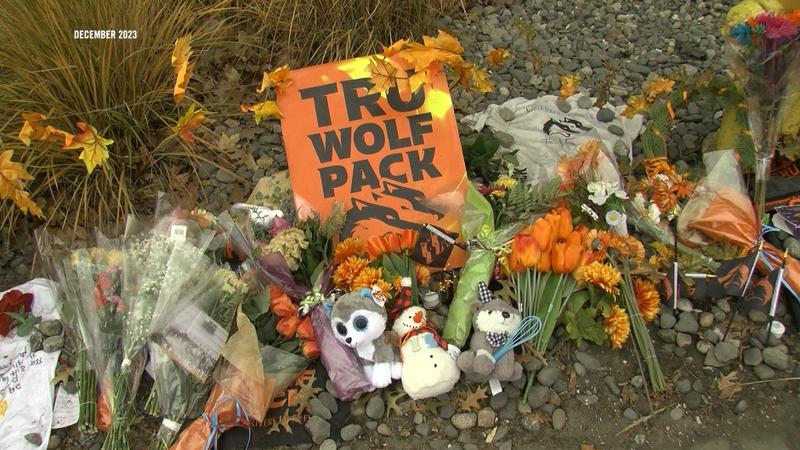
File Photo (Image Credit: CFJC Today)
Two and Out

PETERS: Justice was simply unattainable for the TRU volleyball players

Nov 7, 2025 | 12:30 PM

THERE WILL NEVER BE A WAY to prove what really happened in the cab of Colval Abbinett’s pickup truck seconds before it slammed into a small car on McGill Road two years ago.

That collision killed Owyn McInnis and forever changed the lives of Riley Brinnen and Owen Waterhouse.

Those young men and their families will never truly see justice — or retribution, perhaps — but it’s difficult to really lay blame on the police, the courts or the law for that.

According to the testimony, Abbinett was seen slumped over his steering wheel at McGill and Dalhousie.

The truck lurched forward several times, then accelerated to highway speed and did not slow before the violent impact.

Tests showed Abbinett was not intoxicated, meaning it is likely he fell asleep — even though he didn’t have an explanation for how or why that would have happened.

And because there was no way to prove intent or criminal negligence, there was no way a criminal charge was going to stick.

Prosecutors were left with motor vehicle act violations — limiting what a judge can impose for punishment. In this case, it’s a fine and a driving prohibition.

Does an $1,800 fine and a 15-month driving ban seem fair for the occupant of one vehicle considering what happened to the three young men in the other vehicle? Of course not.

Even if prosecutors could have established intent or criminal negligence with the evidence available to them, even if Abbinett could have been charged criminally and sentenced to hard jail time, that outcome is still unbalanced.

It still leaves three families trying to pick up the pieces.

Does that mean we accept the results of this prosecution as inevitable — as the best we, as a society, can do?

No.

We redouble our efforts to build a safer society, safer streets, safer vehicles.

We recommit to police and prosecution services that are as diligent as possible in collecting evidence and forming the strongest possible cases against those who have done wrong.

And we reinforce how important it is to support those who have experienced profound loss and grief.

It’s not perfect but it’s how we make things better, bit by bit.

——

Editor’s Note: This opinion piece reflects the views of its author, and does not necessarily represent the views of CFJC Today or Pattison Media.