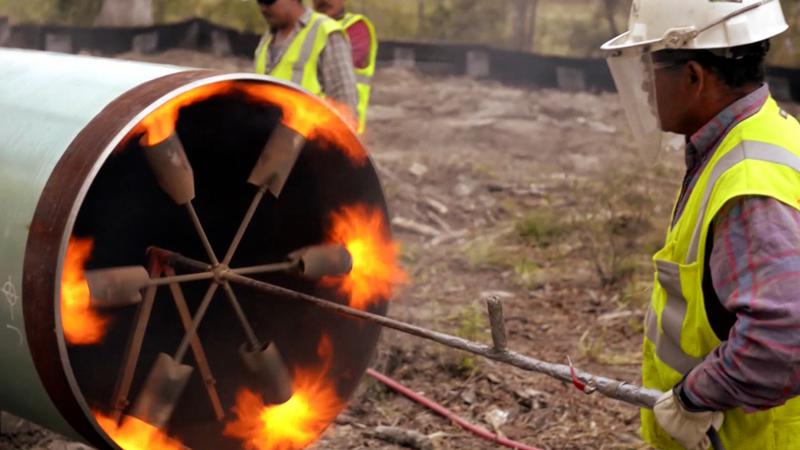
File Photo
PIPELINE TAX CHANGES

‘It has put us in an untenable situation’; municipalities facing steep tax hikes with proposed pipeline taxation changes

Oct 31, 2025 | 4:04 PM

KAMLOOPS — A potential change being mulled by the NDP Government following a recommendation from BC Assessment could end up costing taxpayers in communities throughout the province.

The change would affect how BC Assessment views pipeline properties, basing the evaluation of deprecation and no longer on revenue generation. That would in turn lower the tax collected by municipalities, leaving a large hole in next year’s budget.

The change was proposed after nearly a decade of work with the pipeline companies, yet local communities were only made aware of the change back in September.


“There was no consultation and there was very little heads up,” said Merlin Blackwell, the Mayor of the District of Clearwater. “We did find an email in our junk mail from September of this year I think the 17.”

“We would have risk managed this for multiple years if we knew this was coming. We would have put any Trans Mountain taxation aside and considered it a bonus from the expanded assessment from the expansion to the pipeline project, but we didn’t know that was coming.”

For Clearwater, the change in pipeline valuation could mean an additional tax hit of 11 per cent next year.

“I don’t care what BC Assessment says that there is going to be highs and lows in this, the lows are all losing here,” added Blackwell. “The lows are all the communities that are going to take the hit percentage wise. We are the ones who are going to have to deal with this, and with no heads up and no ability to phase this in or feather it in, it has basically put us in an untenable situation and it is highly damaging.”

The TNRD is already months into its budget process, and they are now in search of approximately $300,000. Board Chair Barbara Roden says they don’t have any fat to cut.

“Now really we have two options, either we raise taxes on other property classes which is mostly going to be residents or we have to look at cutting services,” outlined Roden. “And we are extravagant in our services, every service that we provide to our residents in the TNRD is a service that residents have indicated that they want.”

Kamloops-Centre MLA Peter Milobar has moved a private members bill to halt the change, noting the final decision rests with Finance Minister Brenda Bailey and Premier David Eby.

“So the minister has two options, she can say no the recommendation from BC Assessment and everything stays the same, or she can adopt my private members bill which would be to raise the mill-rate cap on pipelines so that municipalities can collect the same amount of money, not more, but the same amount of money they are collecting of those same pipelines,” Milobar told CFJC News.

Roden called the move downloading, and after hearing repeatedly at the Union of B.C. Municipalities conference that the province was out of money, she said it was a backroom way of giving major industry a deal on the backs of local taxpayers.

“It doesn’t really cost Victoria anything because those tax revenues weren’t going to Victoria, they were coming to local governments,” said Roden. “So it’s a way almost for the pipeline companies to get a break from the province without it costing the province any money, and that is wrong.”

Roden also estimated that the City of Kamloops is looking at a shortfall of $600,000 in its 2026 budget, which would be equivalent to an approximate a 0.5 per cent tax increase using 2024 figures.