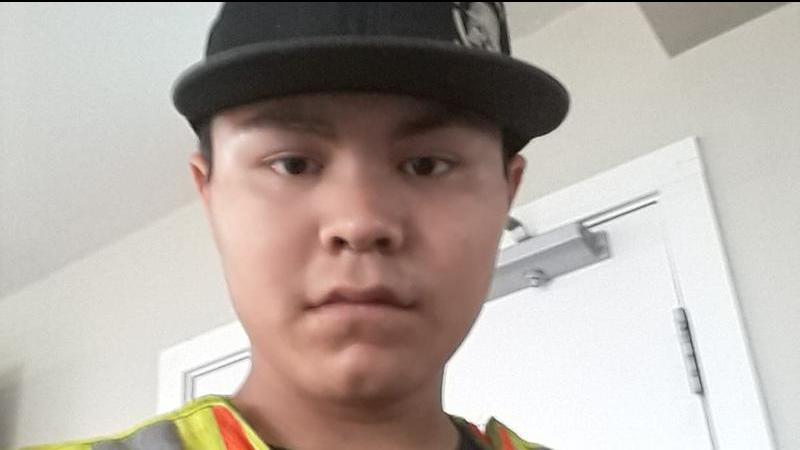
Image Credit: Facebook / Surrance Myers
IIO INVESTIGATION

Death of Indigenous man in Williams Lake RCMP cells blamed on understaffing, inaction of jail guard

Oct 9, 2025 | 3:01 PM

WILLIAMS LAKE, B.C. — B.C.’s police watchdog says understaffing of the Williams Lake RCMP detachment and the inaction of a civilian jail guard each played a part in the death of a young Indigenous man in RCMP cells.

The Independent Investigations Office of BC (IIO) released its report into the 2022 death of Surrance Myers Thursday (Oct. 9).

Early on Oct. 1, 2022, Myers was taken into custody after trying to evade police while riding an unlicensed moped. The 21-year-old had never held a driver’s license and was already prohibited from operating a motor vehicle.

The IIO says Myers was taken to a cell in the Williams Lake detachment and promptly fell asleep on the bench inside. A short time later, he fell to the floor and bore the brunt of the impact directly on his face as he did not use his arms to break his fall.

Closed circuit video showed Myers stopped moving moments after he fell and laid completely still for nearly two hours, when he was discovered in medical distress by an officer who had arrived to release him on conditions. Paramedics were called and Myers was quickly pronounced dead.

The on-duty jail guard, who had noticed Myers’ fall on CCTV and checked on him immediately, later told investigators Myers told her he was okay. In the next nearly two hours, she performed three ‘physical’ checks — fewer than frequency RCMP policy dictates, which is once every 15 minutes. The guard told investigators her knee was hurting that night, so she was relying more heavily on CCTV to monitor the detainees.

The medical examiner did not determine an exact cause of Myers’ death, but noted alcohol and drugs did not appear to be factors. The post-mortem exam did find scrapes and bruises on Myers’ face, which the IIO says were likely caused by the fall in his cell, not during his arrest.

In her conclusion, IIO Chief Civilian Director Jessica Berglund says the guard “did not meet the standard of care expected of her.” Berglund notes the guard had made a habit of logging CCTV checks on detainees as if they were physical checks.

Berglund’s report also noted RCMP supervision of the guard’s shift that night was inadequate, with the acting watch commander having gone home sick. The report says there were only two Williams Lake RCMP members on shift that night — and both of them were on overtime.

The IIO investigates actions or inactions of police officers that may have caused death or serious harm. At the time of the incident and the investigation, it did not have jurisdiction over civilian jail guards. Legislative amendments that extend the IIO’s mandate to include ‘detention guards’ were given royal assent in 2024. Those amendments were enacted and came into effect on September 1, 2025 — but were not in effect when the incident occurred and when the investigation was conducted.

Berglund says Myers was a ‘vulnerable detainee’ and calls his death ‘tragic’, but concludes she has no reason to believe any police officers committed an offence that led to Myers’ death.

Tŝilhqot’in reaction

The Tŝilhqot’in National Government provided civilian monitors of the IIO investigation into Myers’ death.

In their report, monitors Robin McFee and Maya Ollek express satisfaction that the IIO investigation was thorough and diligent but note the gap in civilian jail guards oversight.

McFee and Ollek say the RCMP “ultimately removed the security clearance of the civilian jail guard, such that the civilian jail guard is no longer acting in that role.”

However, they say that action does not go far enough.

“To preserve public confidence in the policing system and the policing oversight system, jurisdictional boundaries must not result in certain actors being beyond the reach of the bodies charged with conducting this oversight,” states the report.

Upon the release of the IIO investigation report Thursday, the Tŝilhqot’in say the young man’s family is still looking for answers.

“Despite these clear failures, there has been no effort by the RCMP, the provincial or federal government, or the City of Williams Lake to address this tragic loss with the family or the Tŝilhqot’in Nation or explain how steps will be taken to ensure that it does not happen again,” said the Nation in a news release.

“As a result, Surrance’s family has had no option but to file a lawsuit in B.C. Supreme Court to seek accountability and change.”

The IIO noted 15 detainees died either in police cells or after incidents in police cells between 2019 and 2023. Of those 15, seven were Indigenous.

“It is unacceptable that Indigenous people continue to die in the jail cells of this country,” said Nits’ilʔin (Chief) Otis Guichon Sr. “We fear for our loved ones, our young men, our women, when they step out the door. It needs to stop. We need to see change. We are calling on the RCMP and all levels of government to work with us to make the changes that are needed to ensure a tragic loss like this one does not occur again. And if they don’t want to work with us, we will do everything in our power to hold them accountable and change the system ourselves, whatever it takes.”

“Surrance was much loved by our community and throughout the Nation,” added Nits’ilʔin Lennon Solomon of the Yuneŝit’in Government. “He was a young man, always polite and positive, respectful, working a couple jobs, one of those kids that gives you hope. I knew Surrance very well. I can’t explain what a loss like this does to a family, or to a community.”

“There are no words. It adds loss on top of loss, trauma on top of trauma. I want to see the RCMP take responsibility and own up to this tragedy. Otherwise, nothing has changed, it is just more of the same for us.”

The full IIO report can be read here.

The report from the Tŝilhqot’in-appointed civilian monitors can be read here.

Ed. note: An earlier version of this story stated the IIO do not have jurisdiction to investigate the actions or inactions of detention guards. That is incorrect. Legislation bringing detention guards under the IIO’s jurisdiction came into effect on Sept. 1, 2025. The legislation was not yet in effect at the time of this incident or subsequent investigation. CFJC Today apologizes for this error.