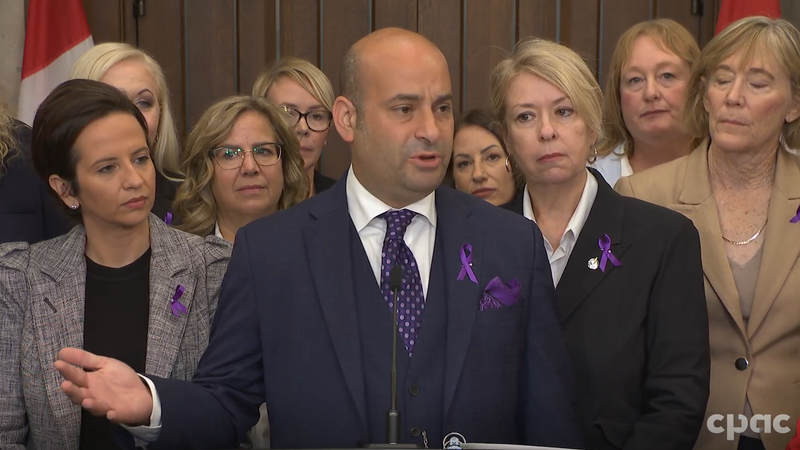
Kamloops-Thompson-Nicola MP Frank Caputo speaking to reporters in Ottawa after tabling his private member's bill (Image credit: CPAC).
Intimate Partner Violence
Kamloops MP Caputo tables private member’s bill aiming to crack down on intimate partner violence
Sep 18, 2025 | 8:46 AM
-
Share on Facebook
-
Share on Bluesky
-
Share on X
- Copy Link
KAMLOOPS — The member of parliament for Kamloops-Thompson-Nicola has tabled a private member’s bill that he calls the most substantive change to intimate partner violence laws in Canadian history.
Frank Caputo, the Conservative Party’s critic for public safety, says his private member’s bill includes:
- creating a new offence of assaulting an intimate partner;
- making the murder of an intimate partner first-degree murder in all cases;
- allowing a judge to have a risk assessment conducted while a person is on release;
- streamlining and modernizing the detention of seized goods.
Speaking to reporters in Ottawa Thursday (Sept. 18), Caputo says other parties haven’t seen his full private member’s bill, but he’s received positive feedback so far.