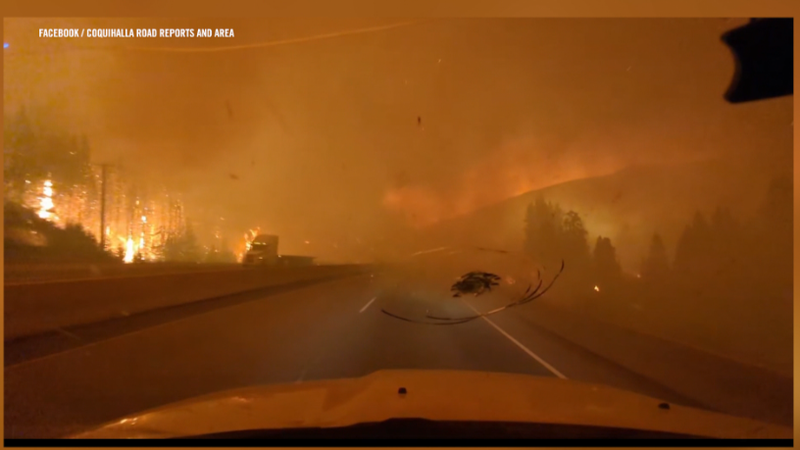
Image: Facebook / Coquihalla Road Reports and Area
FIRE SEASON OUTLOOK

Quiet start enjoyed, furious finish anticipated for Kamloops region wildfire season

Sep 5, 2025 | 4:22 PM

KAMLOOPS — Up until the most recent heat wave, the summer wildfire season in the Kamloops region had been relatively quiet. Aside from the latest surge in first activity near Hope and Princeton, only a few fires of note had sparked in the Kamloops Fire Centre.

However, Mike Flannigan, the scientific director of the Institute for Wildfire Science, Resiliency and Adaptation at Thompson Rivers University says the region is shaping up to have a lot of fire activity on the tail-end of this year’s wildfire season.

The calmer wildfire season the Kamloops region had been coasting along with for most of the summer has apparently ended, with more fires and smoke seen throughout the Interior.

“Earlier we had fires to our north in the Cariboo. Numerous, large active fires producing a ton of smoke. We had fires in Washington state producing a ton of smoke and we were the Goldilocks area. We were not too far south and not too far north, and we avoided it,” Flannigan explains. “But now, our luck has run out and we’re getting this smoke.”

Around the province, many areas had also experienced a slower start to the season. In terms of the number of fire starts, Flannigan notes BC is still below average for this season.

“Area burned is actually above average and most people find that surprising because most of it was in the northeast of British Columbia around Fort Nelson in spring and early summer,” he says.

September is expected to see a shift, particularly as the breakdown of the current upper ridge in the southern Interior could be followed by dry lightning and strong winds.

“The forecast is that we’re going to see lots of lightning this week in Kamloops and across British Columbia, so I expect a lot more fires,” explains Flannigan. “Ballpark, 100 fires, 200 new fires, primarily caused by lightning.”

Conditions could always change, but heading into the next couple of weeks, the recent record-breaking temperatures paired with ongoing drought and a lack of rainfall is a concerning combination for wildfire risk.

“I expect more fire this week, next week — and then who knows? But we are seeing longer fire seasons and in part it is because our climate is changing. We’re warmer and drier, and our summers are extending into the fall,” adds Flannigan.