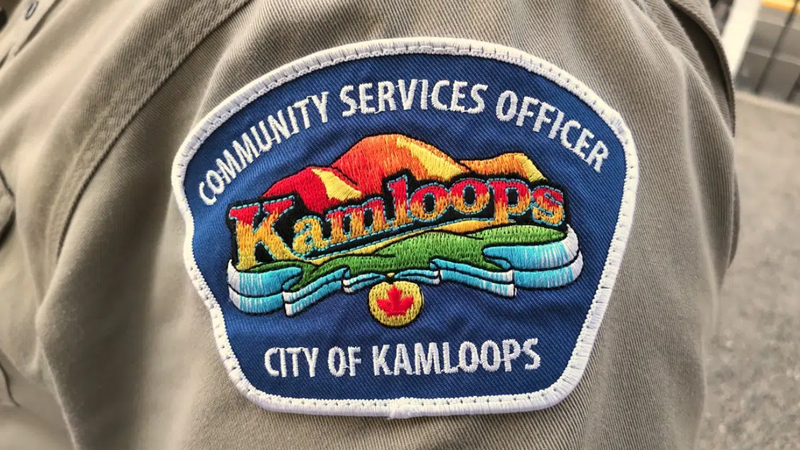
A Kamloops Community Services Officer's badge. Image Credit: Victor Kaisar/CFJC Today)
Community Safety

First cohort of Kamloops CSOs with peace officer status set to be sworn in

Sep 2, 2025 | 8:34 AM

KAMLOOPS — The first cohort of Community Services Officers with peace officer status in Kamloops will be sworn in during a private ceremony on Tuesday (Sept. 2) afternoon.

The City of Kamloops said these officers have completed training under the new Delegation of Bylaw Enforcement Authority Bylaw, which was adopted on July 30 last year.

“I think this is great work on behalf of council to be able to create these changes,” Councillor Katie Neustater, who spearheaded these changes two years ago told CFJC Today. “We know that safety and security are a top priority for our residents and we agree.”

“Last year, there were changes approved for the CSO program and with the adoption of the bylaw and designation of peace officer status, it is a huge accomplishment and it should be celebrated.”

According to the city’s Community Services Manager Will Beatty, the Bylaw Enforcement Authority Bylaw aims to define the authority of CSOs and other enforcement officers like building and fire officials in Kamloops.

He said it will give these officers certain rights, protections, and enforcement tools so long as they’re acting within the scope of their duties.

“Confirming peace status for bylaw enforcement officers or community service officers in our community is significant,” Beatty said in July last year.

“Benefits include protection under the Criminal Code for assault of a peace officer and obstruction of a peace officer in performing their duties. [It] also clarifies the role of Bylaw Enforcement Officers and their lawful authority to investigate and enforce bylaw matters.”

That bylaw was presented to council for approval after the Province proposed amendments to the Police Act to create safety officers. Beatty also told council that CSOs and other bylaw enforcement officers will not be carry guns or other projectile weapons like tasers.

“In the event we had to protect ourselves we would,” Beatty added. “It could be a baton, OC spray, or handcuffs. In the province of B.C. I have yet to see an enforcement agency in municipal bylaws carry anything that is considered lethal force.”

This new cohort of officers will be designated as Tier 1 peace officers, which Neustaeter said, allows them to “legally” do things that they were already doing in some capacity as CSOs, even if previous bylaws technically didn’t permit them to do it.

“It’s things like asking for ID, gathering evidence related to investigations, and serving tickets and summons,” Neustaeter continued. “We wanted to make sure it was falling squarely within regulation.”

“I don’t think there will be any signficant changes that people see overnight, but what we will see CSOs being able to do things that before were in a grey zone, but now they can confidently do them.”

The changes, she added, will also create opportunities for upward mobility within the CSO department for people who are looking at law enforcement as a career.

The CSO program has been praised by incumbent Kamloops RCMP Superintendent Jeff Pelley as well as his predecessor Superintendent, Syd Lecky, prior to his departure in late 2022.

More changes still need at higher levels

Neustaeter also said this new designation and the 24/7 CSO model – which took effect last July – will also help mitigate some of the issues around crime and public safety raised by residents and business owners

“The strengthening of the CSO program and building supports around it and this investment of training will make a big difference in our community,” Neustaeter said, noting the Province has been slow make changes to the Police Act.

“It would shift some power towards municipalities that is desperately needed and we are ready for them.”

She noted that while “significant changes” are still needed at the federal and provincial level, these changes at the local level enable the city to continue supporting RCMP officers by doing what it can to maintain safety and security.

“This elevated training [for peace officers] talks about an integrated community model for these systems of care where we can move people though while also sorting out the crime from vulnerable populations,” Neustaeter said. “Those are not the same things and they require a different kind of addressing.”

“It’s not as simple as some people want to believe that we can round up all vulnerable people and do I don’t know what with them.”

Tuesday’s ceremony will feature addresses from the Deputy Mayor for September Kelly Hall, Chief Administrative Officer Byron McCorkell, and Protective Services Director Ken Uzeloc.

“This is an entry point to a conversation and people can see how hard it has been championed and how long it took for the Province to essentially check a box to say we can do this and this is necessary,” Neustaeter .

“We continue those advocacy efforts as we look at continuing to change the model from what has not been working in our community to what could.”

CFJC Today will have more on this new cohort of peace officers on Tuesday.