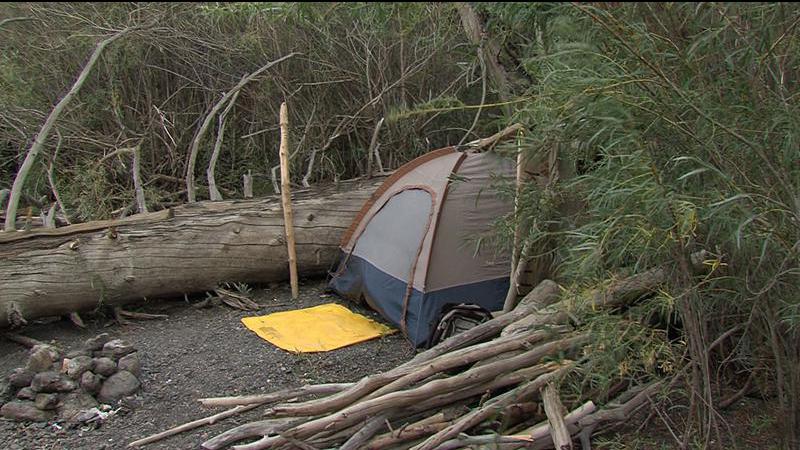
File Photo (Image Credit: CFJC Today)
Sound Off

SOUND OFF: Addressing homelessness by supporting people to become and stay housed

Mar 23, 2022 | 9:26 AM

OUR GOVERNMENT RECENTLY RELEASED a new provincial data set on homelessness with a startling result: more than 23,000 British Columbians experienced homelessness at some point in 2019.

With a finding like this, well documented through various provincial government programs, it is understandable to most British Columbians why in Budget 2022, the provincial government has dedicated an additional $633 million in funding to respond to and prevent homelessness.

More than justifying the need for additional resources, this new data set, which was collected and analyzed for the first time this year, is also helping us guide where these new resources should go in cities like Kamloops, and across the province. The data set is based on shelter use and cross-referenced with income assistance clients who have no fixed address.

For example, our new data shows that within the 23,000 people who experienced homelessness, there are two distinct groups. In one, a significant number of people have a relatively brief experience of homelessness – for example, an unexpected financial crisis or a fight with a landlord or roommate can suddenly result in someone who is working or generally healthy, but who has limited social or familial connections finding themselves without a home. With time, these people eventually find their way back into stable housing.


For people in this situation that experience homelessness relatively briefly, homelessness is still traumatic and can lead to longer repeated cycles of homelessness. That’s why our government’s goal is to prevent a financial shock or interpersonal crisis from leading to inevitable homelessness. A secondary goal is that if someone finds themselves unhoused, we want to get them back into stable housing as quickly as possible.

Targeted spending for this group in the most recent budget includes rent supplements, where government provides a top-up to help a tenant pay rent. These rent supplements – and there are many categories of support – can help move people who don’t need ongoing social or health supports into available market rental housing quickly. Another example is Budget 2022’s support for our new Rent Bank coverage across the entire province. Rent banks, administered by non-profit organizations, offer low-interest emergency loans to prevent a sudden financial shock from leading to homelessness for thousands of families and individuals. Both of these solutions rely on continuing and expanded construction of rental housing across the province as we see a 30-year high in people choosing to move to B.C. from other countries or provinces. This is where the budget’s support for our $2 billion Housing Hub funding that creates more rental housing comes in.

Another group that experiences homelessness revealed by this data, is one that is particularly visible in communities across B.C., including Kamloops. People in this group usually have more profound individual challenges leading to what is often called, “chronic homelessness.” These challenges frequently include serious mental health or chronic addictions. For example, more than 65 per cent of our homelessness point-in-time count participants self-identified as having an addiction. More than 50 per cent identified as having a mental health issue. For this group, homelessness of 180 days in a year or more is not unusual. Some of these individuals are homeless every day of the year and have been for years.

For people experiencing chronic homelessness, the challenges and solutions are significantly more profound. Providing housing immediately does offer stability and the opportunity for further services to be delivered, which is why it is helpful that during the COVID-19 pandemic, we acted quickly to temporarily house around 3,000 people. But temporary housing isn’t a long-term solution. We’re allocating $264 million over three years for a permanent plan to ensure people who were housed through this temporary program have the support they need to not return to homelessness.

More than 40 per cent of people who are homeless experienced homelessness first as a young person. Many of those now experiencing years of homelessness as adults were, at one time, youth in the care of government. These outcomes shouldn’t be surprising – just like any young person, youth in care don’t stop needing support the day they turn 19, but government support did end on 19th birthdays all too often. That’s why, through Budget 2022, to move upstream and prevent chronic homelessness, we are increasing supports for young people in government care up until they turn 27. This includes a new financial supplement, a no-limit earnings exemption, help with the cost of housing, medical benefits and educational support.

For those who have complex health, mental health and substance-use challenges, even beyond what our existing supportive housing program can support, we’re investing in a new type of housing called complex care housing. Delivered by health authorities, complex care housing provides more in the nature of healthcare support, as it includes more specialized medical and mental health care, as well as personal living and social supports, to help people stay in housing and thrive in their communities. Planning is underway to bring complex care housing to Kamloops.

For those who do not struggle with addiction and mental health challenges, rent supplements to end chronic homelessness can work – but only if they’re paired with supports. Similarly, those living in supportive housing may have gotten their health to the point where they can be successful in market housing with less help. This is why another step we are taking is making it easier for people who are homeless or in supportive housing to access housing in the private rental market by providing more than 3,000 people with a rental supplement of $600 per month over the next three years. Rent supplements that will be paired with life skills, food, employment facilitation and other supports to ensure success. This also helps free up space in supportive housing for those who need more support.

These actions are in addition to the thousands of affordable and supportive housing units we’ve built across the province, including more than 1,200 in Kamloops, since 2017. This includes 50 new shelter beds at Merit Place, 37 new affordable homes for seniors at Cookie’s Place and 100 new affordable homes at the Sunrise Centre – all of which opened in Kamloops in the last three months alone.

With good data and a sound strategy, we believe we can reduce homelessness and provide better targeted and more efficient responses that are more humane and dignified for our neighbours who are in crisis. This is good news for local communities, and good news for those experiencing homelessness. While the pandemic has amplified the many challenges we face with homelessness and poverty in cities like Kamloops, we’re working hard with the community to turn things around. Our data-informed homelessness strategy will be released later this year, showing how we will continue to work to respond to the challenges of homelessness in Kamloops and across the province.

——

Editor’s Note: This opinion piece reflects the views of its author, and does not necessarily represent the views of CFJC Today or Pattison Media.