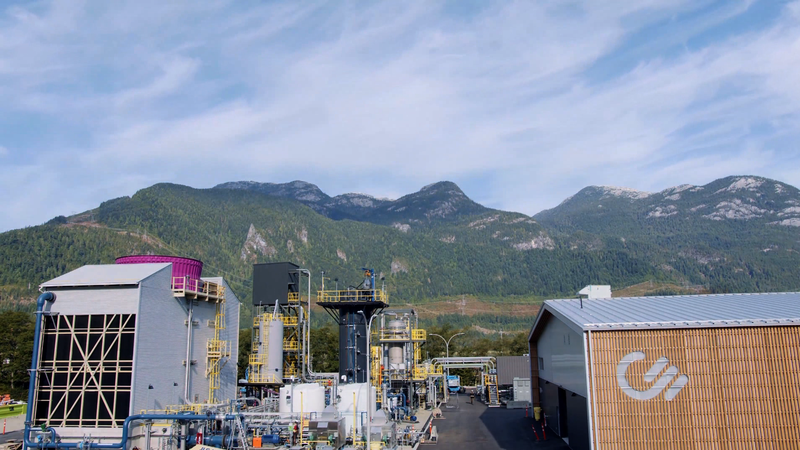
Carbon Engineering is construction a carbon capture plant near Merritt at the Upper Nicola Indian Band by 2026 (Image Credit: Carbon Engineering)
CARBON CAPTURE

Number of carbon capture plants depends on government policies: Carbon Engineering CEO

Oct 15, 2021 | 11:44 AM

KAMLOOPS — The Merritt Electro Fuels Project, a carbon capture plant to be built on the Upper Nicola Indian Band, hopes to revolutionize how we fuel vehicles — whether it’s cars, planes or other machinery.

It will capture carbon dioxide from the air and turn it into a low-carbon fuel. It’s a project Carbon Engineering wants to replicate across the country, but it notes how many of these projects come to fruition is mainly up to government.

“Really the question I turn around and [ask] is: How quickly are we going to implement the policies needed to allow technologies like this to come to market and de-carbonize transportation because a lot of us are increasingly aware of [that] we don’t have a lot of time left to address climate change,” said CEO of Carbon Engineering Steve Oldham.

Oldham says the provincial and federal governments have to jump on board to make green energy a priority.

“At the moment, we have a B.C. Low Carbon Fuel Standard in the province and that’s helped drive some of the demand. Canada is about to introduce a Canadian Fuel Standard, which will also provide incentives for lower-carbon fuels.”

The province contributed $2 million to the Upper Nicola project through its Innovative Clean Energy Fund. B.C. feels it’s a leader in a transition to green energy and wants to keep pushing forward.

The plan is to bump up the Low Carbon Fuel Standard, which forces producers to reduce the amount of carbon in its fuel.

“That is at 10 per cent [carbon] and we’re going to accelerate it to 2030 to 20 per cent,” said Ralston. “We’re one of the leading jurisdictions in the world. We’re keeping pace with California on this, so creating that regulatory environment that supports this kind of project is a really important step.”

Upper Nicola Indian Band chief Harvey McLeod hopes other First Nations, and municipalities, adopt similar projects. The only challenge, he says, is you need a lot of land, which Upper Nicola has to accomodate the plant.

However, McLeod notes the project, and other low-carbon plants in the province, will have a huge impact on the Merritt and Kamloops economies.

“Just based on the numbers of workers and the amount of employment that it’s going to create — the estimations looking at constructing and then the estimated number of employees that it’s going to need to operate the facility.”

Assurance of employment is key if the province and other jurisdictions hope to make a successful green transition.

The Merritt Electro Fuels Project will be finished by 2026 and cost $1.3 billion.