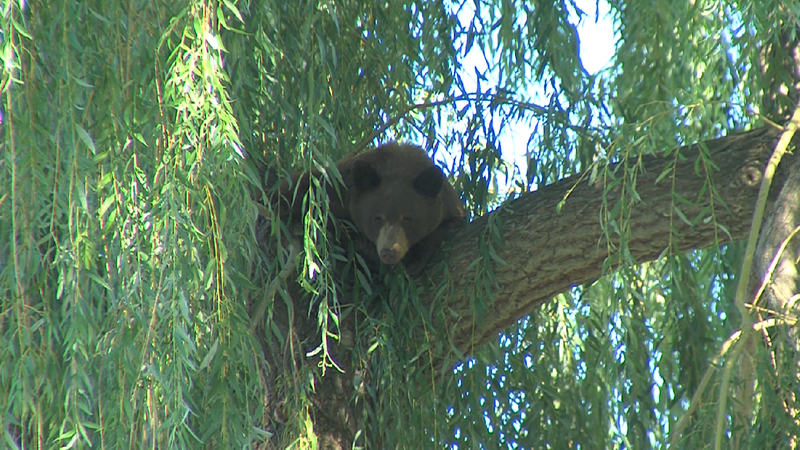
Image Credit: CFJC Today
WILDLIFE

WildsafeBC warns Kamloops about uptick in local bear activity

Sep 28, 2021 | 4:02 PM

KAMLOOPS — WildSafeBC is reminding the City of Kamloops to be aware of the bears.

“This year especially we’ve seen an increase in bear activity. It was a dry spring which means that berry crop wasn’t as abundant out in the forest. That’s bringing bears into town to look for food. And then the wildfires as well could have displaced some of the bears,” said Mackenzie Irwin, Community Coordinator at WildsafeBC.

WildSafeBC says residents can do their part to manage attractants around their homes.

“Take your bird feeders down. There was a bear accessing bird feeders earlier this week. Pick your fruit, pick up any fallen fruit off the ground. If you produce too much fruit, you can register with the Gleaning Abundance program and they’ll help you pick some of your fruit,” Irwin explained.

The number one reason bears are attracted to residential neighbourhoods is human waste. That’s why the City of Kamloops is asking the public to put garbage out on the morning of garbage and not the night before.

“Collection carts are placed at the curb no sooner than 4:00 a.m. on collection day, and then removed from the curb no later than 7:00 p.m. That time period aligns with when bears are active in the community,” explained Allan Michener, Environmental Services Supervisor at the City of Kamloops.

Even with the City’s suggested bear-smarting, WildSafeBC says the public should still be on alert because there have been many recent spottings in Kamloops.

“Make lots of noise, try to travel in groups. Keep dogs on a leash at this time of year, they can often instigate an attack. A bear may see a dog as a potential threat or a prey species,” Irwin continued.

Bear traps have been set up all over the city, and if caught, conservation officers will have to step in.

“They will try to relocate a bear, but unfortunately if a bear but unfortunately if a bear has already been food-conditioned and conditioned to humans, there’s not a lot that we can do. A lot of the bears do end up getting destroyed, but that can be avoided if we manage our attractants appropriately in town,” she added.