Meet me après — but not in the hospital
-
Share on Facebook
-
Share on Bluesky
-
Share on X
- Copy Link
VANCOUVER — For those looking to shred some gnar thanks to the plentiful snowfall so far this year — Trauma Services BC (TSBC) is urging outdoor enthusiasts to take caution on the slopes.
In a news release, the Provincial Health Services Authority says despite a 12 per cent drop in injuries in the 2018/19 winter season, five-year statistics show the rate of hospitalizations for ski and snowboard injuries in the province is increasing.
“B.C. is home to some of the best ski resorts in the world and skiing and snowboarding is a great way to stay active during the winter season, but it comes with an element of risk,” said Dr. David Evans, medical director for TSBC, and trauma surgeon at Vancouver General Hospital in a news release. “The good news is that most injuries are preventable by simply wearing a helmet, avoiding excessive speed or reckless behaviour and learning how to lower your risk of injury. This helps reduce the chances of injuries, lengthy hospital stays, permanent disability and even death.”
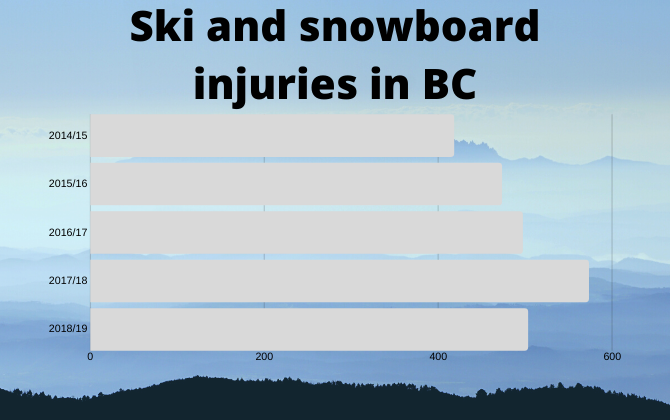 Image Credit: Canva